
Zündapp KS 500 Kardan Sport 1939 - Specifications & Review
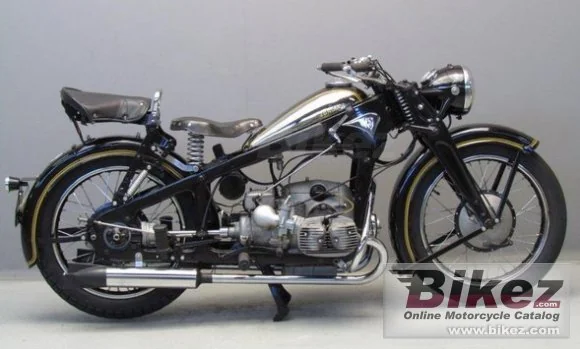
Article Complete Info
| Articleid | 38891 |
|---|---|
| Category | Sport |
| Make | Zündapp |
| Model | KS 500 Kardan Sport |
| Year | 1939 |
Chassis, Suspension, Brakes & Wheels
| Frontbrakes | Expanding brake (drum brake) |
|---|---|
| Fronttyre | 3.50-19 |
| Rearbrakes | Expanding brake (drum brake) |
| Rearsuspension | Rigid |
| Reartyre | 3.50-19 |
| Seat | Single |
| Wheels | Spoked |
Engine & Transmission
| Borexstroke | 66.0 x 66.6 mm (2.6 x 2.6 inches) |
|---|---|
| Coolingsystem | Air |
| Displacement | 498.00 ccm (30.39 cubic inches) |
| Enginedetails | Two cylinder boxer, four-stroke |
| Fuelsystem | Carburettor |
| Power | 24.00 HP (17.5 kW)) @ 5200 RPM |
| Topspeed | 135.0 km/h (83.9 mph) |
| Transmissiontypefinaldrive | Shaft drive (cardan) |
Physical Measures & Capacities
| Dryweight | 185.0 kg (407.9 pounds) |
|---|---|
| Powerweightratio | 0.1297 HP/kg |
About Zündapp KS 500 Kardan Sport 1939
Introducing the 1939 Zündapp KS 500 Kardan Sport, a motorcycle that epitomizes the spirit of pre-war German engineering. Positioned in the sport category, this model was designed for riders who craved performance without sacrificing comfort or reliability. With its striking aesthetics and powerful performance capabilities, the KS 500 Kardan Sport quickly became a favorite among enthusiasts and competitive riders alike. Its combination of innovative design and robust engineering made it not just a machine, but a statement of freedom and adventure during a tumultuous era.
At the heart of the KS 500 Kardan Sport lies a finely tuned 498cc two-cylinder boxer engine, capable of delivering 24 horsepower at 5,200 RPM. This four-stroke powerhouse grants the bike a top speed of 135 km/h (83.9 mph), making it a formidable contender on the roads of its time. Riders will appreciate the smooth power delivery and balanced handling offered by the boxer configuration, which lowers the center of gravity and enhances stability. Additionally, the air-cooled engine and carburettor fuel system provide a classic feel, inviting enthusiasts to engage with the machine in a way that modern motorcycles often lack.
The KS 500 Kardan Sport showcases several key features that set it apart from its contemporaries. The shaft drive (cardan) system not only offers smooth power transfer but also reduces maintenance needs compared to chain-driven bikes. The expanding drum brakes, both front and rear, provide reliable stopping power, ensuring that riders can tackle the open road with confidence. Its rigid rear suspension is a nod to the engineering simplicity of the time, allowing for a lightweight design that contributes to the motorcycle's agile performance. Furthermore, with a weight of just 185 kg (407.9 pounds), the KS 500 is nimble and responsive, making it a delight for spirited rides.
Pros:
- Powerful Engine Performance: The 498cc boxer engine delivers a respectable 24 HP, allowing for impressive acceleration and a thrilling top speed.
- Innovative Shaft Drive: The cardan system enhances durability and reduces maintenance compared to traditional chain drives, making it a practical choice for long-distance riders.
- Classic Aesthetic Appeal: With its vintage design and engineering charm, the KS 500 Kardan Sport is a head-turner and a true collector’s item.
Cons:
- Rigid Rear Suspension: While it contributes to the lightweight design, the rigid rear suspension can lead to a less comfortable ride on bumpy roads.
- Limited Modern Features: As a motorcycle from the late 1930s, it lacks the advanced technology and conveniences found in contemporary bikes, which may deter some modern riders.
- Drum Brakes: The expanding drum brakes, while effective for their time, may not provide the same level of stopping power or feel as modern disc brakes, particularly in high-performance scenarios.
In summary, the 1939 Zündapp KS 500 Kardan Sport is an iconic motorcycle that blends historical significance with spirited performance, making it a must-have for any serious motorcycle enthusiast or collector.