
2021
Skygo Wizard 175 - Specifications & Review
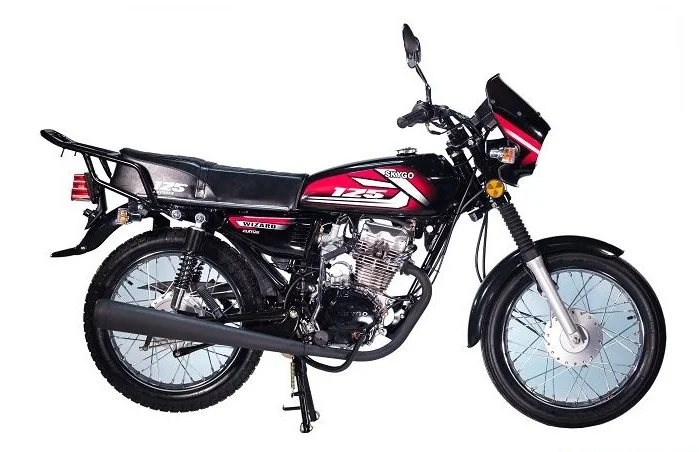
Article Complete Info
| Articleid | 235041 |
|---|---|
| Category | Allround |
| Make | Skygo |
| Model | Wizard 175 |
| Year | 2021 |
Chassis, Suspension, Brakes & Wheels
| Frontbrakes | Expanding brake (drum brake) |
|---|---|
| Frontsuspension | Telescopic fork |
| Fronttyre | 2.75-17 |
| Rearbrakes | Expanding brake (drum brake) |
| Rearsuspension | Dual shocks |
| Reartyre | 3.00-17 |
| Wheels | Wire spoked |
Engine & Transmission
| Borexstroke | 62.0 x 58.0 mm (2.4 x 2.3 inches) |
|---|---|
| Clutch | Multi Plate Wet |
| Compression | 9.0:1 |
| Coolingsystem | Air |
| Displacement | 175.0 ccm (10.68 cubic inches) |
| Enginedetails | Single cylinder, four-stroke |
| Fuelconsumption | 2.90 litres/100 km (34.5 km/l or 81.11 mpg) |
| Gearbox | 5-speed |
| Greenhousegases | 67.3 CO2 g/km. (CO2 - Carbon dioxide emission) |
| Lubricationsystem | Pressure splash |
| Power | 11.8 HP (8.6 kW)) @ 8500 RPM |
| Topspeed | 90.0 km/h (55.9 mph) |
| Torque | 12.0 Nm (1.2 kgf-m or 8.9 ft.lbs) @ 7500 RPM |
| Transmissiontypefinaldrive | Chain |
Other Specifications
| Coloroptions | Red/black |
|---|---|
| Comments | Chinese scooter sold in the Philippines. |
| Starter | Electric & kick |
Physical Measures & Capacities
| Dryweight | 110.0 kg (242.5 pounds) |
|---|---|
| Fuelcapacity | 10.00 litres (2.64 gallons) |
| Groundclearance | 135 mm (5.3 inches) |
| Overallheight | 1065 mm (41.9 inches) |
| Overalllength | 2180 mm (85.8 inches) |
| Overallwidth | 720 mm (28.3 inches) |
| Powerweightratio | 0.1073 HP/kg |
About Skygo
Country of Origin:
Philippines (brand/distributor); manufacturing via Asia
Founder:
Skygo Marketing Corporation
Best Known For:
Affordable commuters/underbones with nationwide parts in the Philippines
Company History
Skygo pairs value motorcycles with deep provincial reach: dealers, spares, and financing aligned to everyday budgets. Models are chosen for durability on rough roads and heavy load duty. By solving logistics and support, Skygo made two-wheel mobility attainable beyond major cities, illustrating how distribution architecture shapes real transport outcomes.