
2023
Apollo RFN Thunder 250 - Specifications & Review
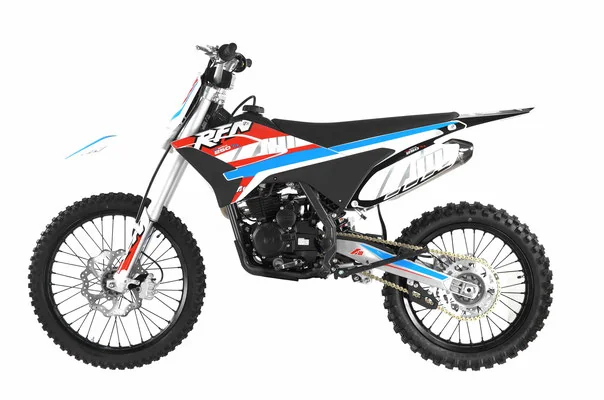
Article Complete Info
| Articleid | 14135 |
|---|---|
| Category | Enduro-offroad |
| Make | Apollo |
| Model | RFN Thunder 250 |
| Year | 2023 |
Chassis, Suspension, Brakes & Wheels
| Frontbrakes | Single disc |
|---|---|
| Frontbrakesdiameter | 270 mm (10.6 inches) |
| Frontsuspension | Telescopic fork, adjustable |
| Fronttyre | 80/100-21 |
| Frontwheeltravel | 200 mm (7.9 inches) |
| Rearbrakes | Single disc |
| Rearbrakesdiameter | 240 mm (9.4 inches) |
| Rearsuspension | Rebound adjustable hydraulic shock |
| Reartyre | 100/90-18 |
| Rearwheeltravel | 70 mm (2.8 inches) |
| Wheels | Aluminium rims |
Engine & Transmission
| Coolingsystem | Air |
|---|---|
| Displacement | 223.0 ccm (13.61 cubic inches) |
| Enginetype | Single cylinder, four-stroke |
| Fuelsystem | Carburettor. PE28 |
| Gearbox | 5-speed |
| Power | 16.1 HP (11.7 kW)) @ 7000 RPM |
| Topspeed | 95.0 km/h (59.0 mph) |
| Transmissiontypefinaldrive | Chain (final drive) |
Other Specifications
| Coloroptions | Red/White/Blue |
|---|---|
| Starter | Electric & kick |
Physical Measures & Capacities
| Dryweight | 106.0 kg (233.7 pounds) |
|---|---|
| Fuelcapacity | 6.50 litres (1.72 US gallons) |
| Groundclearance | 340 mm (13.4 inches) |
| Overallheight | 1075 mm (42.3 inches) |
| Overalllength | 2010 mm (79.1 inches) |
| Overallwidth | 810 mm (31.9 inches) |
| Powerweightratio | 0.1518 HP/kg |
| Seatheight | 910 mm (35.8 inches) If adjustable, lowest setting. |
About Apollo
Country of Origin:
China
Founder:
Zhejiang Apollo Motorcycle
Best Known For:
Value pit bikes, minis, and small dirt bikes popular with beginners
Company History
Apollo supplied a global wave of affordable pit bikes and entry-level dirt machines that lowered barriers to off-road riding. The bikes use proven air-cooled singles, simple carb/EFI setups, and frames that tolerate tip-overs and novice mistakes. Distributors add value with pre-delivery inspection, jetting or map tweaks, and spares kits. Schools and families appreciate that parts—levers, plastics, wheels—are cheap and easy to source, turning practice crashes into learning moments rather than expensive repairs. As quality crept upward—better fasteners, improved looms, stronger hubs—Apollo bikes shifted from throwaway toys to legitimate training tools that can survive seasons of backyard tracks and trail loops.