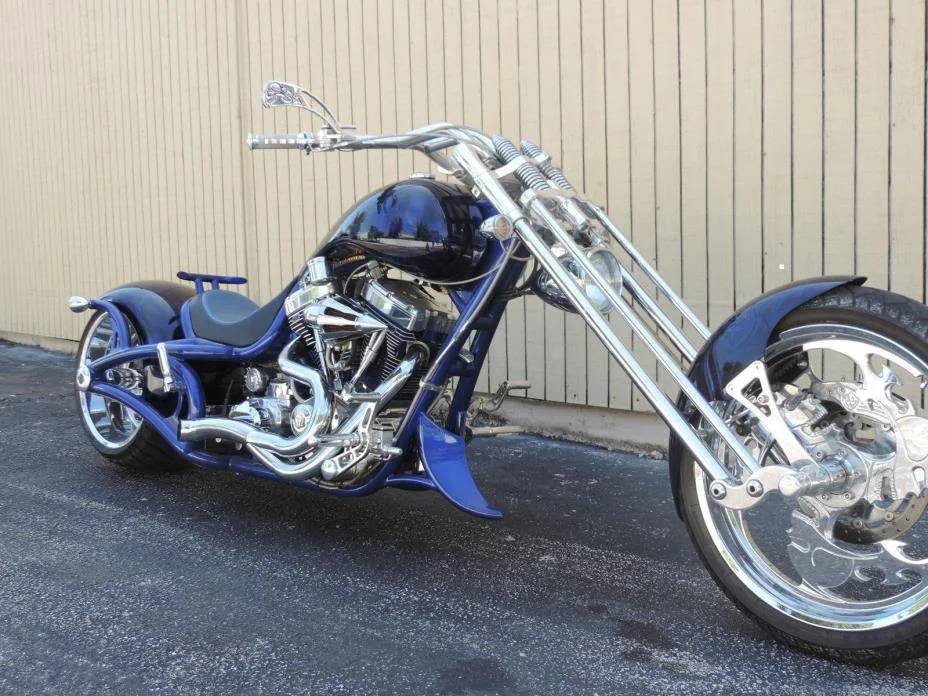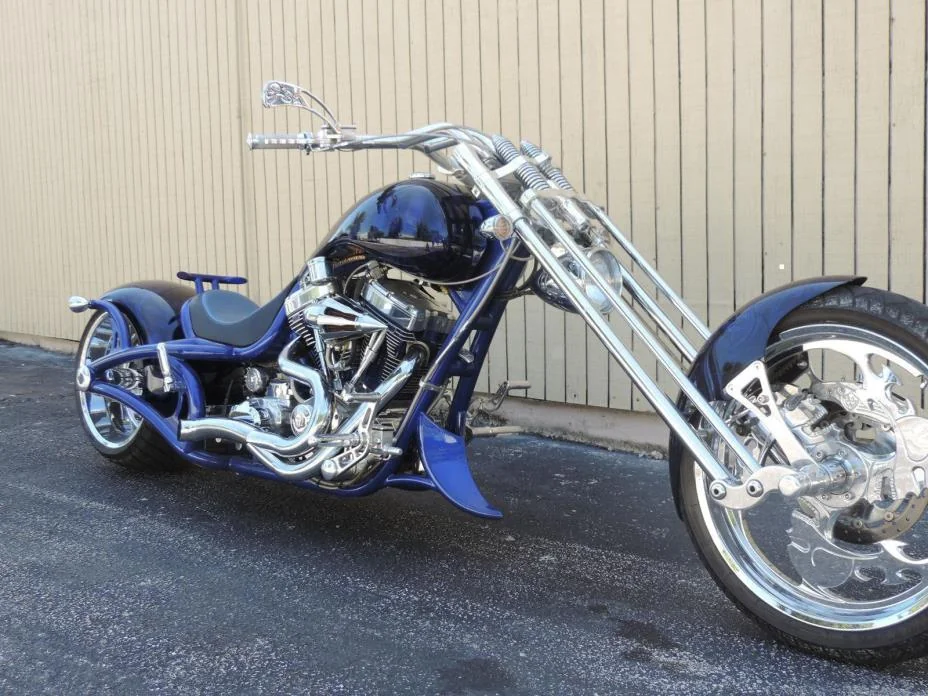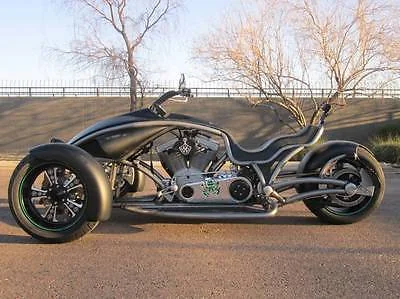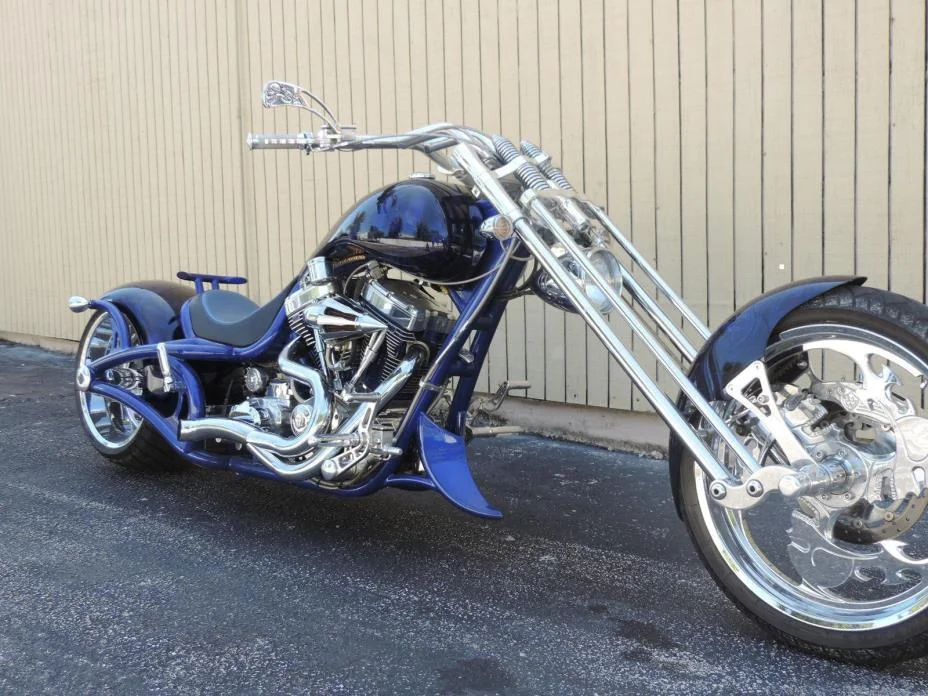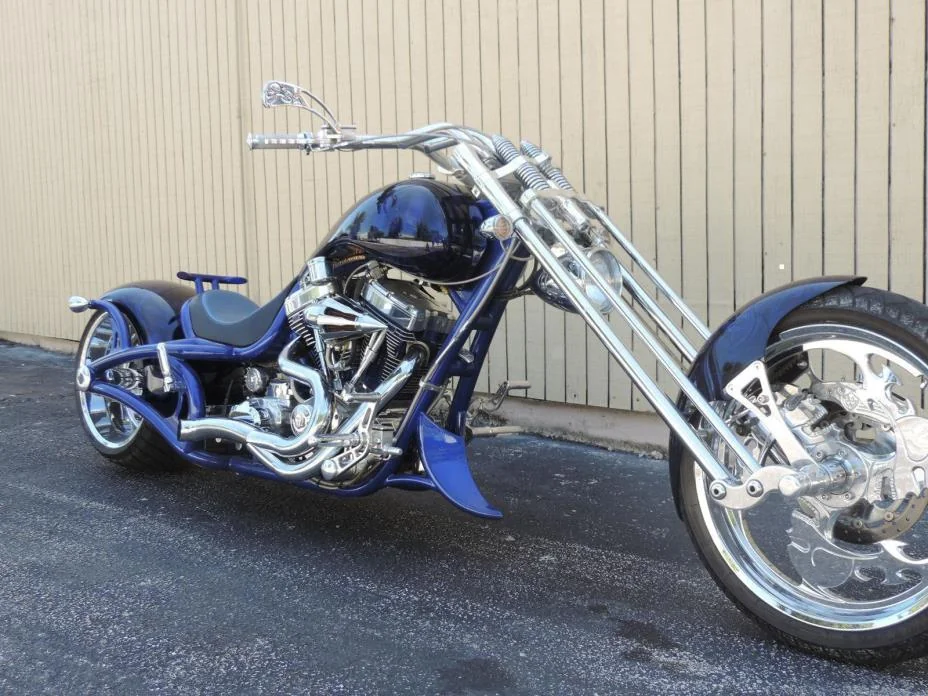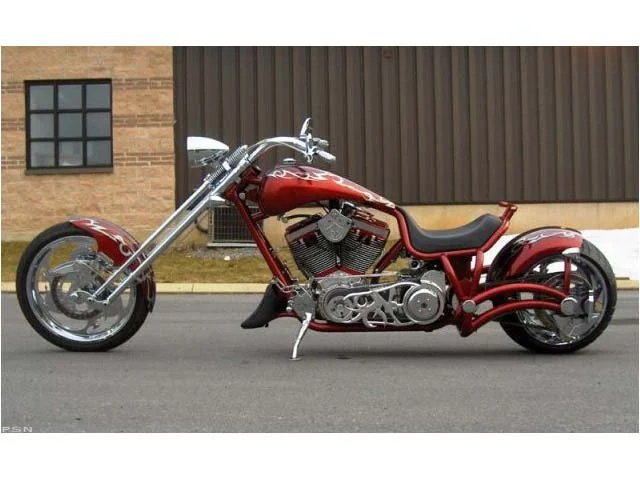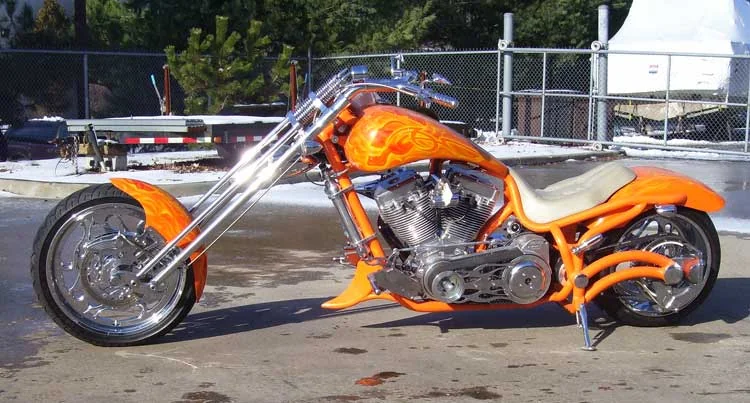
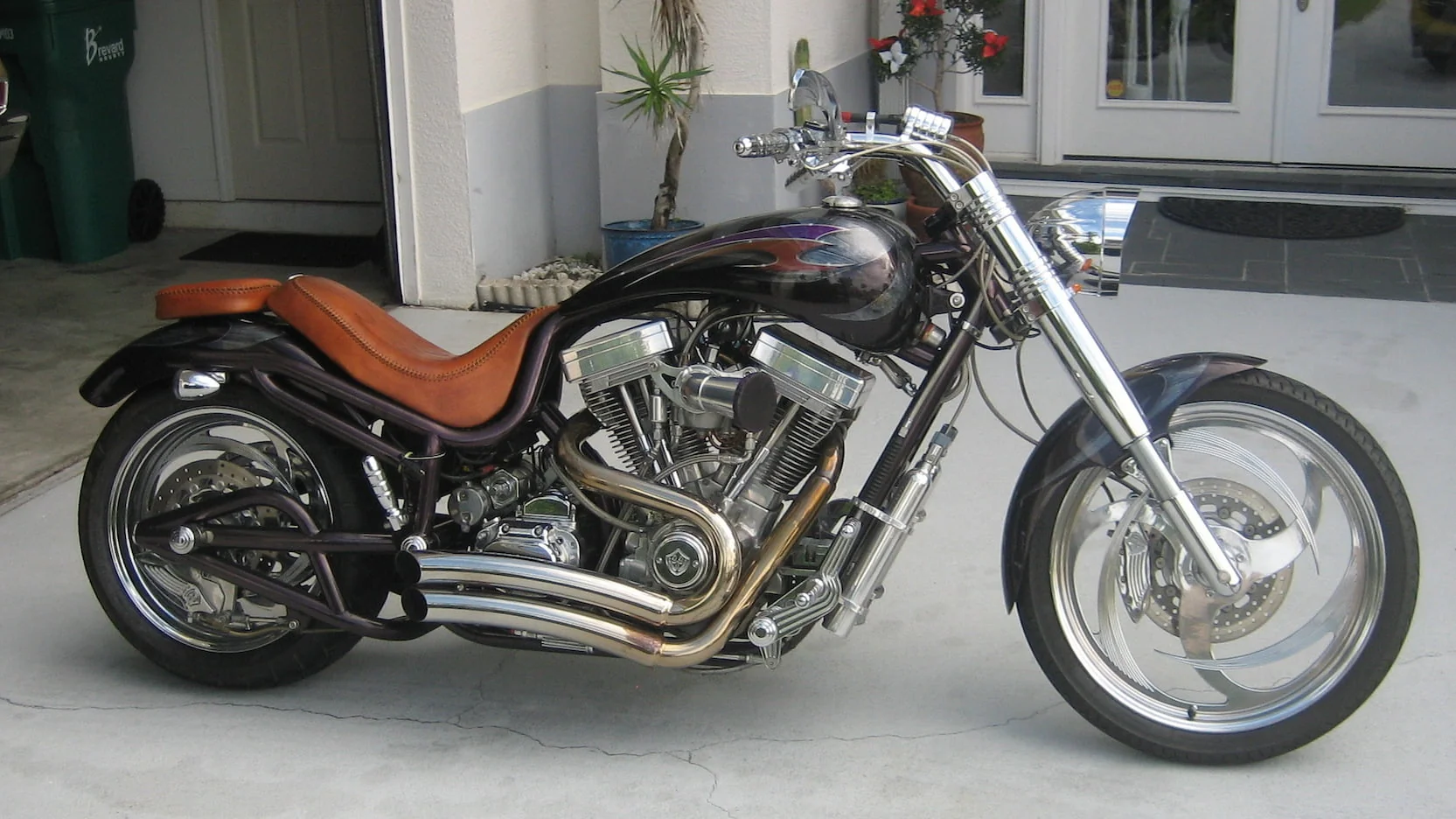
Bourget Low-Blow
Years: 2018 – 2023
Bourget Bike Works helped define the late-1990s and early-2000s American production-custom wave by translating one-off show bikes into repeatable, road-legal machines. Roger Bourget’s shop developed a visual grammar—stretched frames, deep rake, and flowing sheet metal—backed by serious attention to weld quality and fitment. An oil-in-frame approach tidied packaging and reinforced the seamless look customers wanted, while big-inch V-twin engines delivered the torque and soundtrack expected from boulevard royalty. Bourget’s catalog allowed buyers to choose wheel designs, bars, and paints without falling into the uncertainty of a scratch build, and the company’s manufacturing discipline meant parts interchangeability and service documentation improved with each model year. The bikes were unapologetically about presence: long shadows at sundown, chrome that caught every neon sign, and ergos that traded high-mileage comfort for attitude. When the 2008 downturn constricted discretionary spending, the entire segment contracted, but the brand’s influence remained visible in aftermarket ecosystems and the expectations riders had for fit and finish in the custom space. Historically, Bourget demonstrates how a small builder can industrialize artistry without smothering it, creating a bridge between bespoke and mass-market that brought custom ownership to a wider audience. Surviving bikes continue to evolve with their owners—bars swapped, mapping refined, paint refreshed—rolling canvases that carry the memory of an era when style itself was a performance and Main Street was the stage.