
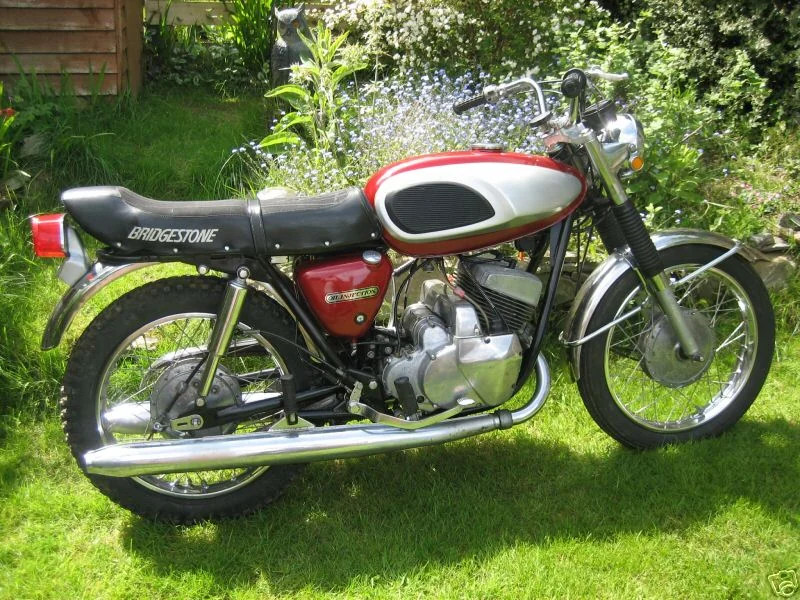
Bridgestone 350 GTO
Years: 1967 – 1969
Bridgestone is globally known for tires, but it also built a short, fascinating chapter in motorcycle manufacturing during the 1960s. Founded by Shojiro Ishibashi in 1931, the company’s technical culture—rubber chemistry, casing construction, and relentless testing—translated naturally into motorsport and OEM supply. In an age when tire technology often limited performance, Bridgestone’s development work expanded the wet and temperature windows riders could trust, refining compounds and profiles that defined the feel of countless bikes. The brief venture into full motorcycles yielded remarkably refined two-strokes, including the 350 GTR, which impressed testers with its engineering polish. Yet conflict with tire-customer OEMs and strategic focus led Bridgestone to exit motorcycle production and concentrate on its core business. That decision didn’t diminish the brand’s influence; from club racing to MotoGP and back to the street, Bridgestone advanced the idea that tires are active components of handling, not just consumables. Historically, the company’s contribution is twofold: it pushed tire performance that let chassis engineers dream bigger, and it demonstrated that even giants can experiment outside their core before returning stronger. For riders, Bridgestone’s name is part of muscle memory—how a BT or Battlax front feels rolling into a cool, damp corner; how a rear carcass communicates drive on exit. Those sensations, refined over decades, are the invisible engineering that turns power and braking into lines of poetry on asphalt.