
2025
Can-Am Canyon? XT - Specifications & Review
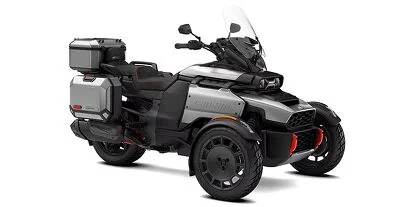
Article Complete Info
| Articleid | 845602 |
|---|---|
| Category | On Off Road |
| Make | Can-Am |
| Model | Canyon? XT |
| Year | 2025 |
Chassis, Suspension, Brakes & Wheels
| Fronttire | XPS Adventure K155/65 R16 72H |
|---|---|
| Reartire | XPS Adventure K225/50 R15 84H |
Engine & Transmission
| Coolingsystem | Liquid |
|---|---|
| Displacement | 1330 / 81.1 |
| Enginedetails | In-Line, 3 cylinder |
| Power | (bhp) HP |
Other Specifications
| Country | Canada |
|---|---|
| Datasource | 2025_enhanced_scrape |
| Richdataavailable | 1 |
| Starter | Electric |
Physical Measures & Capacities
| Overallheight | 1500 mm |
|---|---|
| Overalllength | 2547 mm |
| Overallwidth | 1581 mm |
About Can-Am
Country of Origin:
Canada
Founder:
Bombardier (BRP); legacy of Joseph-Armand Bombardier
Best Known For:
1970s MX/enduro race bikes; modern Spyder/Ryker three-wheelers and ATVs/UTVs
Company History
Can-Am began in the early 1970s as the motorcycle arm of Bombardier, leveraging Canadian engineering to create fiercely competitive two-stroke motocross and enduro machines. Tuned with European expertise and raced hard in North America and overseas, those early Can-Ams collected championships and cult status, proving that a snowmobile maker could out-hustle traditional bike brands in the dirt. As corporate priorities shifted, motorcycle production waned, but the Can-Am name later returned under BRP with a new mission: redefine powersports with three-wheeled roadsters. The Spyder and Ryker platforms offered stability, ABS/traction safety nets, and car-like ease that brought non-motorcyclists into open-air motoring. Parallel growth in ATVs and side-by-sides put Can-Am back into the off-road conversation at scale, competing directly with American and Japanese rivals. The throughline is confidence and accessibility—machines that extend the season, the terrain, or the rider base. Historically, Can-Am’s arc demonstrates corporate agility: pivot from two-stroke race weapons to sophisticated, electronically managed trikes without losing the brand’s appetite for fun. In the 1970s it asked dirt riders to imagine a Canadian upstart on the podium; today it invites highway travelers and trail workers to experience wind and utility with three contact patches. The brand’s enduring contribution is expanding who counts as a ‘rider,’ using engineering to lower barriers rather than raise them.