
2013
Cargobike AS125 - Specifications & Review
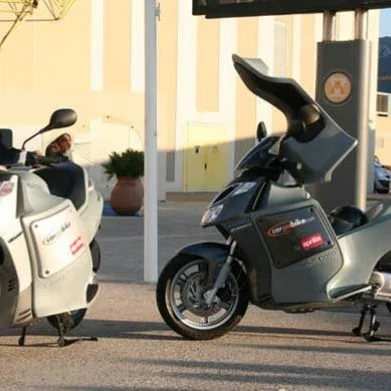
Article Complete Info
| Articleid | 956982 |
|---|---|
| Category | Allround |
| Make | Cargobike |
| Model | AS125 |
| Year | 2013 |
Chassis, Suspension, Brakes & Wheels
| Frametype | Double tube single cradle frame in high tensile strength steel |
|---|---|
| Frontbrakes | Single disc. Twin piston floating calipers |
| Frontbrakesdiameter | 260 mm (10.2 inches) |
| Frontsuspension | Hydraulic telescopic fork with 35 mm stanchions |
| Fronttyre | 120/70-15 |
| Frontwheeltravel | 100 mm (3.9 inches) |
| Rearbrakes | Single disc. Twin piston opposed calipers |
| Rearbrakesdiameter | 220 mm (8.7 inches) |
| Rearsuspension | Engine unit acting as swinging arm. Double hydraulic shock absorber with 4 preload settings. |
| Reartyre | 130/80-15 |
| Rearwheeltravel | 80 mm (3.1 inches) |
| Seat | Two person seat |
| Wheels | Light alloy wheels |
Engine & Transmission
| Borexstroke | 57.0 x 48.6 mm (2.2 x 1.9 inches) |
|---|---|
| Clutch | Automatic centrifugal dry clutch. Automatic torque converter gearbox |
| Compression | 12.5:1 |
| Coolingsystem | Liquid |
| Displacement | 125.00 ccm (7.63 cubic inches) |
| Emissiondetails | Euro 3 |
| Enginedetails | Single cylinder, four-stroke |
| Fuelsystem | Carburettor |
| Gearbox | Automatic |
| Ignition | CDI with automatic advance |
| Power | 14.75 HP (10.8 kW)) @ 9500 RPM |
| Torque | 11.00 Nm (1.1 kgf-m or 8.1 ft.lbs) @ 8250 RPM |
| Transmissiontypefinaldrive | Belt |
| Valvespercylinder | 4 |
Other Specifications
| Carryingcapacity | 150 liter storage compartment. Up to 80 kg. |
|---|---|
| Coloroptions | Excalibur gray, Shot gray, Moka black |
| Comments | French made modification of an Aprilia SportCity scooter. |
| Electrical | 12 Volt |
| Starter | Electric |
Physical Measures & Capacities
| Dryweight | 148.0 kg (326.3 pounds) |
|---|---|
| Fuelcapacity | 9.00 litres (2.38 gallons) |
| Overalllength | 1,985 mm (78.1 inches) |
| Overallwidth | 880 mm (34.6 inches) |
| Powerweightratio | 0.0997 HP/kg |
| Reservefuelcapacity | 1.50 litres (0.40 gallons) |
| Seatheight | 820 mm (32.3 inches) If adjustable, lowest setting. |
About Cargobike
Country of Origin:
Europe
Founder:
Founding team of urban-mobility entrepreneurs (records vary by market)
Best Known For:
Utility two-wheelers and step-throughs configured for load hauling and deliveries
Company History
Across European cities in the 2000s–2010s, several small manufacturers and import labels used the “Cargobike” moniker for powered two-wheelers optimized for hauling. While specifics differ by country and era, the concept is consistent: a rugged step-through or small motorcycle with reinforced racks, sometimes extended wheelbases, and drivetrains selected for reliability over speed. These vehicles serviced bakeries before dawn, florists at lunch, and courier runs until dusk, becoming quiet essentials of urban logistics. Where pedal cargo bikes thrive in dense cores, motor-assist or small motorcycles bearing the Cargobike name covered wider radii and heavier loads without vans’ parking headaches. Chassis tuning emphasized low centers of gravity and stable slow-speed manners, critical when weaving through alleys with top boxes stacked high. As regulations tightened on emissions and noise, many Cargobike-type machines adopted cleaner four-stroke singles or, later, electric conversions with swappable batteries. Historically, the Cargobike idea bridges the gap between scooter culture and professional logistics, demonstrating that two-wheel platforms can be serious work tools. Documentation is often fragmented—brands shifting distributors or sourcing—but the urban impact is unmistakable: thousands of small businesses expanded their reach because an affordable, rugged two-wheeler could legally reach doorways a van could not. In that sense, ‘Cargobike’ names a category as much as a company—a pragmatic European answer to last-mile problems long before the term became fashionable.