
2011
Chang-Jiang Jawa 353 Replica - Specifications & Review
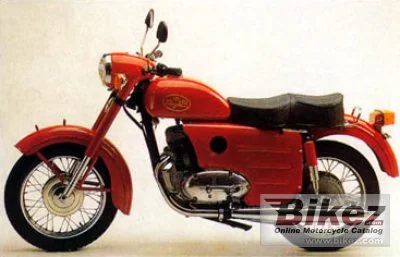
Article Complete Info
| Articleid | 445201 |
|---|---|
| Category | Classic |
| Make | Chang-Jiang |
| Model | Jawa 353 Replica |
| Year | 2011 |
Chassis, Suspension, Brakes & Wheels
| Frontbrakes | Expanding brake (drum brake) |
|---|---|
| Rearbrakes | Expanding brake (drum brake) |
| Seat | Dual seat |
Engine & Transmission
| Compression | 7.2:1 |
|---|---|
| Coolingsystem | Air |
| Displacement | 248.50 ccm (15.16 cubic inches) |
| Enginedetails | Single cylinder, two-stroke |
| Fuelconsumption | 3.00 litres/100 km (33.3 km/l or 78.41 mpg) |
| Fuelsystem | Carburettor |
| Gearbox | 4-speed |
| Greenhousegases | 69.6 CO2 g/km. (CO2 - Carbon dioxide emission) |
| Power | 11.80 HP (8.6 kW)) @ 4600 RPM |
| Topspeed | 90.0 km/h (55.9 mph) |
Other Specifications
| Coloroptions | Red |
|---|---|
| Comments | Chinese copy of 1950 Jawa 353 bike. |
| Starter | Kick |
Physical Measures & Capacities
| Dryweight | 135.0 kg (297.6 pounds) |
|---|---|
| Fuelcapacity | 24.00 litres (6.34 gallons) |
| Overallheight | 1,000 mm (39.4 inches) |
| Overalllength | 2,400 mm (94.5 inches) |
| Overallwidth | 750 mm (29.5 inches) |
| Powerweightratio | 0.0874 HP/kg |
About Chang-Jiang
Country of Origin:
China
Founder:
Beijing Motorcycle Factory (state enterprise lineage)
Best Known For:
CJ750 sidecar motorcycles derived from mid-century boxer designs
Company History
Chang-Jiang (often rendered Changjiang) is the emblem of China’s classic sidecar scene. Originating from state-run production in the mid-20th century, the CJ750 family traces mechanical ancestry to prewar BMW boxers via Soviet Ural designs. For decades these robust, low-revving sidecar outfits served military, police, and utility roles, valued for parts interchangeability and the ability to navigate poor roads with a passenger and cargo aboard. As China modernized, the CJ platform persisted in enthusiast circles and export markets, where restorers mixed original hardware with upgraded electrics, better bearings, and occasional engine swaps. New-build retro models emerged in the 21st century under private ownership licensed to use the historic name, marrying period looks to improved metallurgy and production standards. Historically, Chang-Jiang captures a transitional moment in global motorcycling: when durable, easily repaired machines were worth more than outright performance. The sidecar’s three-track footprint and tractor-like torque reflect priorities of a different era—reliability, simplicity, and adaptability. For many riders and tourists encountering CJ rigs today, the experience is a time machine: the bark of a boxer twin, wind over a metal tub, and the old-world charm of floor-mounted shifters and mechanical clatter. In this niche, Chang-Jiang’s legacy is secure, a living museum that still takes passengers for rides.