
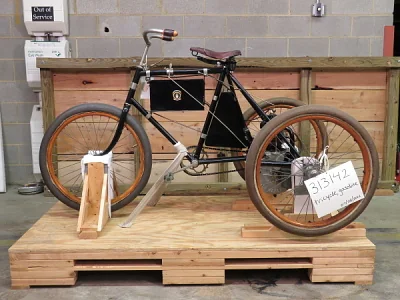
Clarke Gasoline Tricycle
Years: 1897 – 1897
The Clarke name appears in British motorcycle directories from the early to mid-20th century, typically associated with small workshops that assembled lightweight machines or fitted engines to reinforced bicycle frames. As with many minor marques of the era, Clarke operated within a vibrant supplier ecosystem: proprietary engines from firms like Villiers, magnetos and carburetors from specialists, and frames fabricated in modest batches. The resulting machines were humble but transformative, offering shopkeepers, apprentices, and factory workers affordable motorized mobility. Because records are sparse and companies often changed hands or merged quietly, pinning down a single Clarke corporate lineage is difficult; what endures is the pattern. Historically, Clarke stands in for a generation of British tinkerers whose ingenuity filled the gap between pedal power and expensive grand touring motorcycles. Their bikes taught owners basic mechanical skills—decoking a two-stroke, adjusting a clutch, truing a wheel—and knit communities of riders who met at cafes and club runs. While the marque lacks headline racing exploits, its legacy is the democratization of motion at a time when a personal motor vehicle was a genuine luxury. Restorers today treat surviving Clarke-badged machines as artifacts of social history as much as transport: evidence of how small shops and standardized parts created a nation of riders long before motorways and mass car ownership.