
2011
Confederate B120 Wraith - Specifications & Review
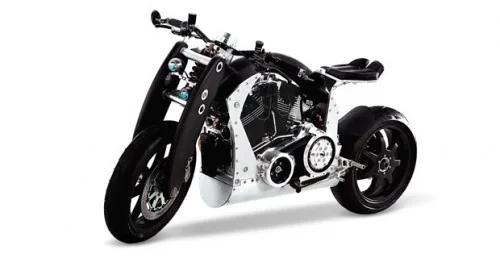
Article Complete Info
| Articleid | 423732 |
|---|---|
| Category | Naked bike |
| Make | Confederate |
| Model | B120 Wraith |
| Year | 2011 |
Chassis, Suspension, Brakes & Wheels
| Frametype | Confederate design triple load path carbon fiber monocoque. Aircraft grade CNC billet bulkhead, fuselage. Oil in frame. |
|---|---|
| Frontbrakes | Double disc. Bremo, 4-piston |
| Frontbrakesdiameter | 320 mm (12.6 inches) |
| Frontsuspension | Double wishbone, machined from aircraft grade billet aluminum, linked to aerodynamically designed carbon fiber wing blades |
| Fronttyre | 120/60-17 |
| Rake | 27.0° |
| Rearbrakes | Single disc. Bremo, 2-piston |
| Rearbrakesdiameter | 220 mm (8.7 inches) |
| Rearsuspension | Single sided aircraft grade aluminum swing arm |
| Reartyre | 280/55-17 |
| Wheels | Carbon fiber; Front: 3.5 in X 17 in; Rear: 5.75 in x 17 in |
Engine & Transmission
| Borexstroke | 104.8 x 114.3 mm (4.1 x 4.5 inches) |
|---|---|
| Displacement | 1966.00 ccm (119.97 cubic inches) |
| Enginedetails | V2, four-stroke |
| Enginetype | Jims/Confederate B120 counter balanced twin cam 45 degree radial twin |
| Fuelsystem | Injection |
| Gearbox | 5-speed |
| Power | 125.00 HP (91.2 kW)) |
| Torque | 176.28 Nm (18.0 kgf-m or 130.0 ft.lbs) |
| Transmissiontypefinaldrive | Belt |
Other Specifications
| Coloroptions | Black/silver |
|---|---|
| Comments | Limited edition of 250 bikes. |
| Starter | Electric |
Physical Measures & Capacities
| Dryweight | 176.9 kg (390.0 pounds) |
|---|---|
| Powerweightratio | 0.7066 HP/kg |
| Seatheight | 775 mm (30.5 inches) If adjustable, lowest setting. |
About Confederate
Country of Origin:
United States
Founder:
H. Matthew Chambers
Best Known For:
Radical, billet-intensive V-twin design (Hellcat, Wraith) and later rebrand toward electric
Company History
Confederate Motors emerged from New Orleans (later Birmingham) in the 1990s as an unapologetically avant-garde American marque. Founder Matt Chambers framed motorcycles as rolling sculpture: skeletal girders of CNC-cut aluminum, carbon components, and muscular V-twins presented as architectural centerpieces. Signature models like the Hellcat and Wraith rejected cruiser clichés in favor of industrial minimalism and rigorous mass centralization, yielding bikes that looked like prototypes escaped from a design studio and onto the street. Low volumes allowed obsessive detailing—hand finishes, bespoke fasteners, and component choices chosen as much for visual honesty as for performance. Hurricanes, financial shocks, and regulatory changes buffeted the small company, yet the brand cultivated a fervent following among collectors and riders who prized mechanical theater and tactile connection. In the late 2010s, the firm pivoted identity, retiring the Confederate name and exploring electrification under the Curtiss banner, invoking aviation pioneer Glenn Curtiss and aligning with a quieter, more sustainable future. Historically, the Confederate chapter matters because it expanded the vocabulary of American V-twin design: proof that a domestic motorcycle could be spare, engineered, and modern without surrendering character. The bikes were not for everybody—seat foam was thin, geometry was demanding, and prices were lofty—but they crystallized the idea that artisan manufacturing could stand shoulder to shoulder with blue-chip OEMs on the axis of desirability. For many, a Confederate wasn’t just a ride; it was a manifesto in billet and carbon about what a motorcycle could be when function and form wrestled, then shook hands.