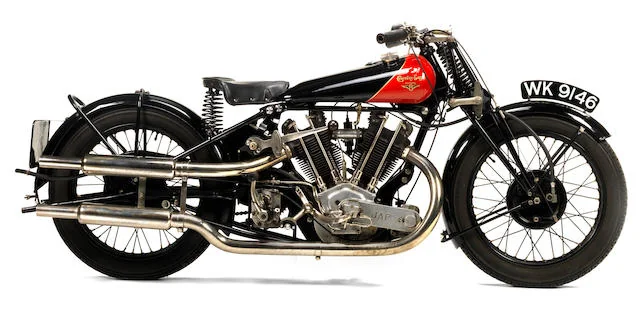
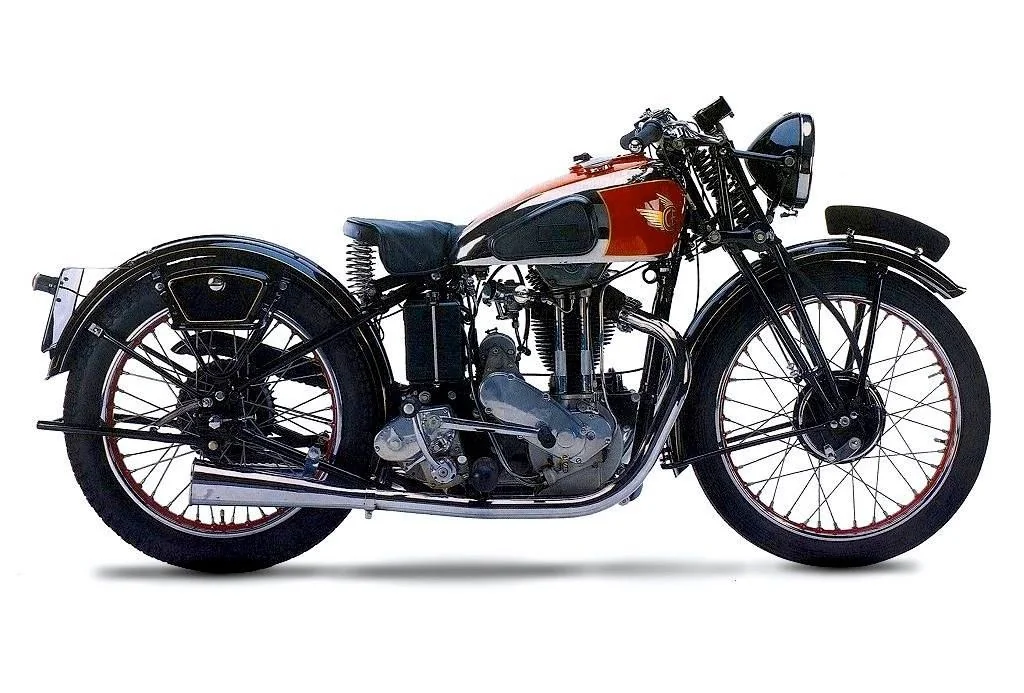
Coventry Eagle Flying 350
Years: 1931 – 1937
Coventry Eagle evolved from a respected bicycle manufacturer into a motorcycle maker during Britain’s brass-era boom, threading craftsmanship from pedal power into petrol. Early machines followed the assembler model—frames built in-house, engines sourced from specialists like Villiers and JAP—resulting in a range that covered commuters to sporting enthusiasts. The company’s most romantic chapter centers on the ‘Flying 8,’ a JAP-powered V-twin that married performance with elegance in the 1920s. With long, lean proportions, quality fittings, and a measured gait at speed, the Flying 8 became a byword for British refinement on two wheels. Coventry Eagle’s catalog also included capable singles for the masses, reflecting the era’s need for affordable, repairable mobility. The downhill came with familiar pressures: economic contraction, the rise of small cars, and increasingly integrated competition from rivals that could invest heavily in unit engines and electrification. By the late 1930s, motorcycle production wound down. Historically, the brand stands as a window into the artisan phase of British motorcycling—when small factories could, with careful sourcing and finishing, produce machines of real distinction. Surviving examples command affection not only for rarity but for the way they ride: neutral steering, a sense of mechanical calm, and an aesthetic balance that feels inevitable. In the company of contemporaries like Brough and Matchless, Coventry Eagle reminds us that the golden age wasn’t just about speed; it was about grace under a tin tank and the honest hum of metal doing its job.