
2009
CSR Glory - Specifications & Review
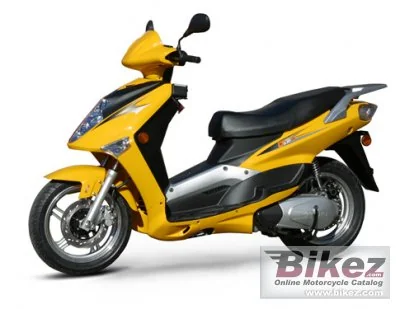
Article Complete Info
| Articleid | 724249 |
|---|---|
| Category | Scooter |
| Make | CSR |
| Model | Glory |
| Year | 2009 |
Engine & Transmission
| Coolingsystem | Liquid |
|---|---|
| Displacement | 124.60 ccm (7.60 cubic inches) |
| Enginedetails | Single cylinder, four-stroke |
| Fuelconsumption | 2.80 litres/100 km (35.7 km/l or 84.01 mpg) |
| Fuelsystem | Carburettor |
| Gearbox | Automatic |
| Greenhousegases | 65.0 CO2 g/km. (CO2 - Carbon dioxide emission) |
| Transmissiontypefinaldrive | Shaft drive (cardan) |
Other Specifications
| Coloroptions | Yellow |
|---|---|
| Starter | Electric |
Physical Measures & Capacities
| Fuelcapacity | 7.00 litres (1.85 gallons) |
|---|---|
| Overalllength | 2,010 mm (79.1 inches) |
| Seatheight | 750 mm (29.5 inches) If adjustable, lowest setting. |
About CSR
Country of Origin:
Asia
Founder:
Regional importer/manufacturer consortium
Best Known For:
Budget commuter motorcycles and delivery-oriented step-throughs
Company History
CSR is a badge that has surfaced on affordable commuters and underbones across several Asian markets, applied by importers assembling model lines from a common pool of engines, frames, and braking systems. The playbook is consistent: air-cooled four-stroke singles designed for fuel thrift, simple gearboxes or semi-automatic transmissions, and rugged racks ready for cargo boxes. These machines occupy the beating heart of urban mobility—short trips, stop-and-go traffic, and all-weather use. Although early examples sometimes suffered from inconsistent electrics and plastics, steady improvement in supplier quality and distributor support tightened tolerances and documentation. Fleet sales to couriers and small businesses stress-tested the platforms, yielding practical enhancements like heavier spokes, better sealing on switchgear, and wider service intervals. While CSR lacks a singular factory mythology, its social function is clear: it pulls riders into ownership with prices that beat used-vehicle uncertainty, then keeps them moving with off-the-shelf consumables. Historically, CSR-type brands demonstrate how modern manufacturing modularity democratizes transport—no single plant needs to do everything when a regional network can configure credible, compliant machines quickly. In cities where time is money and a missed delivery is a lost client, a CSR’s worth is measured day by day in reliable starts and predictable costs. For many, it is the first rung on the motorized ladder, a tool that unlocks opportunity more effectively than any brochure statistic ever could.