
2015
Current Motor Nb Cargo - Specifications & Review
Article Complete Info
| Articleid | 561771 |
|---|---|
| Category | Scooter |
| Make | Current Motor |
| Model | Nb Cargo |
| Year | 2015 |
Chassis, Suspension, Brakes & Wheels
| Frontbrakes | Single disc. 2-piston caliper |
|---|---|
| Frontbrakesdiameter | 245 mm (9.6 inches) |
| Frontsuspension | Telescopic forks |
| Fronttyre | 120/70-12 |
| Rearbrakes | Single disc. 2-piston caliper |
| Rearbrakesdiameter | 180 mm (7.1 inches) |
| Rearsuspension | Telescopic coil over spring, adjustable |
| Reartyre | 130/60-13 |
| Wheels | Black, five spoke |
Engine & Transmission
| Coolingsystem | Air |
|---|---|
| Driveline | Single-Speed Direct Drive Hub Motor |
| Enginedetails | Electric |
| Enginetype | Permanent Magnet DC Brushless Hub Motor |
| Gearbox | 1-speed |
| Topspeed | 112.7 km/h (70.0 mph) |
Other Specifications
| Carryingcapacity | Top box |
|---|---|
| Coloroptions | White/red/blue, Gray, Orange/white |
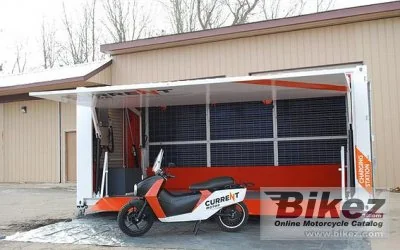
| Comments | Optional solar charging station. GPS. Windscreen. Range 50 miles. Lithium Iron Manganese Phosphate (LifeMnPO4) battery. 5 hour recharge time. 2,000+ discharge/recharge cycles. Computer controlled regenerative braking. Various options. |
| Instruments | Digital dashboard |
| Starter | Electric |
Physical Measures & Capacities
| Seatheight | 686 mm (27.0 inches) If adjustable, lowest setting. |
|---|---|
| Weightincloilgasetc | 195.0 kg (429.9 pounds) |
About Current Motor
Country of Origin:
United States
Founder:
Michigan engineering team (co-founders and investors from Ann Arbor/Detroit EV scene)
Best Known For:
Electric maxi-scooters and fleet ‘Super Scooter’ projects for campuses and utilities
Company History
Current Motor operated in the 2010s at the pragmatic end of the EV spectrum, building electric scooters designed for fleets, campuses, and short-haul commuters. Rather than chasing superbike headlines, the company focused on packaging batteries, controllers, and hub motors into approachable maxi-scooter formats with weather protection and storage—the kind of vehicles that could quietly replace small vans for many tasks. Its ‘Super Scooter’ concept explored modular packs, telematics, and solar charging stations for closed-loop operations at universities or corporate parks. The business model hinged on total cost of ownership: predictable energy use, low maintenance, and uptime supported by remote diagnostics. Like many early EV startups, Current Motor faced capital intensity, evolving cell chemistry, and the challenge of educating buyers unused to thinking about range planning and charging dwell. Some projects found homes in forward-looking institutions; others stalled as budgets shifted or competing priorities emerged. Historically, the company’s significance lies in its focus on the middle miles of mobility—the overlooked, utilitarian trips that shape urban life more than weekend rides ever will. By treating scooters as fleet assets with data and support, Current Motor helped prototype the service patterns that many EV providers now consider standard. Its story is a reminder that electrification isn’t only a performance revolution; it’s also a logistics revolution, where the right vehicle in the right niche can quietly transform how organizations move people and payloads.