
1976
CZ 250 MotoCross Type 980.5 - Specifications & Review
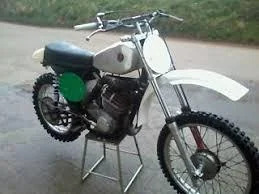
Article Complete Info
| Articleid | 866202 |
|---|---|
| Category | Cross-motocross |
| Make | CZ |
| Model | 250 MotoCross Type 980.5 |
| Year | 1976 |
Chassis, Suspension, Brakes & Wheels
| Frametype | Tubular |
|---|---|
| Frontbrakes | Expanding brake (drum brake) |
| Frontbrakesdiameter | 180 mm (7.1 inches) |
| Frontsuspension | Telescopic oil shock |
| Frontwheeltravel | 200 mm (7.9 inches) |
| Rearbrakes | Expanding brake (drum brake) |
| Rearbrakesdiameter | 180 mm (7.1 inches) |
| Rearsuspension | Hydropneumatic spring unit |
| Rearwheeltravel | 90 mm (3.5 inches) |
Engine & Transmission
| Borexstroke | 70.0 x 64.0 mm (2.8 x 2.5 inches) |
|---|---|
| Compression | 11.5:1 |
| Coolingsystem | Air |
| Displacement | 246.20 ccm (15.02 cubic inches) |
| Enginedetails | Single cylinder, two-stroke |
| Fuelsystem | Carburettor. JIKOV 2933 SE / JIKOV 2934 CD |
| Gearbox | 5-speed |
| Ignition | Magneto flywheel, voltage 6V |
| Power | 34.00 HP (24.8 kW)) @ 6800 RPM |
| Transmissiontypefinaldrive | Chain |
Other Specifications
| Starter | Kick |
|---|
Physical Measures & Capacities
| Dryweight | 99.5 kg (219.4 pounds) |
|---|---|
| Fuelcapacity | 8.00 litres (2.11 gallons) |
| Groundclearance | 180 mm (7.1 inches) |
| Overallheight | 1,090 mm (42.9 inches) |
| Overalllength | 2,100 mm (82.7 inches) |
| Overallwidth | 840 mm (33.1 inches) |
| Powerweightratio | 0.3417 HP/kg |
| Weightincloilgasetc | 107.5 kg (237.0 pounds) |
About CZ
Country of Origin:
Czechoslovakia (now Czech Republic)
Founder:
Česká zbrojovka Strakonice (state-linked arms works)
Best Known For:
Championship-winning two-stroke motocross bikes and robust road singles
Company History
CZ, born from the industrial might of Czechoslovakia’s arms and machinery works, became a motocross powerhouse from the 1950s through the early 1970s. The company’s two-stroke racers—simple, strong, and cleverly ported—earned world titles and a reputation for surviving brutal European courses. For privateers, CZ offered the holy trinity: tractable power, frames that could take a beating, and parts that didn’t shatter hopes when a rock struck home. Road models leaned practical, supplying essential transport behind the Iron Curtain and to export markets hungry for affordable, repairable machines. The fall came as Japanese rivals unleashed light, powerful bikes with rapidly advancing suspension and materials; state planning struggled to fund modernization at the same pace. Yet the CZ legend endured, buoyed by the imagery of mud-covered factory riders and by the reliability stories told in paddocks worldwide. Today, classic MX events and restorations keep the ring-ding alive, while roadgoing CZs roll as reminders that utility and sport can coexist in honest metal. Historically, CZ stands for engineering under constraint: make it work with what you can make yourselves, iterate in the field, and let results speak louder than brochures. In that spirit, CZ helped define the grammar of motocross before long-travel suspension and liquid-cooling rewrote the rules.