
2009
E-max 140L - Specifications & Review
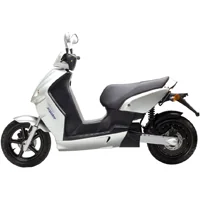
Article Complete Info
| Articleid | 688363 |
|---|---|
| Category | Scooter |
| Make | E-max |
| Model | 140L |
| Year | 2009 |
Chassis, Suspension, Brakes & Wheels
| Frontbrakes | Single disc |
|---|---|
| Frontsuspension | Oil/gass pressure |
| Fronttyre | 130/60-13 |
| Rearbrakes | Single disc |
| Rearsuspension | Oil/gass pressure |
| Reartyre | 130/60-13 |
Engine & Transmission
| Clutch | No transmission or clutch |
|---|---|
| Coolingsystem | Air |
| Enginedetails | Electric |
| Gearbox | Automatic |
| Power | 5.36 HP (3.9 kW)) |
| Topspeed | 60.0 km/h (37.3 mph) |
Other Specifications
| Comments | 2.5-6 hours charging time. Lithium ion battery, 15 x 3.2V/90Ah. Operating range 130-150 km. Made in Germany. |
|---|---|
| Starter | Electric |
Physical Measures & Capacities
| Dryweight | 100.0 kg (220.5 pounds) |
|---|---|
| Powerweightratio | 0.0536 HP/kg |
| Weightincloilgasetc | 145.0 kg (319.7 pounds) |
About E-max
Country of Origin:
Germany (later production links with Asia)
Founder:
E-max Germany GmbH (later associated with Vmoto group operations)
Best Known For:
Early electric scooters for European urban mobility and fleets
Company History
E-max was among Europe’s early electric-scooter specialists, targeting delivery fleets and city commuters long before e-motos were mainstream. The company prioritized durable hub motors, swappable or modular battery packs, and rugged frames that could absorb curbs, cobbles, and all-weather use. Quiet operation, low running costs, and simple maintenance made e-max attractive to institutions experimenting with cleaner last-mile logistics—municipal services, campuses, and food delivery. As the market evolved, e-max production and branding intersected with Asian manufacturing partners, reflecting a globalizing supply chain that lowered costs and broadened distribution. The challenge for early EV two-wheelers was as much cultural as technical: teaching operators to think in range, dwell time, and charger placement. E-max leaned on telematics and fleet analytics to make the math visible, convincing buyers that reliability and TCO could beat small vans or petrol scooters in many use cases. Historically, e-max represents the first serious wave of European two-wheel electrification—pragmatic, fleet-friendly, and data-driven. Its legacy lives in how modern scooter fleets plan charging, spec batteries, and train riders, practices that e-max and its peers helped prototype a decade ago.