
1988
Maico GP 360 E - Specifications & Review
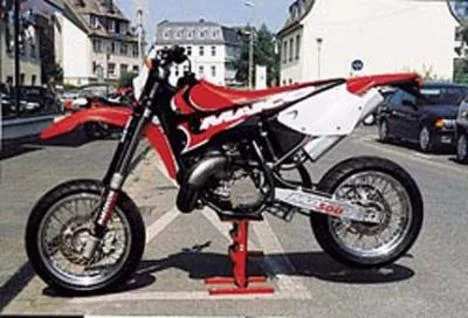
Article Complete Info
| Articleid | 972968 |
|---|---|
| Category | Unspecified category |
| Make | Maico |
| Model | GP 360 E |
| Year | 1988 |
Chassis, Suspension, Brakes & Wheels
| Frontbrakes | Single disc |
|---|---|
| Fronttyre | 3.00-21 |
| Rearbrakes | Single disc |
| Reartyre | 4.10-18 |
Engine & Transmission
| Borexstroke | 77.0 x 76.0 mm (3.0 x 3.0 inches) |
|---|---|
| Compression | 13.5:1 |
| Coolingsystem | Liquid |
| Displacement | 354.00 ccm (21.60 cubic inches) |
| Enginedetails | Single cylinder, two-stroke |
| Gearbox | 5-speed |
| Power | 17.00 HP (12.4 kW)) @ 5400 RPM |
| Topspeed | 100.0 km/h (62.1 mph) |
| Transmissiontypefinaldrive | Chain |
Physical Measures & Capacities
| Fuelcapacity | 10.00 litres (2.64 gallons) |
|---|---|
| Weightincloilgasetc | 106.0 kg (233.7 pounds) |
About Maico
Country of Origin:
Germany
Founder:
Ulrich and Wilhelm Maisch
Best Known For:
Ferocious 1970s–80s motocross/enduro two-strokes (e.g., 490 Mega 2)
Company History
Maico built fearsome, charismatic two-strokes that defined an era of European motocross. The bikes were renowned for supple, communicative chassis and engines with brutal, elastic power—machines that rewarded skilled riders with speed and punished the inattentive. In the woods, Maico enduros floated over roots and held lines through loam with uncanny feel. Financial turbulence and competition from Japanese OEMs dimmed the factory, but the legend persists: restorers race vintage Maicos precisely because they still handle beautifully when set up right. The 490 remains lore for its torque and immediacy, a reminder that lightweight frames and great suspension can make big power usable. Historically, Maico stands for rider-centric engineering—geometry before gimmicks, damping before decals. Its imprint lives in today’s enduro doctrine: prioritize feedback and traction, then add horsepower. In paddocks around the world, red tanks and long shocks still gather crowds who remember how these bikes felt between the trees.