
1979
Münch 4-1200 TTS - Specifications & Review
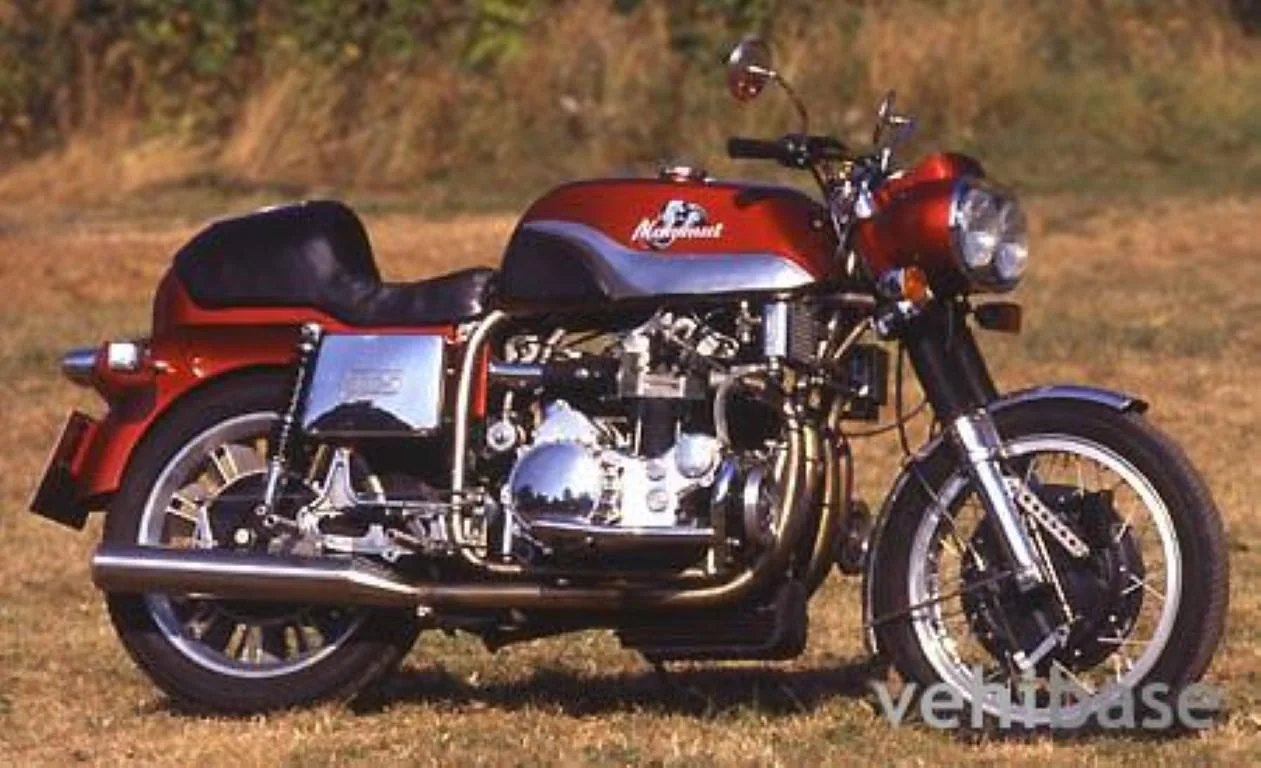
Article Complete Info
| Articleid | 402448 |
|---|---|
| Category | Unspecified category |
| Make | Münch |
| Model | 4-1200 TTS |
| Year | 1979 |
Chassis, Suspension, Brakes & Wheels
| Frontbrakes | Dual disc |
|---|---|
| Fronttyre | 3.25-19 |
| Rearbrakes | Single disc |
| Reartyre | 4.00-18 |
Engine & Transmission
| Borexstroke | 78.5 x 66.6 mm (3.1 x 2.6 inches) |
|---|---|
| Compression | 9.1:1 |
| Coolingsystem | Air |
| Displacement | 1289.00 ccm (78.65 cubic inches) |
| Enginedetails | In-line four, four-stroke |
| Gearbox | 4-speed |
| Power | 98.00 HP (71.5 kW)) @ 6600 RPM |
| Topspeed | 194.0 km/h (120.5 mph) |
| Transmissiontypefinaldrive | Chain |
| Valvespercylinder | 2 |
Physical Measures & Capacities
| Fuelcapacity | 24.00 litres (6.34 gallons) |
|---|---|
| Weightincloilgasetc | 298.0 kg (657.0 pounds) |
About Münch
Country of Origin:
Germany
Founder:
Friedel Münch
Best Known For:
Mammut 1200/1250 roadsters using NSU car engines; later Mammut 2000 revival
Company History
Friedel Münch built some of the most audacious road bikes of the 1960s and 70s by mating automobile engines to motorcycle frames with craftsmanship that bordered on obsession. The Mammut 1200/1250 harnessed NSU car powerplants, huge brakes, and stout chassis to deliver speed and durability that humbled contemporaries. Each bike was essentially hand-built—castings, machining, and assembly tailored with a watchmaker’s patience—yielding performance that felt effortless and inexhaustible. The economics of such work were punishing, and production numbers remained tiny, cementing cult status. A later Mammut revival attempted to translate the idea to modern standards with fuel injection and contemporary components. Historically, Münch embodies the magic of a master craftsman unafraid of scale: using big, torquey engines to create road bikes that feel unburstable, then finishing them like heirlooms. Ride one and you sense not just speed, but intent—the certainty that every bracket and bearing was considered by a human who cared.