
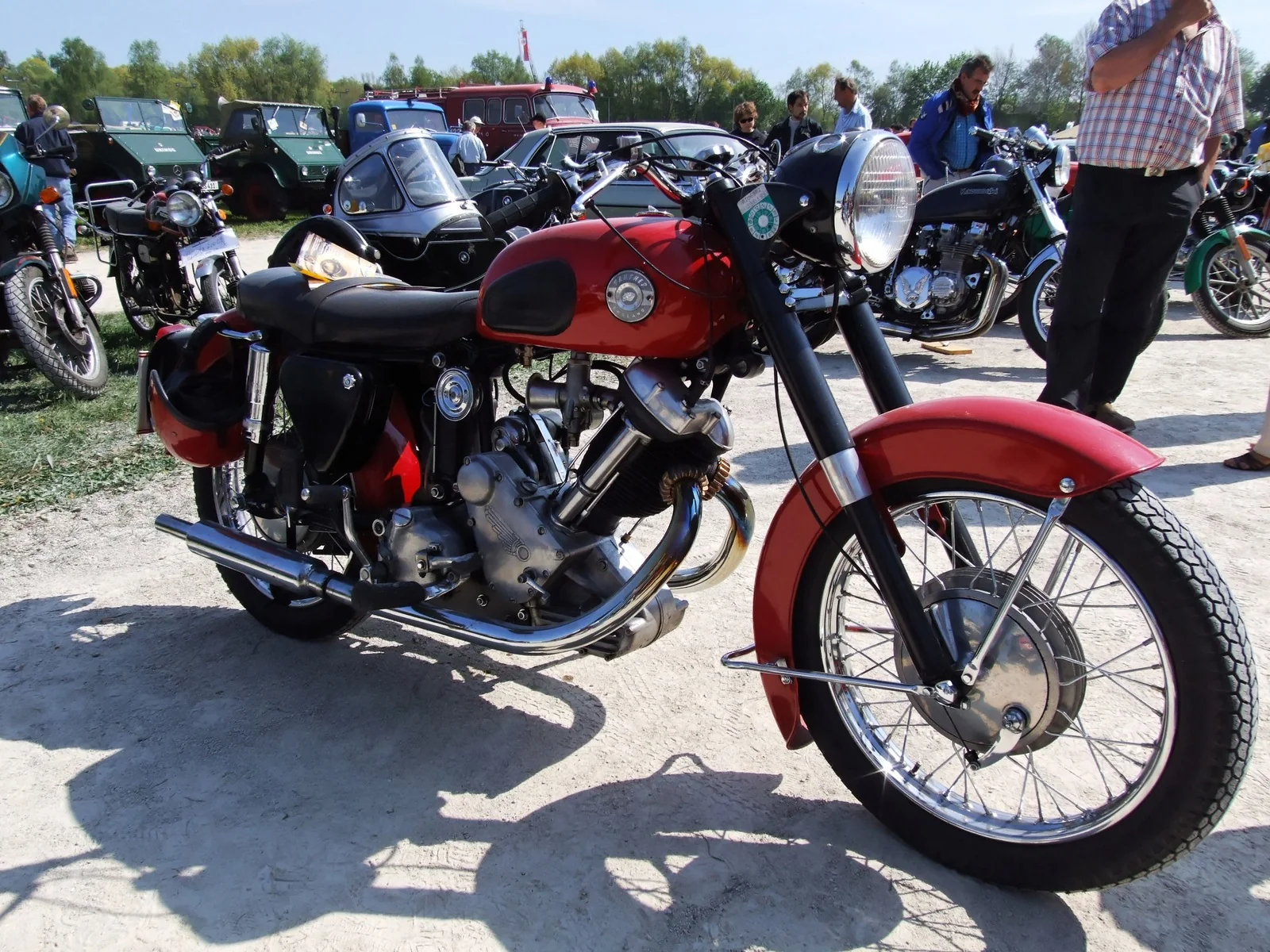
Panther M 120 1962 - Specifications & Review
Article Complete Info
| Articleid | 233146 |
|---|---|
| Category | Allround |
| Make | Panther |
| Model | M 120 |
| Year | 1962 |
Chassis, Suspension, Brakes & Wheels
| Frontbrakes | Expanding brake (drum brake) |
|---|---|
| Frontsuspension | Telescopic |
| Fronttyre | 3-19 |
| Rearbrakes | Expanding brake (drum brake) |
| Rearsuspension | Swingarm |
| Reartyre | 3-19 |
| Seat | Dual |
| Wheels | Spoked |
Engine & Transmission
| Borexstroke | 88.0 x 106.0 mm (3.5 x 4.2 inches) |
|---|---|
| Compression | 6.5:1 |
| Coolingsystem | Air |
| Displacement | 649.00 ccm (39.60 cubic inches) |
| Enginedetails | Single cylinder, four-stroke |
| Fuelconsumption | 5.10 litres/100 km (19.6 km/l or 46.12 mpg) |
| Fuelsystem | Carburettor |
| Greenhousegases | 118.3 CO2 g/km. (CO2 - Carbon dioxide emission) |
| Power | 27.00 HP (19.7 kW)) @ 6500 RPM |
| Transmissiontypefinaldrive | Chain |
Physical Measures & Capacities
| Dryweight | 209.1 kg (461.0 pounds) |
|---|---|
| Powerweightratio | 0.1291 HP/kg |
About Panther M 120 1962
Introducing the 1962 Panther M 120, a motorcycle that embodies the spirit of classic British engineering and design. Positioned as an allrounder, this bike was designed to cater to a variety of riders, whether they were commuting through bustling city streets or embarking on leisurely country rides. The Panther brand, known for its high-quality craftsmanship and attention to detail, made the M 120 a popular choice during its time, appealing to enthusiasts who valued both performance and style. With its iconic design and robust build, the M 120 remains a respected piece of motorcycle history, cherished by collectors and riders alike.
At the heart of the Panther M 120 is a single-cylinder, four-stroke engine that churns out 27 horsepower at 6,500 RPM, providing a spirited yet manageable riding experience. With a displacement of 649 cc, this power unit delivers a satisfying blend of torque and responsiveness, allowing for nimble handling and steady acceleration. The 6.5:1 compression ratio, combined with a carburettor fuel system, ensures that the engine operates smoothly and efficiently. Riders can expect a fuel consumption of approximately 5.10 liters per 100 kilometers, translating to an impressive 46.12 miles per gallon. Whether winding through tight corners or cruising on the open road, the M 120 offers a delightful connection between rider and machine, enhanced by its air-cooled design and chain final drive that provides reliability in various conditions.
The Panther M 120 is equipped with several features that highlight its advanced engineering for the era. The chassis features a telescopic front suspension and a swingarm rear suspension, allowing for improved stability and comfort on diverse terrains. Both the front and rear brakes utilize expanding drum brake systems, which, while offering a vintage charm, provide adequate stopping power for everyday use. Weighing in at 209.1 kg (461 pounds), the M 120 boasts a power-to-weight ratio of 0.1291 HP/kg, making it accessible for both novice and experienced riders. Its classic design elements, such as the vintage tank shape and leather detailing, add to its allure, placing it firmly in the realm of classic motorcycle aesthetics.
Pros:
- Classic Design: Timeless aesthetics that appeal to vintage motorcycle enthusiasts.
- Efficient Fuel Consumption: Competitive fuel economy, making it suitable for everyday riding.
- Nimble Handling: Lightweight and agile, providing a fun riding experience on various terrains.
Cons:
- Limited Power: While adequate for casual riding, it may lack the thrill that sportier bikes offer.
- Drum Brakes: Less effective than modern disc brakes, which can affect stopping performance.
- Weight: At 209.1 kg, it may be considered heavy for some riders, impacting maneuverability in tight spaces.
In summary, the 1962 Panther M 120 stands as a testament to the enduring allure of classic motorcycles. Its combination of engaging performance, vintage charm, and practical features makes it a delightful choice for those who appreciate the art of motorcycling.