
1960
Simplex Automatic - Specifications & Review
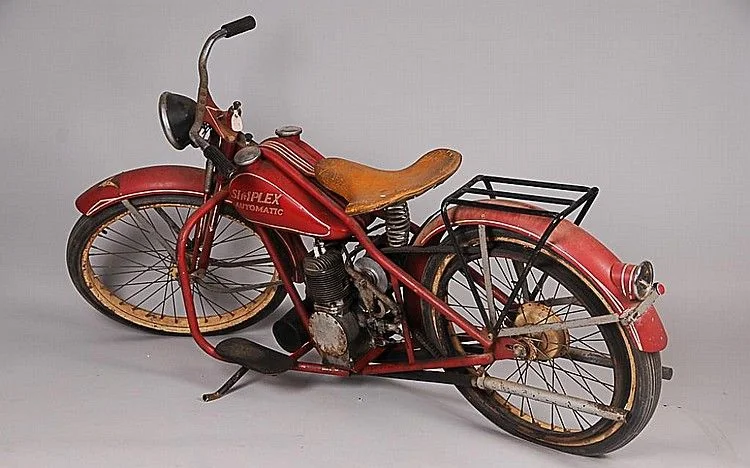
Article Complete Info
| Articleid | 32458 |
|---|---|
| Category | Allround |
| Make | Simplex |
| Model | Automatic |
| Year | 1960 |
Chassis, Suspension, Brakes & Wheels
| Frontsuspension | Leading link |
|---|---|
| Rearbrakes | Expanding brake (drum brake) |
| Rearsuspension | Rigid |
Engine & Transmission
| Borexstroke | 50.8 x 64.3 mm (2.0 x 2.5 inches) |
|---|---|
| Clutch | Variable speed automatic |
| Compression | 6.5:1 |
| Displacement | 130.00 ccm (7.93 cubic inches) |
| Enginedetails | Single cylinder, two-stroke |
| Fuelsystem | Carburettor |
| Power | 4.00 HP (2.9 kW)) @ 5000 RPM |
| Transmissiontypefinaldrive | Belt |
Physical Measures & Capacities
| Fuelcapacity | 9.46 litres (2.50 gallons) |
|---|
About Simplex
Country of Origin:
United States
Founder:
Paul Treen (Simplex Manufacturing Company, Louisiana)
Best Known For:
Lightweight utility motorcycles and Servi-Cycle (1930s–60s)
Company History
Simplex built rugged, minimalist motorcycles that blurred the line between moped and motorcycle decades before the terms were fixed. The Servi-Cycle’s small two-stroke engine, belt drive, and bicycle-like frame produced a light, economical machine that could be ridden without intimidation and repaired at home. During wartime and the austere postwar years, Simplex machines kept mail carriers, students, and shop workers moving. The company iterated slowly—improving electrics, brakes, and frame stiffness—prioritizing reliability and affordability over speed. Production ended as highways, bigger cars, and Japanese lightweights reshaped expectations, but Simplex remains a southern American icon of pragmatic mobility. Historically, the marque proves that independence on two wheels is often about simplicity: low mass, easy service, and an engine that asks little yet gives back daily freedom.