
Simson 425 GS 1957 - Specifications & Review
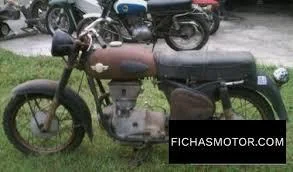
Article Complete Info
| Articleid | 832634 |
|---|---|
| Category | Sport |
| Make | Simson |
| Model | 425 GS |
| Year | 1957 |
Chassis, Suspension, Brakes & Wheels
| Frontbrakes | Expanding brake (drum brake) |
|---|---|
| Frontbrakesdiameter | 180 mm (7.1 inches) |
| Frontsuspension | Telescopic |
| Fronttyre | 3.5-19 |
| Rearbrakes | Expanding brake (drum brake) |
| Rearbrakesdiameter | 180 mm (7.1 inches) |
| Rearsuspension | Swingarm |
| Reartyre | 4-18 |
| Seat | Single |
Engine & Transmission
| Borexstroke | 68.0 x 68.0 mm (2.7 x 2.7 inches) |
|---|---|
| Coolingsystem | Air |
| Displacement | 247.00 ccm (15.07 cubic inches) |
| Enginedetails | Single cylinder, four-stroke |
| Fuelconsumption | 3.30 litres/100 km (30.3 km/l or 71.28 mpg) |
| Fuelsystem | Carburettor |
| Greenhousegases | 76.6 CO2 g/km. (CO2 - Carbon dioxide emission) |
| Ignition | Magneto |
| Power | 17.50 HP (12.8 kW)) @ 7200 RPM |
| Transmissiontypefinaldrive | Shaft drive (cardan) |
Physical Measures & Capacities
| Dryweight | 157.0 kg (346.1 pounds) |
|---|---|
| Fuelcapacity | 16.00 litres (4.23 gallons) |
| Powerweightratio | 0.1115 HP/kg |
About Simson 425 GS 1957
Introducing the 1957 Simson 425 GS motorcycle, a remarkable example of post-war German engineering that carved its niche in the sport category. With a design ethos that marries performance with practicality, this motorcycle was aimed at enthusiasts who sought a thrilling ride without compromising on reliability. The 425 GS stands out as a testament to Simson's dedication to quality, offering a combination of robust construction and spirited performance that appealed to both seasoned riders and newcomers to the sport biking scene.
At the heart of the 425 GS lies a spirited 247cc single-cylinder, four-stroke engine that churns out an impressive 17.5 horsepower at a rev-happy 7,200 RPM. This power plant, coupled with its air-cooling system, provides an exhilarating ride that is both responsive and efficient. The motorcycle's shaft drive (cardan) ensures smooth power delivery and minimizes maintenance needs, making it an excellent choice for both urban commuting and spirited country rides. With a commendable fuel consumption of just 3.30 liters per 100 kilometers (approximately 71.28 mpg), the 425 GS not only promises performance but also economy—a rare combination in its class.
The 1957 Simson 425 GS is equipped with features that enhance its riding characteristics and overall usability. The telescopic front suspension and swingarm rear suspension work in harmony to provide a comfortable ride, absorbing bumps and offering stability through corners. The expanding drum brakes on both ends, with a diameter of 180 mm, ensure reliable stopping power, instilling confidence in the rider. With a weight of 157 kg (346.1 lbs) and a fuel capacity of 16 liters (4.23 gallons), this motorcycle strikes an excellent balance between agility and endurance, making it an ideal companion for both leisure rides and spirited excursions.
Pros:
- Excellent Fuel Efficiency: With a fuel consumption of 3.30 liters per 100 km, it’s economical for long rides.
- Smooth Power Delivery: The shaft drive system provides seamless acceleration and reduces maintenance.
- Comfortable Ride Quality: The combination of telescopic front and swingarm rear suspension offers a stable and comfortable experience over various terrains.
Cons:
- Limited Power Output: With only 17.5 HP, it may not satisfy riders looking for high-performance capabilities.
- Drum Brakes: While reliable, the expanding drum brakes may not provide the same stopping power as modern disc brakes.
- Weight Considerations: At 157 kg, it may feel heavier compared to contemporary sport bikes, potentially impacting maneuverability for some riders.
The 1957 Simson 425 GS is more than just a motorcycle; it’s a slice of history that encapsulates the spirit of its era, offering riders a unique blend of charm, efficiency, and a touch of nostalgia. Whether you are a collector or an enthusiast, this motorcycle is sure to ignite a passion for the open road.