
Triumph Daytona 500 1966 - Specifications & Review
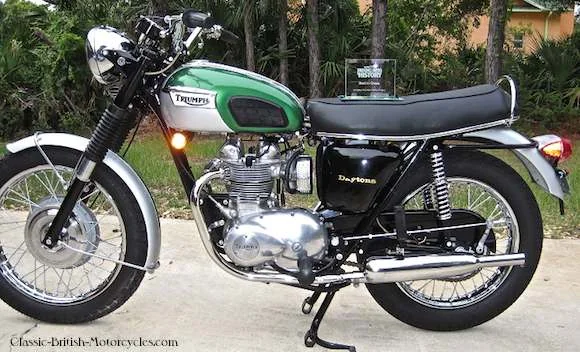
Article Complete Info
| Articleid | 430941 |
|---|---|
| Category | Allround |
| Make | Triumph |
| Model | Daytona 500 |
| Year | 1966 |
Chassis, Suspension, Brakes & Wheels
| Frametype | Doble cradle |
|---|---|
| Frontbrakes | Expanding brake (drum brake) |
| Frontsuspension | Telescopic fork |
| Rearbrakes | Expanding brake (drum brake) |
| Rearsuspension | Two schock |
| Seat | Dual |
Engine & Transmission
| Borexstroke | 69.0 x 65.5 mm (2.7 x 2.6 inches) |
|---|---|
| Clutch | Wet multiplate |
| Compression | 9.0:1 |
| Coolingsystem | Air |
| Displacement | 490.00 ccm (29.90 cubic inches) |
| Enginedetails | Twin, four-stroke |
| Fuelsystem | Carburettor |
| Power | 39.00 HP (28.5 kW)) @ 7400 RPM |
| Transmissiontypefinaldrive | Chain |
Physical Measures & Capacities
| Dryweight | 153.0 kg (337.3 pounds) |
|---|---|
| Powerweightratio | 0.2549 HP/kg |
About Triumph Daytona 500 1966
Introducing the 1966 Triumph Daytona 500
The 1966 Triumph Daytona 500 is a classic motorcycle that perfectly embodies the spirit of the mid-60s British motorcycle movement. Positioned as an all-rounder, the Daytona 500 was designed to cater to both enthusiast riders and everyday commuters, showcasing Triumph's commitment to quality craftsmanship and innovative engineering. With its sleek lines and iconic design, this motorcycle not only captures the eye but also delivers a thrilling riding experience that has made it a beloved choice among collectors and vintage bike aficionados alike.
Engine Performance and Riding Characteristics
At the heart of the Daytona 500 lies a spirited 490cc twin-cylinder, four-stroke engine that produces a robust 39 horsepower at 7400 RPM. This power, combined with a compression ratio of 9.0:1, ensures that the motorcycle offers impressive acceleration and a responsive ride. The engine's air-cooling system keeps the performance consistent, while the carburettor fuel system allows for smooth power delivery. Riders will appreciate the engaging feel of the wet multiplate clutch, which offers a direct connection to the bike's chain final drive. The combination of lightweight construction at just 153 kg (337.3 pounds) and a power-to-weight ratio of 0.2549 HP/kg allows the Daytona 500 to handle corners with agility, making it a joy to ride through twisting roads or city streets alike.
Key Features and Technology
The Daytona 500 is equipped with a double cradle frame that provides stability and confidence on the road. Its telescopic front forks absorb bumps effectively, while the rear suspension features two shock absorbers that enhance ride comfort and handling. The motorcycle is outfitted with drum brakes at both the front and rear, ensuring reliable stopping power for its time. Its classic design is complemented by thoughtful touches, such as the elegant instrumentation that provides riders with essential information at a glance. The Daytona 500 not only serves as a reliable mode of transportation but also as a genuine piece of motorcycle history, representing the golden era of British engineering.
Pros and Cons of the 1966 Triumph Daytona 500
Pros:
- Classic Aesthetic: The iconic styling and vintage appeal make it a standout in any collection.
- Agile Handling: With a lightweight frame and responsive engine, it provides a spirited riding experience.
- Strong Community Support: The Daytona 500 benefits from a strong enthusiast community, making parts and restoration advice more accessible.
Cons:
- Drum Brakes: While reliable for their time, the drum brake system may feel less effective compared to modern disc brakes.
- Limited Power for High Speeds: The engine is not built for high-speed performance, making it less suitable for highway cruising compared to contemporary bikes.
- Maintenance Demands: As a vintage motorcycle, regular maintenance and care are necessary to keep it in optimal riding condition, which may deter some potential owners.
In summary, the 1966 Triumph Daytona 500 stands as a testament to the timeless allure of classic motorcycles, blending performance, style, and nostalgia into one remarkable package. Whether you're a seasoned rider or a newcomer to the world of vintage bikes, the Daytona 500 promises an exhilarating journey through both history and the open road.