
1969
Triumph Daytona 500 - Specifications & Review
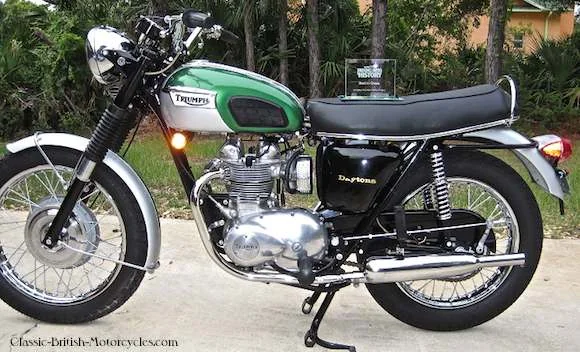
Article Complete Info
| Articleid | 276348 |
|---|---|
| Category | Allround |
| Make | Triumph |
| Model | Daytona 500 |
| Year | 1969 |
Chassis, Suspension, Brakes & Wheels
| Frontbrakes | Expanding brake (drum brake) |
|---|---|
| Frontsuspension | Telescopic fork |
| Rearbrakes | Expanding brake (drum brake) |
| Rearsuspension | Two schock |
Engine & Transmission
| Borexstroke | 69.0 x 65.5 mm (2.7 x 2.6 inches) |
|---|---|
| Clutch | Duplex |
| Compression | 9.0:1 |
| Coolingsystem | Air |
| Displacement | 490.00 ccm (29.90 cubic inches) |
| Enginedetails | Twin, four-stroke |
| Fuelsystem | Carburettor |
| Power | 39.00 HP (28.5 kW)) @ 7400 RPM |
| Transmissiontypefinaldrive | Chain |
Physical Measures & Capacities
| Dryweight | 153.0 kg (337.3 pounds) |
|---|---|
| Powerweightratio | 0.2549 HP/kg |
About Triumph
Country of Origin:
United Kingdom
Founder:
Siegfried Bettmann (original); modern Triumph Motorcycles Ltd.
Best Known For:
Modern classics (Bonneville), Speed/Street Triple, Tiger ADV, and rich heritage
Company History
Triumph rose, fell, and rose again—reinvented as a modern manufacturer blending heritage with sharp engineering. The Bonneville family anchors the brand with air-/liquid-cooled twins that feel timeless yet include ABS, ride modes, and refined fueling. The Speed/Street Triple lines defined playful, usable performance with characterful triples; Tiger ADV models carried that feel into distance. Triumph’s attention to finishing, dealer support, and approachable ergonomics built a wide audience—from new riders to veterans returning for a bike that feels special daily. Historically, Triumph proves that heritage can power innovation when it informs proportions, sound, and feel rather than dictating technology.