
Triumph Daytona 500 1967 - Specifications & Review
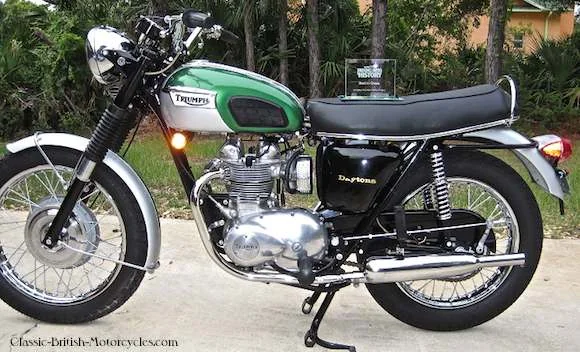
Article Complete Info
| Articleid | 652257 |
|---|---|
| Category | Allround |
| Make | Triumph |
| Model | Daytona 500 |
| Year | 1967 |
Chassis, Suspension, Brakes & Wheels
| Frontbrakes | Expanding brake (drum brake) |
|---|---|
| Frontsuspension | Telescopic fork |
| Rearbrakes | Expanding brake (drum brake) |
| Rearsuspension | Two schock |
| Seat | Dual |
Engine & Transmission
| Borexstroke | 69.0 x 65.5 mm (2.7 x 2.6 inches) |
|---|---|
| Clutch | Wet multiplate |
| Compression | 9.0:1 |
| Coolingsystem | Air |
| Displacement | 490.00 ccm (29.90 cubic inches) |
| Enginedetails | Twin, four-stroke |
| Fuelsystem | Carburettor |
| Power | 39.00 HP (28.5 kW)) @ 7400 RPM |
| Transmissiontypefinaldrive | Chain |
Physical Measures & Capacities
| Dryweight | 153.0 kg (337.3 pounds) |
|---|---|
| Powerweightratio | 0.2549 HP/kg |
About Triumph Daytona 500 1967
The 1967 Triumph Daytona 500 stands as a classic emblem of the British motorcycle renaissance, merging timeless design with robust engineering. Positioned as an all-rounder, this bike was crafted for enthusiasts who sought both performance and versatility. With its distinctive Triumph aesthetics, characterized by a sleek silhouette and iconic tank design, the Daytona 500 not only captured the hearts of riders but also carved out a niche in a market buzzing with competition. It epitomized the spirit of the 1960s, a decade marked by freedom, adventure, and the open road.
At the heart of the Daytona 500 lies a powerful 490cc twin-cylinder, four-stroke engine that produces a commendable 39 horsepower at 7400 RPM. This spirited power plant, with a compression ratio of 9.0:1, delivers a thrilling riding experience that resonates with the roar of classic British bikes. The air-cooled engine combines with a wet multiplate clutch and chain final drive, ensuring smooth power delivery and responsiveness. Riders can expect an exhilarating ride, whether navigating urban streets or carving through winding country roads, thanks to its lightweight design at just 153 kilograms (337.3 pounds) and a power-to-weight ratio that invites spirited acceleration.
The Daytona 500 is equipped with features that reflect the technological advancements of its time. Its telescopic front fork and dual shock rear suspension offer a balance of comfort and stability, ensuring that riders can tackle diverse terrains with confidence. The bike's drum brakes—while not as advanced as modern disc systems—provide reliable stopping power, embodying the charm of vintage engineering. The classic carburettor fuel system adds a touch of nostalgia, delivering that quintessential riding feel that many enthusiasts cherish. Whether you're a collector or a casual rider, the Daytona 500 promises an authentic experience that resonates with the golden age of motorcycling.
Pros:
- Iconic Design: The classic aesthetic and styling make it a standout on the road, appealing to vintage motorcycle lovers.
- Responsive Performance: With a lively engine and lightweight chassis, the Daytona 500 offers an engaging riding experience that is both fun and thrilling.
- Versatile Use: As an all-rounder, it excels in various riding conditions, from city commuting to spirited country rides.
Cons:
- Drum Brakes: While adequate for its time, drum brakes may not provide the stopping power and reliability expected by modern riders.
- Limited Power: At 39 HP, some riders might find the performance lacking compared to contemporary motorcycles with higher displacement and power.
- Maintenance Needs: The carburettor system requires regular tuning and maintenance, which may deter some riders accustomed to modern fuel injection systems.
The 1967 Triumph Daytona 500 remains a cherished classic, embodying the spirit of adventure and the thrill of riding in a bygone era, making it a desirable addition to any motorcycle enthusiast's collection.