
Triumph Daytona 500 1969 - Specifications & Review
Article Complete Info
| Articleid | 276348 |
|---|---|
| Category | Allround |
| Make | Triumph |
| Model | Daytona 500 |
| Year | 1969 |
Chassis, Suspension, Brakes & Wheels
| Frontbrakes | Expanding brake (drum brake) |
|---|---|
| Frontsuspension | Telescopic fork |
| Rearbrakes | Expanding brake (drum brake) |
| Rearsuspension | Two schock |
Engine & Transmission
| Borexstroke | 69.0 x 65.5 mm (2.7 x 2.6 inches) |
|---|---|
| Clutch | Duplex |
| Compression | 9.0:1 |
| Coolingsystem | Air |
| Displacement | 490.00 ccm (29.90 cubic inches) |
| Enginedetails | Twin, four-stroke |
| Fuelsystem | Carburettor |
| Power | 39.00 HP (28.5 kW)) @ 7400 RPM |
| Transmissiontypefinaldrive | Chain |
Physical Measures & Capacities
| Dryweight | 153.0 kg (337.3 pounds) |
|---|---|
| Powerweightratio | 0.2549 HP/kg |
About Triumph Daytona 500 1969
The Timeless Triumph Daytona 500: A Classic Allrounder
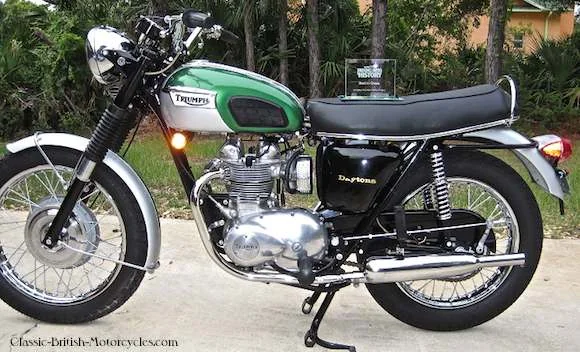
Launched in 1969, the Triumph Daytona 500 carved out its niche as a versatile allround motorcycle, appealing to riders with a penchant for both spirited performance and everyday practicality. With its gleaming chrome accents and classic British styling, the Daytona 500 captures the essence of late '60s motorcycling, offering a blend of nostalgia and modern engineering for its time. Positioned in a competitive market, it stood out with its robust build quality and user-friendly design, making it a popular choice among both novice riders and seasoned enthusiasts alike.
At the heart of the Daytona 500 lies a potent 490cc twin-cylinder, four-stroke engine that delivers an impressive 39 horsepower at 7400 RPM. This power is harnessed through a reliable chain final drive, providing a smooth transfer of energy. Riders can expect a lively throttle response and a thrilling ride experience, thanks to the bike's 9.0:1 compression ratio and well-designed carburettor fuel system. With a power-to-weight ratio of 0.2549 HP/kg, the Daytona offers a balanced blend of performance and handling, ensuring that both city commutes and winding country roads are met with enthusiasm.
The Daytona 500 is not just about power; it also features a thoughtfully engineered chassis and suspension system. Equipped with a telescopic fork in the front and dual shock absorbers in the rear, this motorcycle promises a comfortable ride, absorbing bumps and imperfections in the road with grace. The expanding drum brakes on both the front and rear offer reliable stopping power, a nod to the classic designs of the era. The Daytona's lightweight construction, tipping the scales at 153 kg (337.3 pounds), enhances its agility and maneuverability, making it a joy to ride for both experienced and novice motorcyclists.
#### Pros and Cons of the Triumph Daytona 500:
Pros:
- Nostalgic Design: The classic styling and chrome detailing make the Daytona a head-turner and a favorite among vintage motorcycle enthusiasts.
- Balanced Performance: With its efficient engine and manageable power delivery, the Daytona 500 is perfect for both city commuting and weekend rides.
- Comfortable Ride: The well-designed suspension system provides excellent comfort, making long rides enjoyable.
Cons:
- Drum Brakes: While adequate for the era, the drum brakes may not offer the same stopping power and responsiveness as modern disc brakes.
- Limited Power: With only 39 HP, some riders may find it lacks the punch for more aggressive performance compared to contemporary motorcycles.
- Maintenance: As a vintage model, finding parts and maintaining the Daytona 500 may require more effort and dedication, especially for those not familiar with classic bike mechanics.
In summary, the 1969 Triumph Daytona 500 remains a beloved classic that embodies the spirit of its time, offering a delightful ride experience bolstered by its distinctive style and solid engineering. Whether you're a collector or simply a fan of classic motorcycles, the Daytona 500 is a must-see piece of motorcycling history that continues to inspire and excite.