
Triumph Daytona 500 1968 - Specifications & Review
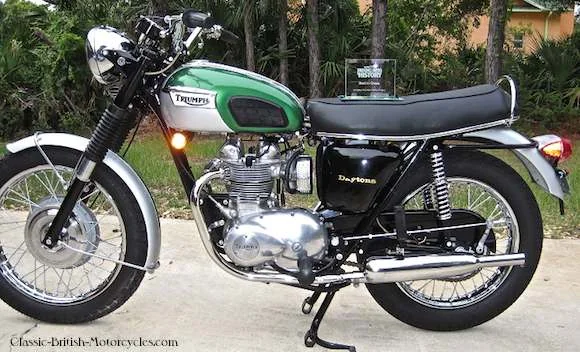
Article Complete Info
| Articleid | 686183 |
|---|---|
| Category | Allround |
| Make | Triumph |
| Model | Daytona 500 |
| Year | 1968 |
Chassis, Suspension, Brakes & Wheels
| Frontbrakes | Expanding brake (drum brake) |
|---|---|
| Frontsuspension | Telescopic fork |
| Rearbrakes | Expanding brake (drum brake) |
| Rearsuspension | Two schock |
| Seat | Dual |
Engine & Transmission
| Borexstroke | 69.0 x 65.5 mm (2.7 x 2.6 inches) |
|---|---|
| Clutch | Duplex |
| Compression | 9.0:1 |
| Coolingsystem | Air |
| Displacement | 490.00 ccm (29.90 cubic inches) |
| Enginedetails | Twin, four-stroke |
| Fuelsystem | Carburettor |
| Power | 39.00 HP (28.5 kW)) @ 7400 RPM |
| Transmissiontypefinaldrive | Chain |
Physical Measures & Capacities
| Dryweight | 153.0 kg (337.3 pounds) |
|---|---|
| Powerweightratio | 0.2549 HP/kg |
About Triumph Daytona 500 1968
Introducing the 1968 Triumph Daytona 500, a true classic motorcycle that stands as a testament to British engineering and style. Positioned in the allround category, the Daytona 500 was designed to cater to riders seeking versatility without compromising on performance. This model epitomizes the spirit of the late 1960s, an era marked by a burgeoning motorcycle culture that celebrated freedom and adventure. With its iconic design and performance capabilities, the Daytona 500 has secured its place in the hearts of enthusiasts and collectors alike.
At the heart of the Daytona 500 is a robust 490cc twin-cylinder, four-stroke engine that produces a spirited 39 horsepower at 7400 RPM. The engine's 9.0:1 compression ratio ensures that it delivers a thrilling ride with a distinctive character, making it perfect for both spirited twisty roads and casual cruising. Riders will appreciate the responsive power delivery and smooth operation, thanks to the air-cooled design and carburettor-fed fuel system. With a weight of just 153 kg (337.3 pounds), the Daytona 500 boasts an impressive power-to-weight ratio of 0.2549 HP/kg, allowing for agile handling and a dynamic riding experience that keeps riders engaged and excited.
The Triumph Daytona 500 is equipped with features that were cutting-edge for its time, combining practicality with style. The classic telescopic front fork and dual rear shocks provide a comfortable ride, while the expanding drum brakes—both front and rear—offer reliable stopping power, instilling confidence even in less-than-ideal conditions. Its stylish lines and chrome accents reflect the era's aesthetic, ensuring that it turns heads wherever it goes. Whether you’re navigating city streets or tackling country roads, the Daytona 500 delivers a delightful blend of vintage charm and modern performance.
PROs:
- Iconic Design: The Daytona 500 features a classic aesthetic that appeals to vintage motorcycle enthusiasts and collectors.
- Agile Handling: Weighing only 153 kg, this motorcycle offers excellent maneuverability and responsiveness, making it a joy to ride.
- Robust Engine Performance: With 39 horsepower on tap, the twin-cylinder engine provides a thrilling experience suitable for various riding conditions.
CONs:
- Limited Braking Technology: The drum brakes, while reliable, may not offer the stopping power found in more modern disc brake systems, which can be a concern for some riders.
- Basic Suspension: While the telescopic fork and dual shocks provide decent comfort, they may not match the performance of contemporary suspension systems in terms of adjustability and handling.
- Maintenance Requirements: The carburettor and air-cooled engine may necessitate more regular maintenance compared to modern fuel-injected alternatives, which could deter some potential buyers.
In summary, the 1968 Triumph Daytona 500 is more than just a motorcycle; it’s a piece of history that encapsulates the spirit of its time. Whether you’re a seasoned rider or a collector, the Daytona 500 remains a captivating choice that offers both nostalgia and performance.