
Triumph Daytona 750 (reduced effect #2) 1992 - Specifications & Review
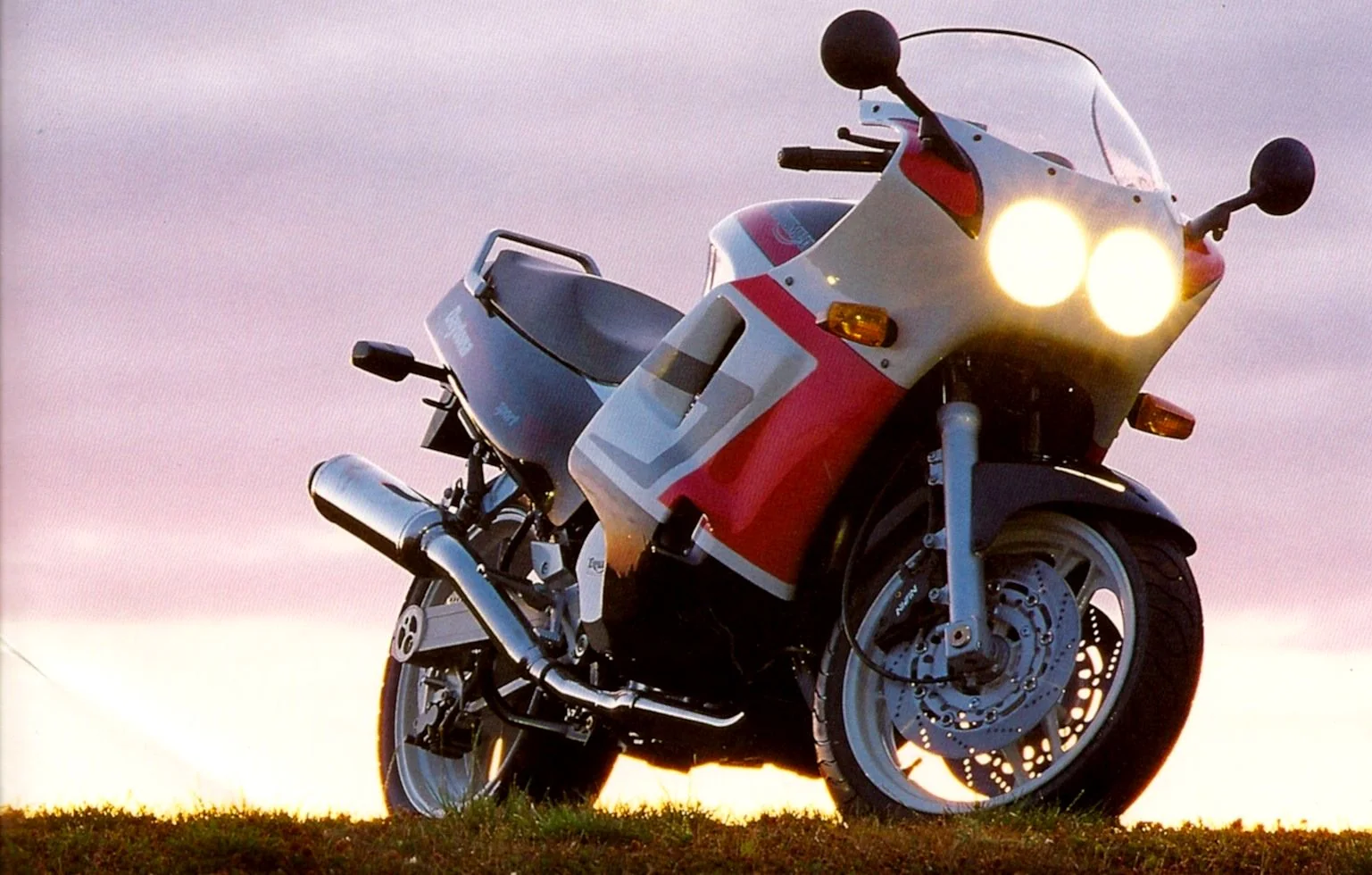
Article Complete Info
| Articleid | 458980 |
|---|---|
| Category | Unspecified category |
| Make | Triumph |
| Model | Daytona 750 (reduced effect #2) |
| Year | 1992 |
Chassis, Suspension, Brakes & Wheels
| Frontbrakes | Dual disc |
|---|---|
| Fronttyre | 120/70-17 |
| Rearbrakes | Single disc |
| Reartyre | 160/60-18 |
Engine & Transmission
| Borexstroke | 76.0 x 55.0 mm (3.0 x 2.2 inches) |
|---|---|
| Compression | 11.0:1 |
| Coolingsystem | Liquid |
| Displacement | 748.00 ccm (45.64 cubic inches) |
| Enginedetails | In-line three, four-stroke |
| Gearbox | 6-speed |
| Power | 27.00 HP (19.7 kW)) @ 7000 RPM |
| Transmissiontypefinaldrive | Chain |
| Valvespercylinder | 4 |
Physical Measures & Capacities
| Fuelcapacity | 25.00 litres (6.61 gallons) |
|---|---|
| Weightincloilgasetc | 260.0 kg (573.2 pounds) |
About Triumph Daytona 750 (reduced effect #2) 1992
Introducing the 1992 Triumph Daytona 750, a motorcycle that perfectly captures the essence of the early '90s sport bike evolution. With its distinctive styling and spirited performance, the Daytona 750 was Triumph's answer to the growing demand for versatile, high-performance motorcycles. Positioned as an entry-level sport bike, it effectively blends approachable handling with a robust character, making it an attractive choice for both novice riders and seasoned enthusiasts looking for a reliable companion on the road.
At the heart of the Daytona 750 lies a potent 748 cc in-line three engine, delivering a respectable 27 horsepower at 7,000 RPM. This four-stroke powerplant, with its 11.0:1 compression ratio and 4 valves per cylinder, offers a thrilling ride with a unique sound that characterizes Triumph's engineering prowess. The power is delivered seamlessly through a 6-speed gearbox, allowing riders to explore the bike's capabilities across a range of speeds and terrains. The bike's liquid cooling system ensures optimal performance, even during those long summer rides, while the lightweight chassis, weighing in at 260 kg (573 lbs) with fluids, enhances agility and control. With a fuel capacity of 25 liters (6.61 gallons), the Daytona 750 is ready for extended adventures without frequent stops at the pump.
The Daytona 750 is adorned with features that reflect Triumph's commitment to both performance and rider comfort. The dual disc front brakes offer powerful stopping power, while the rear single disc provides reliable deceleration, ensuring confidence on twisty roads and city routes alike. The bike’s suspension setup provides a balanced ride, absorbing bumps and imperfections while still allowing for spirited cornering. The ergonomics of the Daytona 750 are designed to cater to a wide range of riders, making it an easy motorcycle to maneuver, whether you're navigating through traffic or carving up your favorite mountain roads.
PROs:
- Engaging Power Delivery: The 748 cc engine provides an exciting ride, with a smooth power band and responsive throttle.
- Agile Handling: The lightweight design makes it nimble and easy to handle, perfect for both new and experienced riders.
- Classic Triumph Aesthetics: Timeless styling combined with classic Triumph craftsmanship makes the Daytona 750 a head-turner.
CONs:
- Limited Power Output: With only 27 HP, it may feel underwhelming for riders seeking more high-performance thrills.
- Unspecified Category: As an unspecified category bike, it might not meet the strict requirements of some racing events or classifications.
- Heavier Weight for a Sportbike: At 260 kg, it might feel heavier compared to its modern sportbike counterparts, especially during low-speed maneuvers.
In summary, the 1992 Triumph Daytona 750 is a blend of classic design and engaging performance, making it a noteworthy choice for those looking to experience the joy of motorcycling in a package that’s both stylish and approachable.