Miami, FL Motorcycle Parking and Lane-Splitting Update 2026: What New City Ordinances Mean for Riders Commuting Through Dade and Broward Counties
South Florida has long been a year-round riding paradise — warm weather, coastal scenery, and a culture that embraces two wheels. But anyone who's tried to commute on a motorcycle through Miami, Fort Lauderdale, or the dense urban corridors connecting Dade and Broward Counties knows the frustration firsthand: gridlocked highways, scarce parking, and a legal gray area around lane positioning that has left riders uncertain about their rights and responsibilities. In 2026, a wave of new and updated local ordinances is changing the game, and understanding what's actually on the books — and what's still being debated — is essential for every commuter on two wheels.
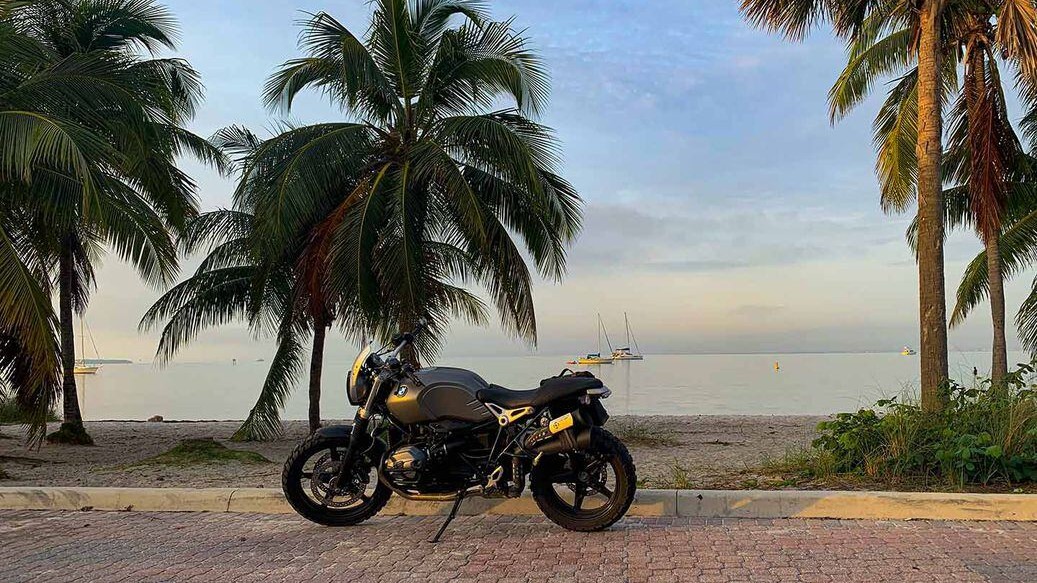
Hero image showing a motorcyclist riding through Miami urban traffic
Motorcycle Parking in Miami: What the New Ordinances Actually Say
One of the most rider-friendly developments coming out of Miami-Dade County in 2026 involves designated motorcycle parking. For years, motorcyclists have faced a frustrating paradox: meters and parking garages designed for cars charged the same rate regardless of the vehicle's footprint, and enforcement was inconsistently applied when riders parked in ways that made practical sense but technically violated posted rules.
Updated city ordinances in the City of Miami now formally recognize shared motorcycle parking spaces in select high-density districts, including parts of Brickell, Wynwood, and the Downtown core. Under the revised framework, certain metered spaces can legally accommodate up to three motorcycles simultaneously, with each bike paying a proportional rate rather than the full car-space fee. This brings Miami in closer alignment with practices already seen in cities like San Francisco and Washington, D.C.
For riders commuting into the urban core, this is significant. The practical upshot is that you may no longer need to hunt for a rare free curb spot or risk a ticket for parking in a manner that seemed logical but wasn't explicitly permitted. That said, the rollout is ongoing, and not all municipal garages have updated their signage or enforcement protocols yet. Check with the Miami Parking Authority and local rider groups for the most current map of compliant spaces, as these are being added in phases throughout 2026.
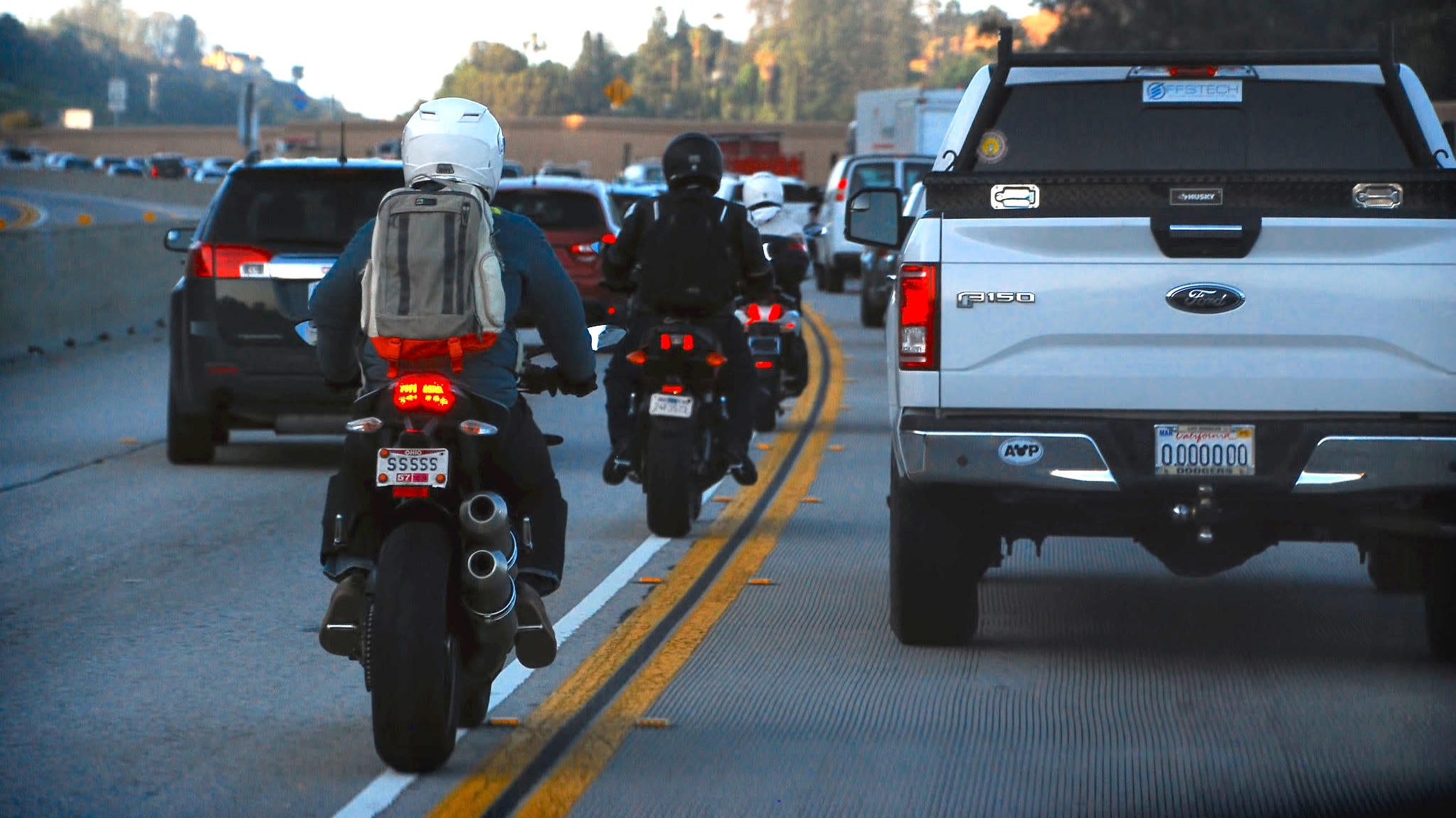
Illustrative image of lane filtering or splitting concept on a busy freeway
Broward County Parking: A Patchwork to Navigate
Broward County presents a more fragmented picture. Fort Lauderdale, Hollywood, and Pompano Beach each operate under their own municipal codes, and the 2026 updates have not been uniformly adopted across county lines. Fort Lauderdale has signaled interest in following Miami-Dade's lead, particularly around the Las Olas corridor and the downtown entertainment district, but as of mid-2026, formal shared-space designations remain limited. Riders commuting through Broward are advised to verify local rules municipality by municipality and to keep documentation of any applicable city code sections accessible — a best practice when parking regulations are in flux.
Lane Splitting and Lane Filtering: Florida's Evolving Legal Landscape
Here is where things get both exciting and complicated. Florida has historically been one of the states where lane splitting — riding between lanes of same-direction traffic — is explicitly illegal. Unlike California, which formally legalized lane splitting in 2016, or Utah and Montana, which have passed lane-filtering laws allowing riders to move through stopped traffic, Florida has kept riders firmly in their lanes. That legal reality has not changed in full as of 2026, but the conversation has moved significantly.
A lane-filtering bill modeled loosely on Utah's approach was introduced in the Florida Legislature in the 2025-2026 session. The proposal would allow motorcyclists to filter through stopped or very slow-moving traffic (typically defined as vehicles traveling under 5 mph) at a maximum filtering speed of 15 mph, on roads with posted speed limits of 45 mph or higher, when it is safe to do so. The bill has garnered support from rider advocacy groups including the Florida chapter of the American Motorcyclist Association and has received a warmer reception than previous attempts, though it had not been signed into law as of the time of this writing.
What This Means for Miami-Dade and Broward Commuters Right Now
Until and unless a statewide filtering law passes, lane splitting and filtering remain illegal on Florida roads, including I-95, the Palmetto Expressway, US-1, and every other arterial that Miami and Broward commuters rely on daily. Enforcement in South Florida has historically been inconsistent, but that is not a legal defense, and citations carry real consequences including points on your license.
Do not lane split or filter on Florida roads unless and until a law explicitly permitting it is enacted and in effect.
Follow legislative updates through the Florida Legislature's official website and rider advocacy organizations — check local organizers and AMA Florida chapter updates for the latest bill status.
Even in states where filtering is legal, the rules come with specific conditions; study those conditions carefully if the law passes so you understand exactly what is and isn't permitted.
In the meantime, legal tools like using HOV lanes where motorcycles qualify, adjusting departure times to avoid peak gridlock, and utilizing the 836/Dolphin Expressway or 595 express lanes can meaningfully reduce commute times.
Practical Tips for South Florida Motorcycle Commuters in 2026
Beyond the legislative headlines, there are practical steps riders can take right now to commute smarter and safer through Dade and Broward.
Know Your Parking Rights
Download the Miami Parking Authority app, which is being updated in 2026 to flag motorcycle-specific spaces as they come online.
In Broward, photograph your parking configuration if it's unconventional — timestamped photos can be useful context if a citation is disputed.
Attend local rider meetups and forum threads (check local organizers and Facebook groups like South Florida Riders and Miami Motorcycle Club pages) where members regularly share real-time parking intel.
Stay Visible and Defensively Positioned
South Florida traffic is notoriously aggressive, and even without lane filtering, your lane positioning within a single lane matters enormously. Riding in the left third of your lane on multi-lane roads improves your visibility to merging drivers and gives you an escape route to the right. High-visibility gear, especially in the dense stop-and-go of US-1 through Coral Gables or Federal Highway through Broward, is not just fashion — it's survival strategy.
Engage with Local Advocacy
The lane-filtering bill's progress in Tallahassee will be significantly influenced by rider turnout, testimony, and organized advocacy. Groups like the Motorcycle Riders Foundation, the AMA, and Florida-specific clubs have been active in pushing this legislation forward. Attending public comment sessions, contacting your state representative, and supporting riders' rights organizations are all direct ways South Florida riders can influence the outcome. Check local organizers for upcoming advocacy events and Tallahassee ride-ins, which have historically coincided with legislative sessions.
Looking Ahead: The Road to Smarter Motorcycle Policy in South Florida
Miami's parking reforms and the ongoing lane-filtering debate represent a broader shift in how Florida is beginning to think about motorcycle commuting — not as an edge-case novelty, but as a legitimate traffic solution in a region that desperately needs them. With some of the worst congestion in the country concentrated along the I-95 and I-595 corridors, and with motorcycle ownership continuing to climb in South Florida's perpetual summer, pressure on lawmakers and city planners to accommodate two-wheeled commuters is only going to grow.
For now, ride smart, park strategically, and stay plugged into the legislative process. The rules of the road in South Florida are actively being rewritten, and riders who pay attention will be best positioned to benefit when the next chapter is signed into law.