
1960
Ariel HT5 500 Trials - Specifications & Review
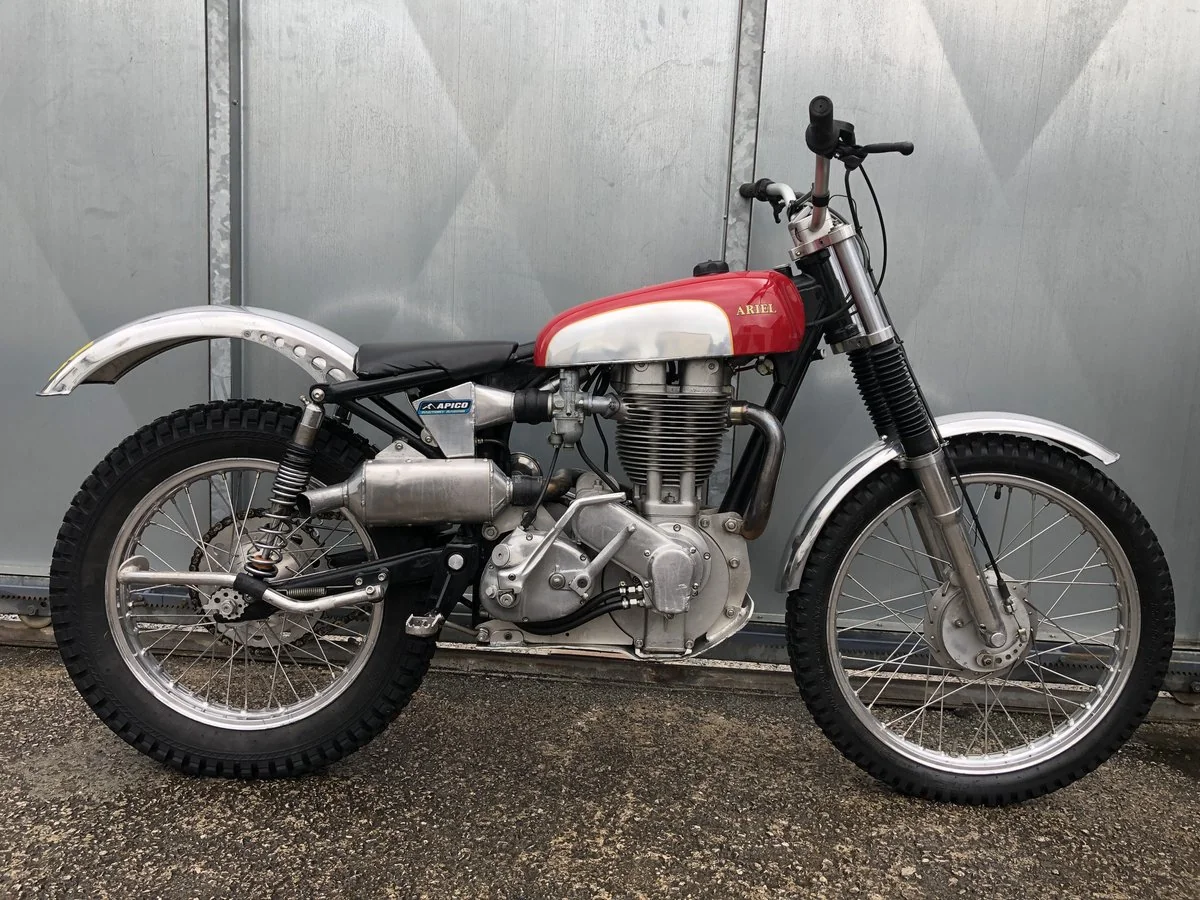
Article Complete Info
| Articleid | 574690 |
|---|---|
| Category | Enduro-offroad |
| Make | Ariel |
| Model | HT5 500 Trials |
| Year | 1960 |
Chassis, Suspension, Brakes & Wheels
| Frametype | Single cradle |
|---|---|
| Frontbrakes | Expanding brake (drum brake) |
| Frontbrakesdiameter | 152 mm (6.0 inches) |
| Frontsuspension | Telescopic fork |
| Fronttyre | 2.75-21 |
| Rearbrakes | Expanding brake (drum brake) |
| Rearbrakesdiameter | 152 mm (6.0 inches) |
| Rearsuspension | Swing arm, hydraulic dampers |
| Reartyre | 4.00-19 |
| Seat | Single seat |
| Wheels | Wire spoked |
Engine & Transmission
| Coolingsystem | Air |
|---|---|
| Displacement | 497.00 ccm (30.33 cubic inches) |
| Enginedetails | Single cylinder, four-stroke |
| Exhaustsystem | 1-into-1 pipe |
| Fuelsystem | Carburettor. Monoblock |
| Gearbox | 4-speed |
| Power | 24.94 HP (18.2 kW)) @ 6000 RPM |
| Transmissiontypefinaldrive | Chain |
Other Specifications
| Starter | Kick |
|---|
Physical Measures & Capacities
| Dryweight | 132.0 kg (291.0 pounds) |
|---|---|
| Groundclearance | 220 mm (8.7 inches) |
| Powerweightratio | 0.1889 HP/kg |
About Ariel
Country of Origin:
United Kingdom
Founder:
James Starley & William Hillman (bicycles); later Ariel Motorcycles under Charles Sangster
Best Known For:
Square Four tourers, Red Hunter singles, and innovative early designs
Company History
Ariel is among Britain’s most storied names, moving from bicycles to motorcycles in the brass era and innovating through several epochs. The Red Hunter singles set a standard for sporting roadsters, while Edward Turner’s Square Four delivered creamy long-distance power from a compact four-cylinder layout. Postwar Ariels carried commuters and enthusiasts alike, with alloy cylinders and tidy frames that showcased the firm’s engineering finesse. The two-stroke Leader/Arrow of the late 1950s pushed modernity—enclosed bodywork, pressed steel, unit construction—foreshadowing scooters and lightweight commuters. Industry headwinds and consolidation into BSA/Triumph eventually ended motorcycle production in the late 1960s. In the 21st century, the Ariel name returned on radical lightweight cars and a boutique V-4 motorcycle prototype, channeling the brand’s historic appetite for bold design. Historically, Ariel symbolizes British ingenuity: elegant solutions to packaging and power delivery, a willingness to try new materials and layouts, and an understanding that motorcycles could be both fast and refined. A well-sorted Square Four remains a bucket-list ride—silky midrange, dignified pace, and the sense of traveling with civilized authority.