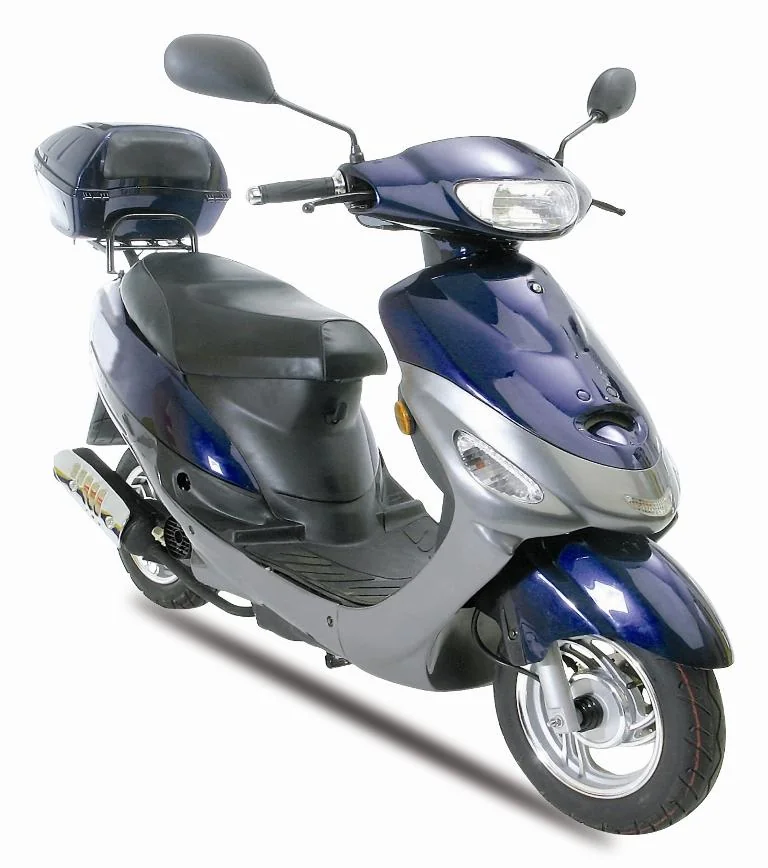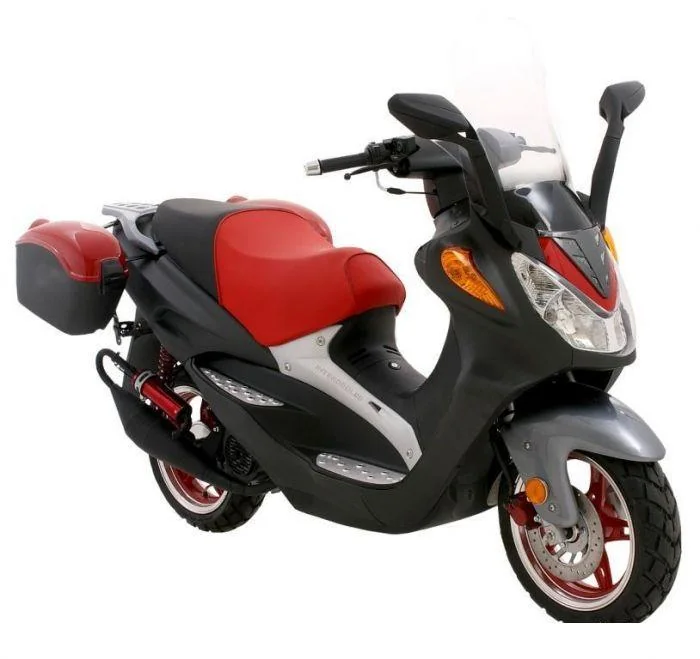
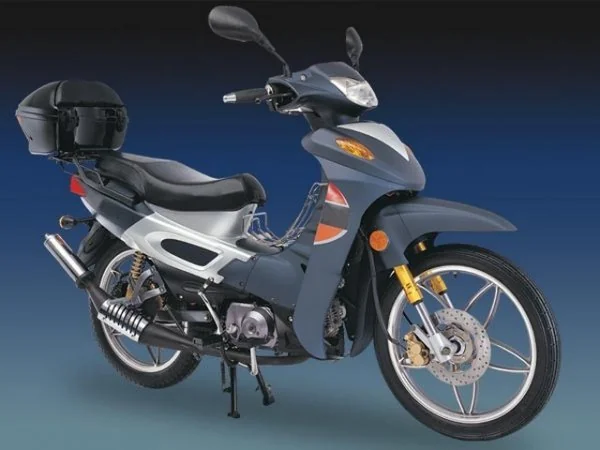
Azel Aries 50
Years: 2009 – 2010
Azel is emblematic of the private-label scooter phenomenon that spread across Europe in the 2000s: import reliable mechanical platforms from Asia, adjust lighting and emissions to EU regulations, and brand them under market-friendly names. The value proposition was clear—new, warrantied mobility at prices that undercut legacy marques, supported by local parts shelves and straightforward maintenance. Azel-badged scooters targeted students, delivery riders, and commuters who needed under-seat storage, CVT simplicity, and the ability to shrug off daily use. As the segment matured, distributors improved QC, wiring robustness, and panel fit, narrowing the gap with established competitors. While Azel never chased racing prestige, its impact shows in kilometers ridden rather than headlines. Historically, badges like Azel demonstrate how supply chains democratize transport: a handful of engine families, frames, and brake systems can be configured into credible urban appliances that keep cities moving. The brand’s story is also a caution: aftersales matters. Where importers invested in documentation and spares, ownership was smooth; where they did not, the badge disappeared, leaving only the lesson that mobility’s value is measured over years, not just at the cash register.