
2017
Boss Hoss BHC-3 LS3 - Specifications & Review
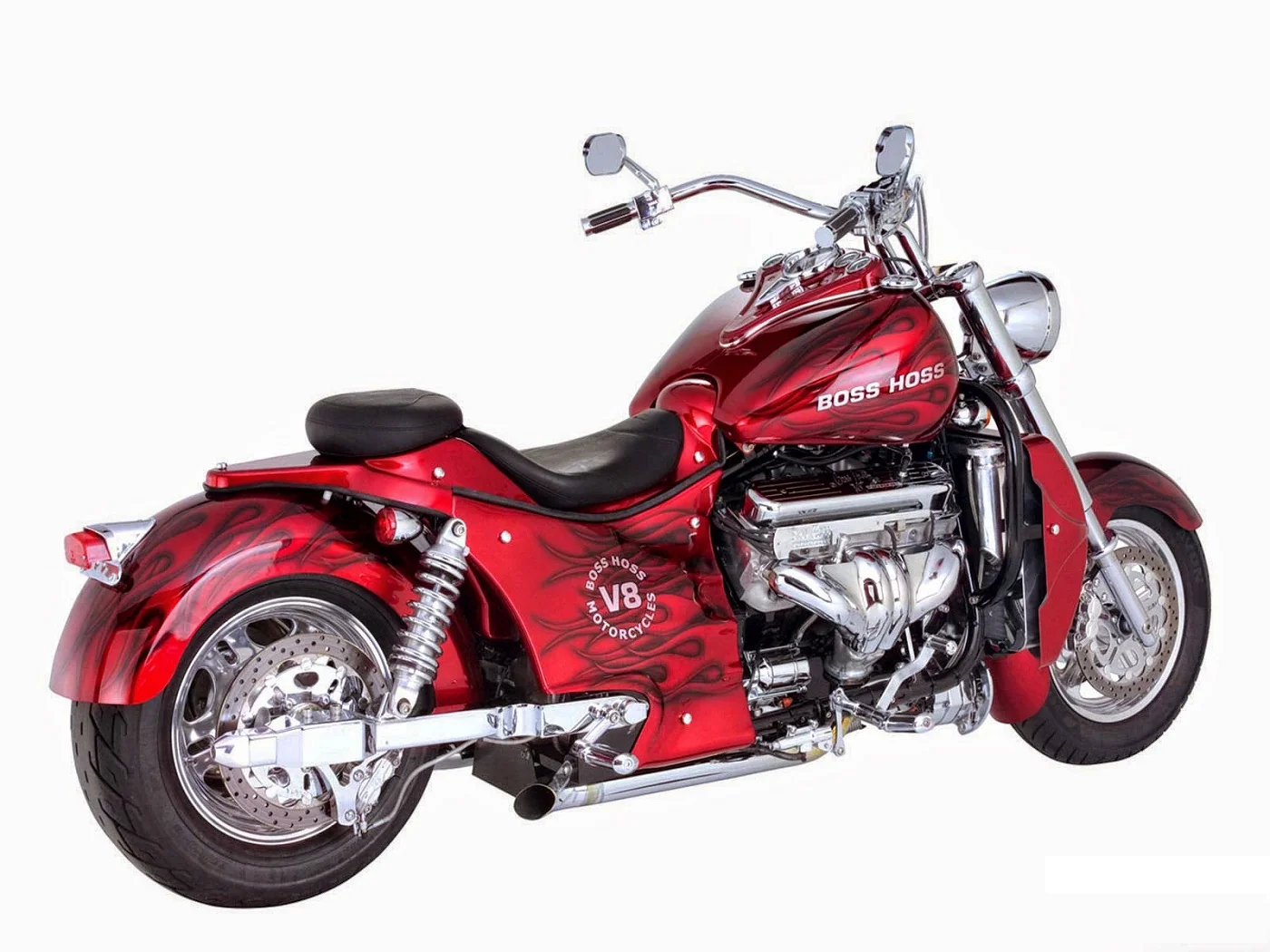
Article Complete Info
| Articleid | 475367 |
|---|---|
| Category | Custom-cruiser |
| Make | Boss Hoss |
| Model | BHC-3 LS3 |
| Year | 2017 |
Chassis, Suspension, Brakes & Wheels
| Frontbrakes | Double disc. Dual 4-piston caliper |
|---|---|
| Frontsuspension | Inverted forks, 63 mm, adjustable preload |
| Fronttyre | 130/90-16 |
| Rake | 33.0° |
| Rearbrakes | Single disc. 2-piston caliper |
| Rearsuspension | Dual coilover shocks, adjustable preload |
| Reartyre | 300/35-18 |
| Rearwheeltravel | 330 mm (13.0 inches) |
Engine & Transmission
| Compression | 10.7:1 |
|---|---|
| Coolingsystem | Liquid |
| Displacement | 6200.00 ccm (378.32 cubic inches) |
| Driveline | 2-speed semi-auto transmission. Final drive: Gates polychain belt. |
| Enginedetails | V8, four-stroke |
| Enginetype | Aluminum block - 6 bolt main. Aluminum cylinders |
| Exhaustsystem | 2.5 inch with dual mufflers |
| Fuelconsumption | 8.55 litres/100 km (11.7 km/l or 27.51 mpg) |
| Fuelsystem | Injection. MPFI |
| Gearbox | Automatic |
| Greenhousegases | 198.4 CO2 g/km. (CO2 - Carbon dioxide emission) |
| Power | 445.00 HP (324.8 kW)) @ 5750 RPM |
| Torque | 603.42 Nm (61.5 kgf-m or 445.1 ft.lbs) @ 4750 RPM |
| Transmissiontypefinaldrive | Belt |
Other Specifications
| Coloroptions | Red/yellow/blue flames or custom color |
|---|---|
| Factorywarranty | 12 month., unlimited miles excluding engine and drivetrain |
| Starter | Electric |
Physical Measures & Capacities
| Dryweight | 528.4 kg (1,165.0 pounds) |
|---|---|
| Fuelcapacity | 32.00 litres (8.45 gallons) |
| Groundclearance | 114 mm (4.5 inches) |
| Overalllength | 2,616 mm (103.0 inches) |
| Overallwidth | 711 mm (28.0 inches) |
| Powerweightratio | 0.8421 HP/kg |
| Seatheight | 673 mm (26.5 inches) If adjustable, lowest setting. |
About Boss Hoss
Country of Origin:
United States
Founder:
Monte Warne
Best Known For:
Chevy V8-powered motorcycles and trikes with automatic transmissions
Company History
Boss Hoss took an idea that sounded like a dare—put a small-block Chevrolet V8 into a motorcycle—and turned it into a surprisingly rideable, fully supported product line. Founded in Tennessee by Monte Warne in the 1990s, the company engineered around the mass and heat of a car engine with oversized radiators, carefully distributed weight, and long wheelbases for stability. Automatic transmissions and belt or shaft final drive simplified operation, making the bikes less intimidating than their displacement suggests. The result is a riding experience that’s as much about torque as about speed: effortless roll-on, relaxed revs, and highway passing that feels like a shrug. Frames, brakes, and tires were all spec’d to handle the loads, while trike variants opened the experience to riders who preferred three wheels. Boss Hoss embraced its show-stopping identity—polished metal, custom paint, and the distinctive burble of a V8 at idle—but it also built the dealer and parts networks that transform spectacle into sustainable ownership. Purists may debate whether such machines are “motorcycles” in spirit; owners typically answer by racking up cross-country miles and telling stories at every fuel stop. Historically, Boss Hoss is important because it widened the definition of what a motorcycle can be, proving that outrageous ideas can be domesticated with good engineering and that emotional theater—sound, presence, and scale—can coexist with reliability. In a landscape dominated by optimization, Boss Hoss celebrates excess, and for its community, that’s precisely the point.