BMW Motorrad's Bold Leap Toward Semi-Autonomous Riding
BMW Motorrad has never been shy about pushing the boundaries of motorcycle technology. From the first mass-market ABS system on a bike back in 1988 to the sophisticated Dynamic ESA and radar-guided adaptive cruise control found on modern GS models, the German manufacturer has consistently led the industry in electronic innovation. Now, a newly filed patent suggests BMW is preparing to take its biggest technological step yet — a semi-autonomous rider assist system that could fundamentally change the relationship between rider and machine.
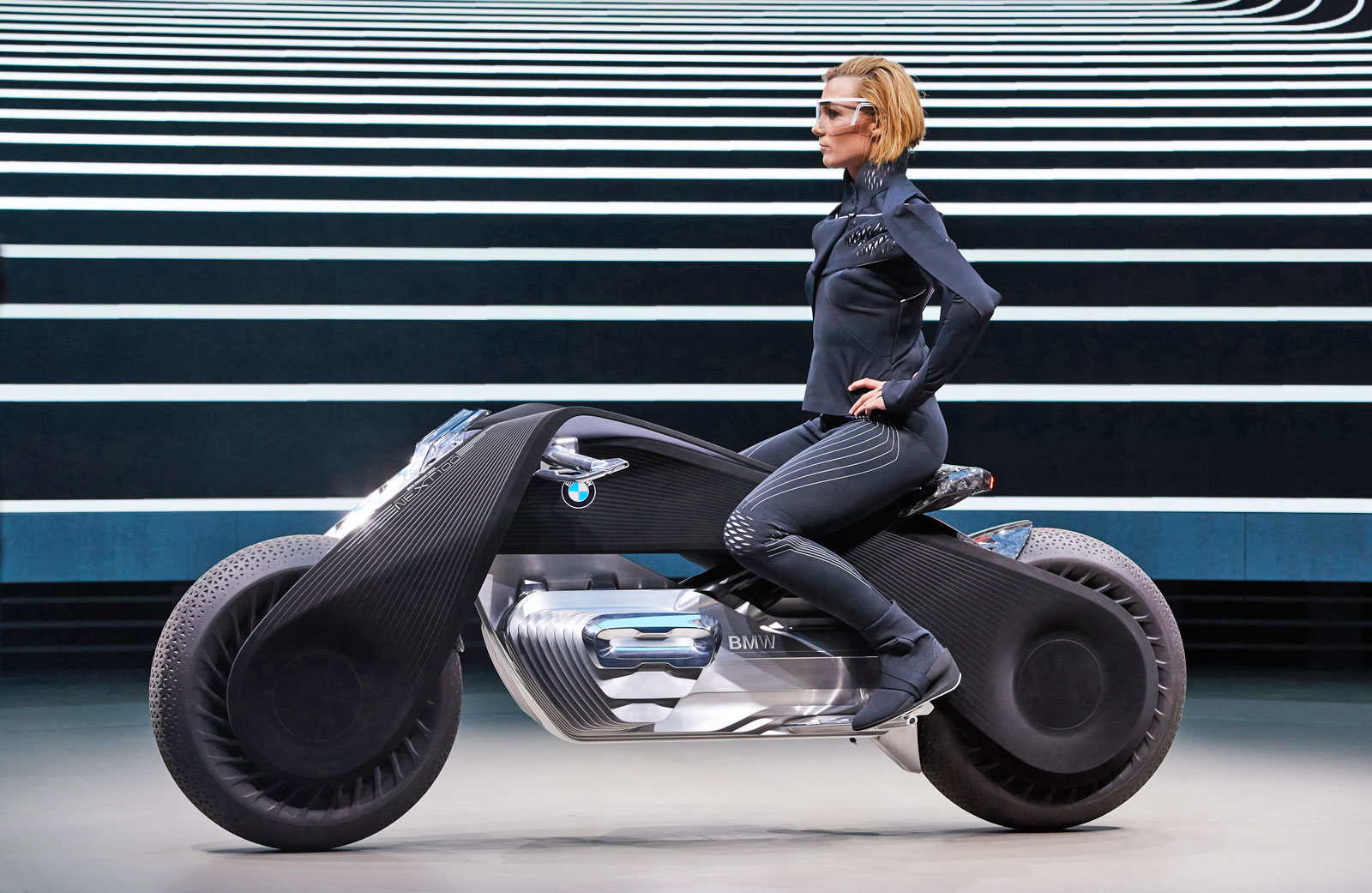
The patent, filed with the European Union Intellectual Property Office and the United States Patent and Trademark Office, describes a multi-layered system that integrates forward-facing radar, inertial measurement units, camera arrays, and vehicle-to-infrastructure (V2I) communication to create a ride management platform capable of making real-time adjustments without direct rider input. Industry analysts and patent watchers believe this technology is being developed with BMW's 2028 model range in mind.
What the Patent Actually Describes
Patent filings can be notoriously dense, but the core concept here is relatively clear. BMW's system appears to function across three distinct operational layers, each escalating the degree of autonomous intervention:
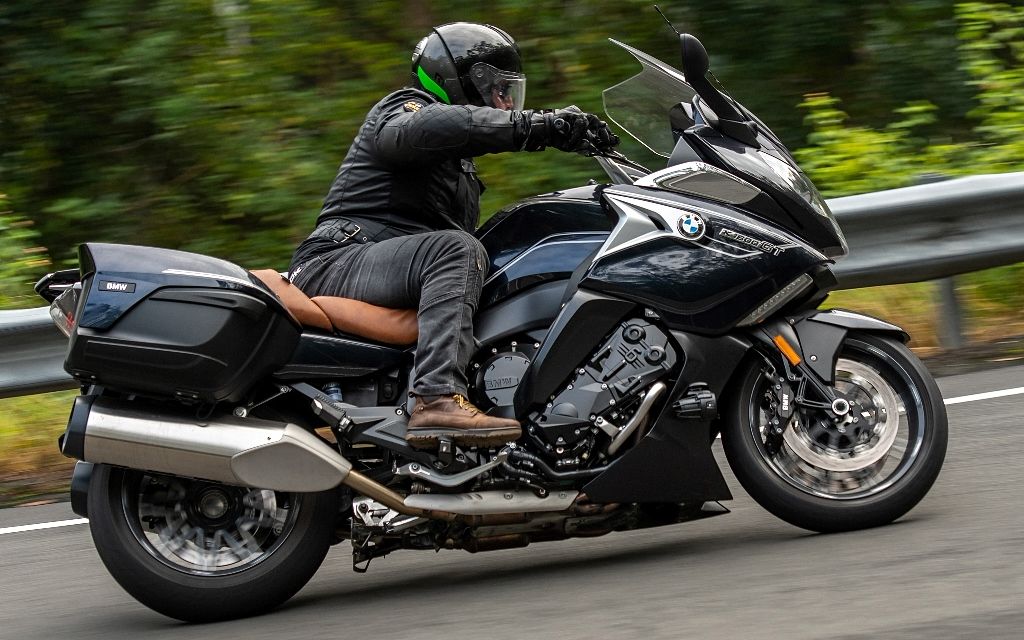
- Layer One – Predictive Hazard Detection: Using a combination of forward-facing radar (similar to what already exists on the BMW R1250RT and K1600 range) and a new stereo camera setup, the system continuously maps the road ahead for potential hazards including stopped vehicles, debris, adverse surface conditions, and junction conflicts.
- Layer Two – Dynamic Stability Intervention: When a hazard is detected, the system can pre-emptively adjust throttle response, pre-charge the brakes, stiffen suspension via semi-active dampers, and shift the bike's weight distribution through electronic preload adjustment — all before the rider consciously reacts.
- Layer Three – Guided Braking and Line Correction: In emergency scenarios, the patent describes the ability for the system to apply graduated braking autonomously and, most controversially, apply subtle steering torque through an electronically actuated handlebar actuator to guide the bike onto a safer trajectory.
It's that third layer — the steering torque actuator — that will raise the most eyebrows among riders. The idea of a motorcycle applying corrective steering without rider input ventures into territory that no production motorcycle has publicly claimed before.
How It Differs from Current Technology
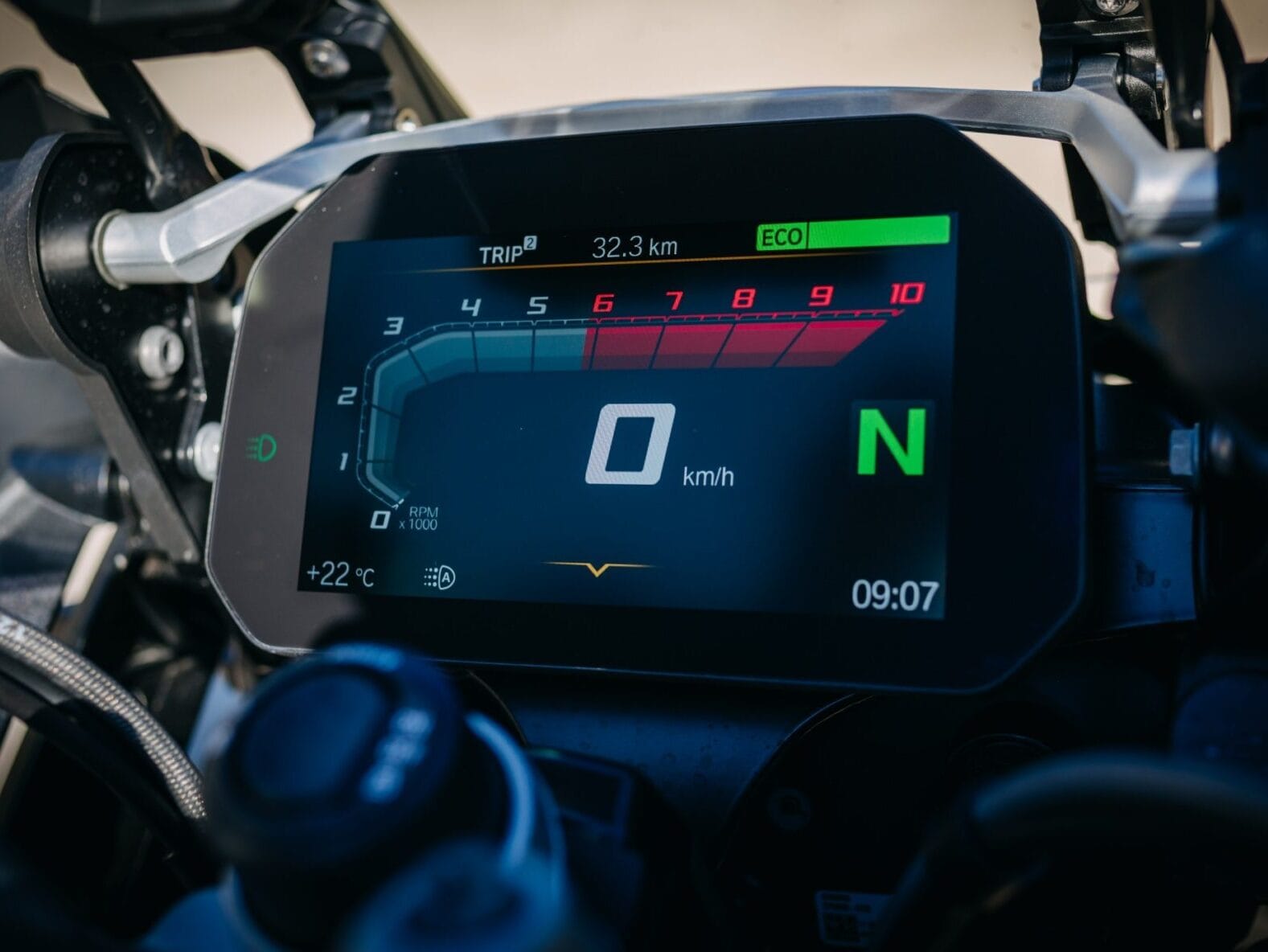
To understand why this is significant, it helps to appreciate what current high-end motorcycles already do. The BMW R1250GS Adventure, for example, already features cornering ABS, Dynamic Traction Control, hill start control, and optional adaptive cruise control. These are reactive systems — they respond to what's already happening, whether that's a wheel starting to lock or traction beginning to break down.
What BMW's new patent describes is a predictive system. Rather than waiting for a crisis to begin, it anticipates the crisis and begins preparing the motorcycle before the rider is even consciously aware of the danger. In theory, this could compress the critical seconds between hazard recognition and effective response — seconds that, in motorcycle accidents, can mean the difference between a near miss and a catastrophic outcome.
The V2I communication element adds another dimension entirely. If a motorcycle can receive data from smart traffic infrastructure — warning signals, road condition reports, or emergency vehicle alerts — the system gains environmental awareness that no onboard sensor can match.
The Engineering Challenges Are Real
Filing a patent and delivering a production-ready system are vastly different things, and BMW engineers will face formidable challenges before anything like this reaches a showroom floor.
Motorcycles are inherently dynamic, two-wheeled systems that rely on constant balance management. Any autonomous steering intervention, however subtle, must account for lean angle, speed, surface grip, and rider input simultaneously — and it must do so without creating conflict with the rider's own instincts. A system that fights the rider at the wrong moment could cause more harm than the hazard it was trying to avoid.
Liability and regulatory frameworks will also need to evolve. Europe's ambitious road safety directives and the U.S. National Highway Traffic Safety Administration (NHTSA) are still working through the frameworks for autonomous cars — motorcycles add another layer of complexity that legislators have barely begun to address.
What This Means for Riders
Reactions among the riding community are likely to be mixed, and understandably so. For many motorcyclists, the appeal of riding is precisely the unmediated, visceral connection between human and machine. The idea of a computer making steering decisions — even in fractions of a second during emergencies — will feel to some like an unwelcome intrusion into that relationship.
But consider the other side. Motorcyclists remain disproportionately vulnerable on public roads. In the United States alone, riders account for roughly 14% of all traffic fatalities despite representing only 3% of registered vehicles. Technologies that can measurably reduce fatalities and serious injuries deserve serious consideration, even when they challenge our instincts about what motorcycling should be.
It's also worth remembering that BMW has historically implemented new technologies in ways that allow riders to choose their level of electronic involvement. The company's riding mode systems already let riders dial back intervention on track days or spirited rides. A semi-autonomous system of this kind would almost certainly be configurable, with riders able to reduce or disable individual layers based on preference and context.
Which Models Could Get It First?
While BMW has not confirmed any production timeline, industry observers expect the technology to debut on flagship touring and adventure bikes where the rider demographic skews toward technology adoption and where long-distance, high-mileage riding creates the greatest exposure to unpredictable hazards. The BMW R1300GS, which already serves as BMW's technology showcase, and the K1600GT Grand America touring flagship are the most frequently cited candidates for early adoption.
A 2028 introduction would give BMW engineers roughly three to four years of real-world testing and regulatory navigation — a timeline that feels ambitious but not impossible given the maturity of some underlying component technologies.
The Bigger Picture: Where Is Motorcycling Headed?
BMW is not alone in exploring this territory. Honda, Yamaha, and Bosch — a major supplier of motorcycle electronics systems — have all filed patents or published research related to advanced rider assistance. The industry is clearly converging on a future where electronics play a far more active role in motorcycle safety.
The question is not whether such systems will exist, but how the industry, regulators, and the riding community will negotiate the boundaries of acceptable autonomous intervention. BMW's patent filing is less a declaration of a finished product and more an opening statement in what promises to be one of the most consequential conversations motorcycling has ever had.
For now, riders can watch this space with a mixture of excitement, curiosity, and the healthy skepticism that has always served the motorcycling community well. The road ahead is going to be interesting.