Why Your Intercom System Matters More Than Ever on Long Tours
There's a moment on every long-distance motorcycle tour when communication stops being a luxury and becomes a genuine safety tool. It might be a sudden lane closure at 75 mph, a fuel stop decision made three miles too late, or simply the need to warn your riding partner about a tire-shredding pothole lurking in the right lane. In 2026, mesh network intercom systems have matured dramatically, and the gap between a mediocre unit and a genuinely great one has never been more consequential—or more measurable.

We assembled nine of the most talked-about mesh intercom systems on the market, recruited a group of four experienced long-haul riders, and set out on a 1,000-mile loop that included interstate droning at sustained highway speeds, twisty mountain roads where formation spacing stretched beyond a quarter mile, heavy urban stop-and-go traffic, and a torrential rainstorm that lasted the better part of an afternoon. These are the conditions that expose every weakness a headset can have.
The Contenders: Nine Mesh Headsets We Tested
Our test group included units from the established leaders and a few aggressive newcomers pushing the technology forward. The nine systems in our saddle bags were the Sena 50S, Sena 50R, Cardo Packtalk Edge, Cardo Packtalk Neo, Cardo Spirit HD, Midland BTX3 Pro S, FreedConn TCOM-SC Mesh, Fodsports M1-S Pro Mesh, and the LEXIN G20. We tested each unit both in same-brand group pairings and, where cross-brand mesh protocols allowed, in mixed configurations.
How We Tested: The Real-World Protocol
Each system was worn for at least two full riding days—not just a quick parking-lot demo. We evaluated audio clarity at three distinct speed ranges: under 50 mph, 50–80 mph, and above 80 mph. Wind noise management was scored separately from overall volume, because a unit that simply cranks up the gain to drown out wind roar doesn't actually solve the problem—it just trades one kind of distortion for another. We also timed how quickly each unit re-paired after a group member split off and rejoined, since real-world touring almost always involves fuel stops, bio breaks, and spontaneous detours that break the mesh topology temporarily.
Top Performers: What Rose to the Top
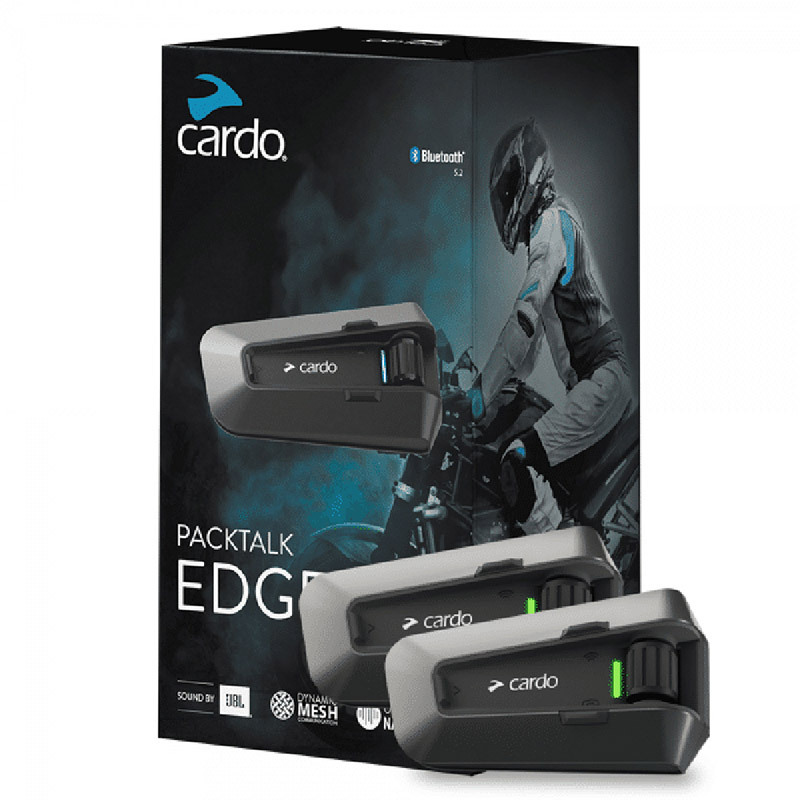
Cardo Packtalk Edge — Best Overall for Serious Tourers
After 1,000 miles, the Cardo Packtalk Edge was the unit that nobody in our group wanted to take off their helmet. Its Dynamic Mesh Communication (DMC) technology proved genuinely resilient—when one rider fell nearly half a mile behind on a switchback descent, the mesh simply rerouted through an intermediate rider rather than dropping the call. Audio quality at highway speeds was the best in the field, thanks to what Cardo calls its Natural Voice Operation with enhanced noise cancellation. Music sharing via Bluetooth 5.2 streamed cleanly even at 80 mph. Battery life comfortably covered a 13-hour riding day with music and regular intercom use. If you're spending serious money on a touring setup, this is where it goes.

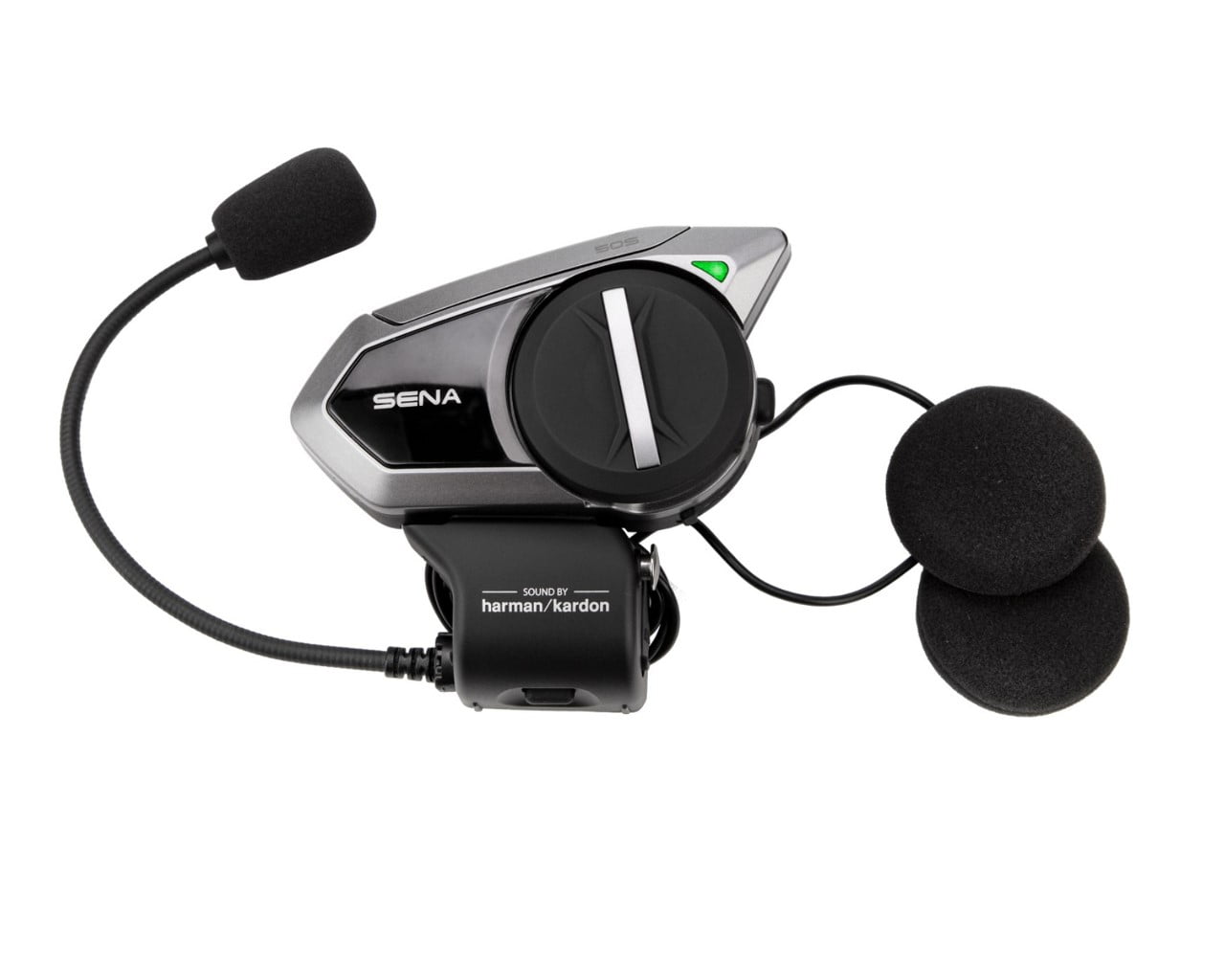
Sena 50S — Best for Tech Lovers and Bike Integration
The Sena 50S remains the system for riders who want the deepest feature integration with their motorcycle. Its dual Bluetooth chip architecture means you can maintain a connection to your phone, your bike's navigation, and your mesh group simultaneously without juggling connections. The Harman Kardon speakers delivered the best music reproduction of any unit we tested—a meaningful consideration on long slabs. Our only gripe is that Sena's mesh range trailed Cardo's by a noticeable margin on open desert highway, with connections becoming choppy beyond about 1.2 miles between riders versus Cardo's more confident 1.5-plus miles in similar conditions.
Cardo Packtalk Neo — Best Value for Group Riding
If your group of four doesn't all want to spend top-tier money but still needs reliable mesh, the Packtalk Neo is the answer. It runs on the same DMC platform as the Edge at a meaningfully lower price point, sacrificing some speaker quality and a few premium software features. For communication-first tourers who aren't using their intercom as a premium audio system, the trade-off makes complete sense.
The Middle of the Pack
The Sena 50R is essentially the 50S in a slimmer, lower-profile housing that plays better with tighter helmet profiles like full-face sport lids. Performance is nearly identical; the choice between 50S and 50R is almost entirely about your helmet shape. The Midland BTX3 Pro S impressed us with its waterproofing—it was the only unit that showed zero signs of stress after our sustained rainstorm—and its FM radio integration is a genuine differentiator for riders who like to catch local traffic reports. However, its mesh range and re-pairing speed lagged behind the Cardo and Sena flagships.
The Budget Tier: Honest Findings
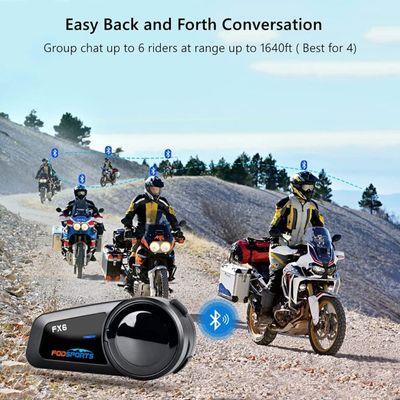
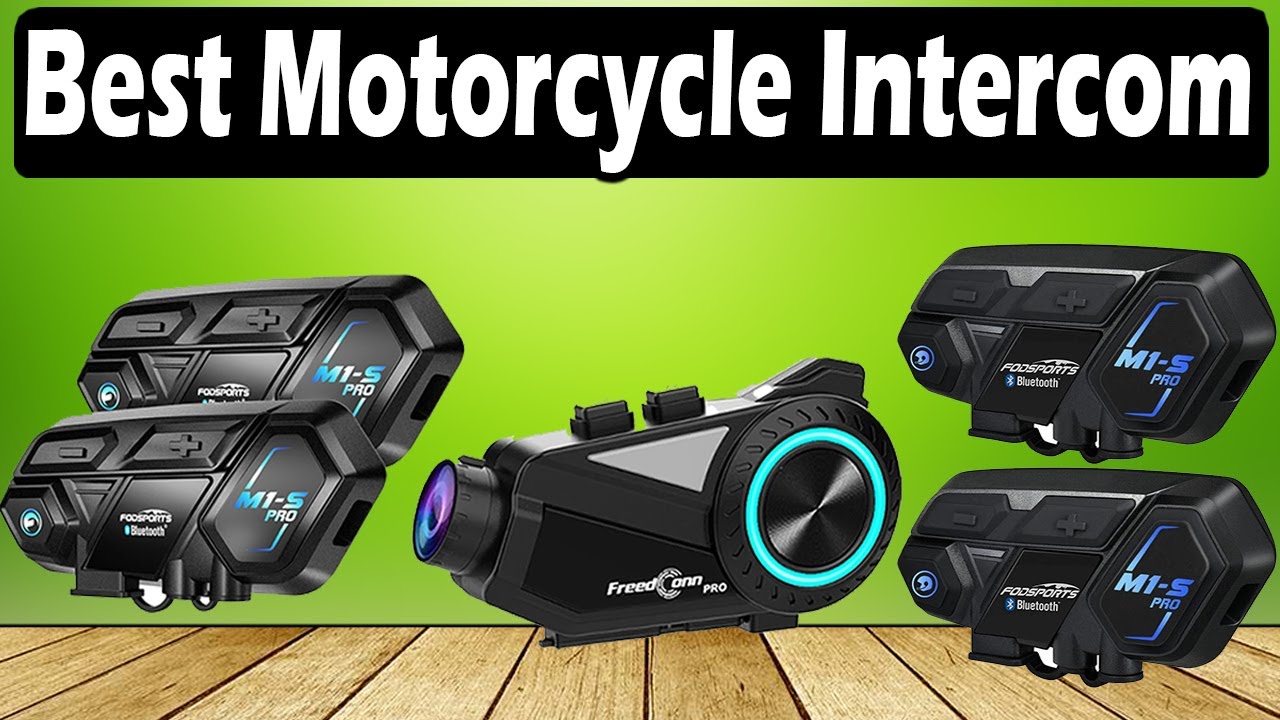
The FreedConn TCOM-SC Mesh, Fodsports M1-S Pro Mesh, and LEXIN G20 all represent the burgeoning budget mesh segment, and our findings were consistent: they work adequately for casual weekend riders doing short group rides in close proximity, but they revealed significant limitations over sustained touring distances. Re-pairing after a separation took noticeably longer, audio compression at highway speeds was more aggressive, and the speaker quality made phone navigation audio difficult to parse without slowing down to concentrate. For a rider who tours solo and uses the intercom primarily for music and phone calls, the Fodsports M1-S Pro Mesh in particular offers surprisingly solid value. For group touring above 50 miles, save up for the mid-tier at minimum.
Key Buying Considerations for Long-Distance Tourers
- Mesh vs. Bluetooth pairing: True mesh networks automatically reroute when a rider drops out of direct range. Legacy Bluetooth pairing systems do not. For groups of three or more, mesh is non-negotiable.
- Speaker quality: On a 10-hour day, fatiguing audio matters. Harman Kardon (Sena) and JBL (Cardo Edge) partnerships produce meaningfully better speakers than generic units.
- Battery life: Look for a rated battery life at least 30 percent beyond your planned daily riding hours. Ratings are tested under favorable conditions.
- Cross-brand compatibility: Sena and Cardo systems do not natively mesh with each other in 2026. Plan your group's system selection together.
- Helmet fit: Test physical installation on your actual helmet before committing. Some units are incompatible with certain helmet speaker cutout shapes.
Our Final Rankings
After tallying all criteria, our ranked order for long-distance touring came out as follows: 1) Cardo Packtalk Edge, 2) Sena 50S, 3) Cardo Packtalk Neo, 4) Sena 50R, 5) Midland BTX3 Pro S, 6) Cardo Spirit HD, 7) Fodsports M1-S Pro Mesh, 8) LEXIN G20, 9) FreedConn TCOM-SC Mesh. The top three are genuinely excellent tools. Everything below rank five is a compromise that serious mile-eaters will feel on day two of a multi-day trip.
Bottom Line
The intercom market in 2026 has bifurcated cleanly into systems built for real touring and systems that look the part but underperform when the miles stack up. Spend what it takes to get into the Cardo Packtalk Edge or Sena 50S tier, match your whole group on the same platform, and the technology will disappear into the background—exactly where it belongs when you're 600 miles from home and concentrating on the road ahead.