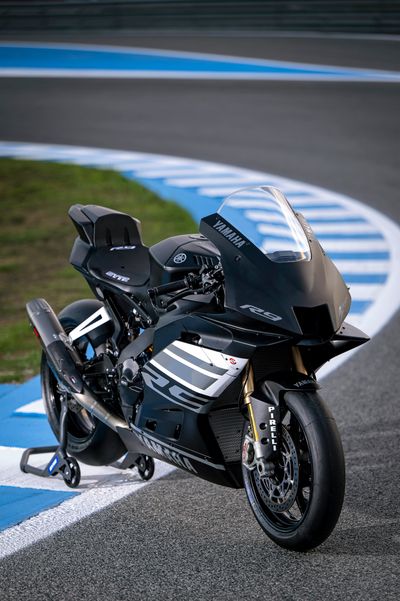
The R6-Shaped Hole Yamaha Finally Decided to Fill
For nearly a decade, Yamaha faithful have been riding with a quiet heartbreak. The R6 — one of the most celebrated middleweight supersports ever built — was effectively retired from road-legal sale in major markets after Euro5 and EPA emissions standards made its race-bred inline-four commercially unviable as a street bike. Enthusiasts have watched competitors like Kawasaki refine the ZX-6R and Honda keep the CBR600RR on life support, all while Yamaha's sport bike shelf sat conspicuously empty between the entry-level R3 and the fire-breathing R1. That gap is now closed. Enter the 2026 Yamaha R9.
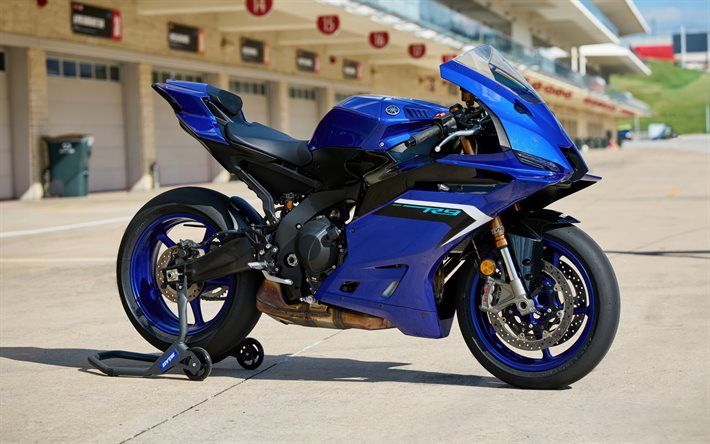
Hero image — full side profile of the 2026 Yamaha R9 in motion or studio
The R9 isn't a direct R6 successor in the traditional sense — Yamaha's engineers were clear about that in pre-launch briefings. Instead, it's a ground-up reimagining of what a middleweight supersport should look like in 2026: compliant enough for real-world commuting, sharp enough for track days, and visually aggressive enough to make your neighbors question your life choices. After seven days that included canyon carving, highway cruising, and four sessions at a closed circuit, here's what we found.
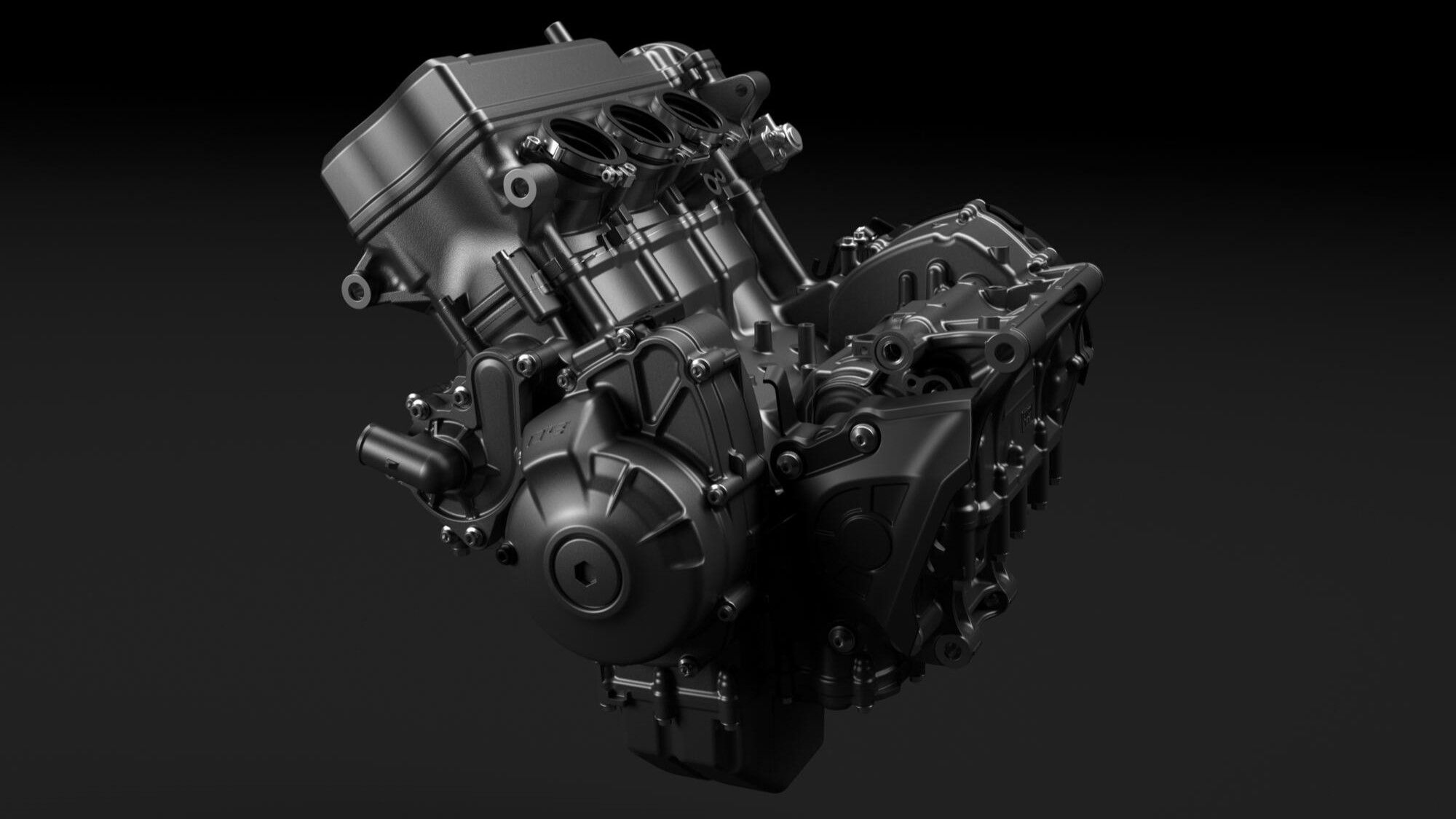
Close-up of the CP3 engine for the engine section
Engine: A New Character for a New Era
The R9 is powered by a 890cc CP3 triple-cylinder engine — the same basic architecture found in the MT-09 and XSR900, but remapped, retuned, and repackaged for supersport duty. Peak output sits at approximately 119 horsepower and 68 lb-ft of torque, figures that put it comfortably ahead of the old R6's top-end scream but with a dramatically different power delivery character.
Where the R6 demanded that you rev it to oblivion to access its best performance, the R9's triple-cylinder configuration delivers muscular midrange pull from as low as 4,000 rpm. On the street, this translates into a bike that feels effortless and exploitable in a way the old R6 never was outside of a race circuit. On the track, however, it's a slightly different conversation — the top-end rush isn't quite as intoxicating as a rev-happy four-cylinder, and experienced track riders will feel that trade-off. That said, the power delivery is linear, predictable, and — critically — fast enough to have serious fun.
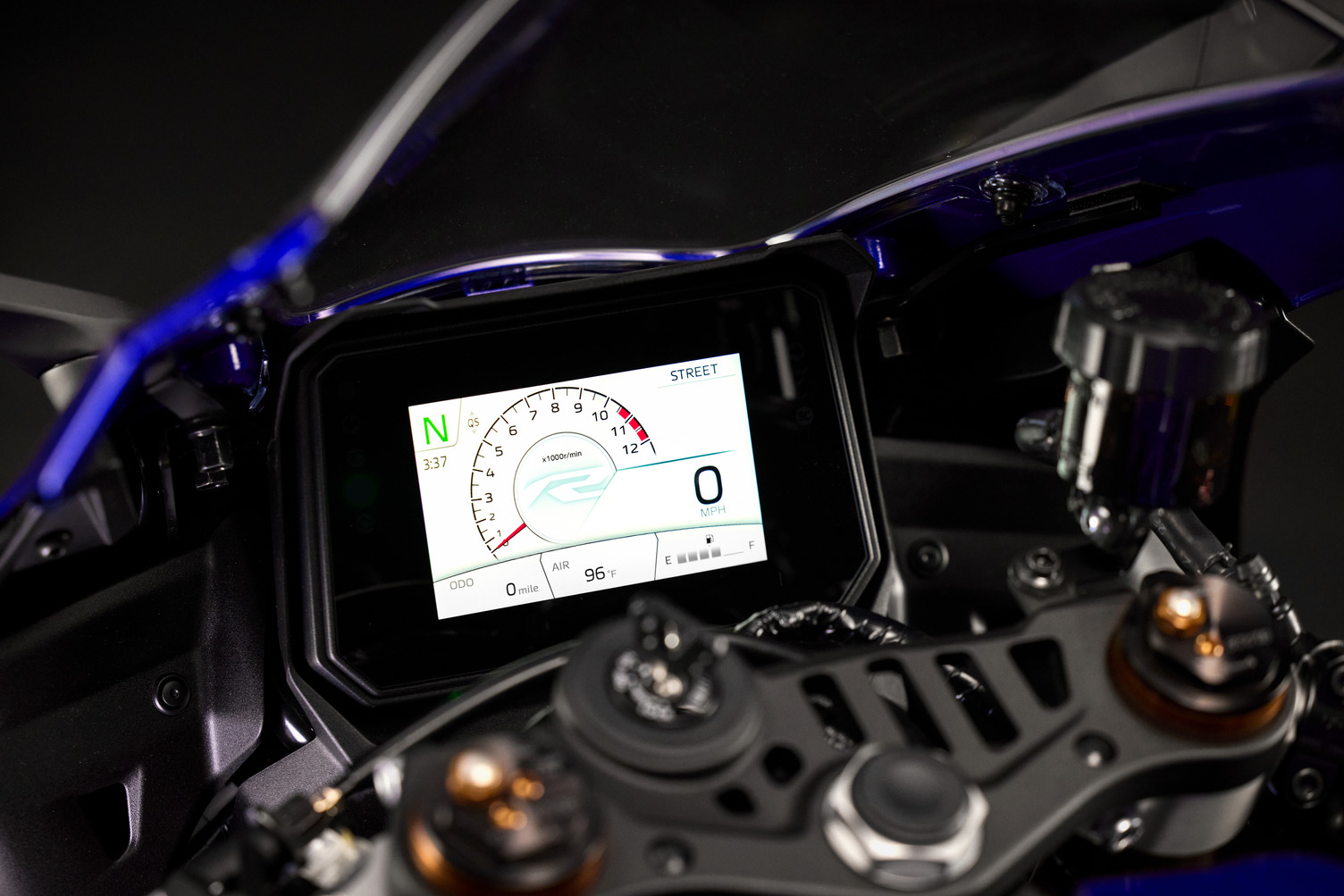
Interior cockpit and TFT instrument cluster detail shot
Three riding modes (Sport, Street, and Rain) come standard, alongside a six-axis IMU that governs traction control, slide control, and a quick-shifter/auto-blipper system that clicks through the six-speed gearbox with satisfying precision.
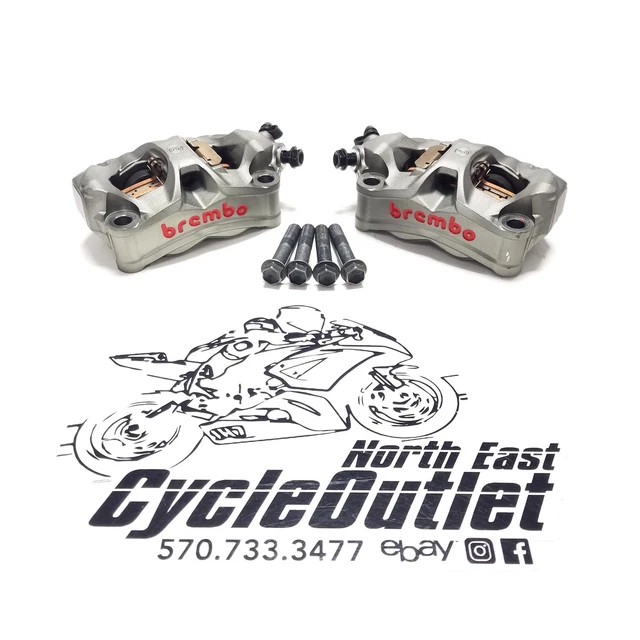
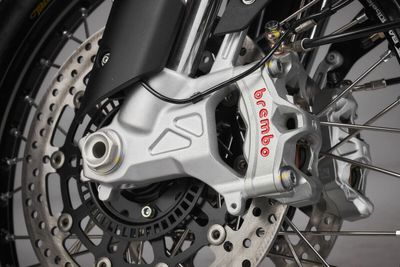
Front brake caliper and rotor detail shot for braking section
Chassis and Suspension: Confidence in Every Corner
Yamaha engineers developed an all-new aluminum deltabox frame for the R9, designed specifically to balance the unique torque output of the CP3 engine while providing sharper steering geometry than the naked MT-09 platform allows. The result is a bike that turns in crisply without the nervous twitchiness that plagued some competitors in this class.
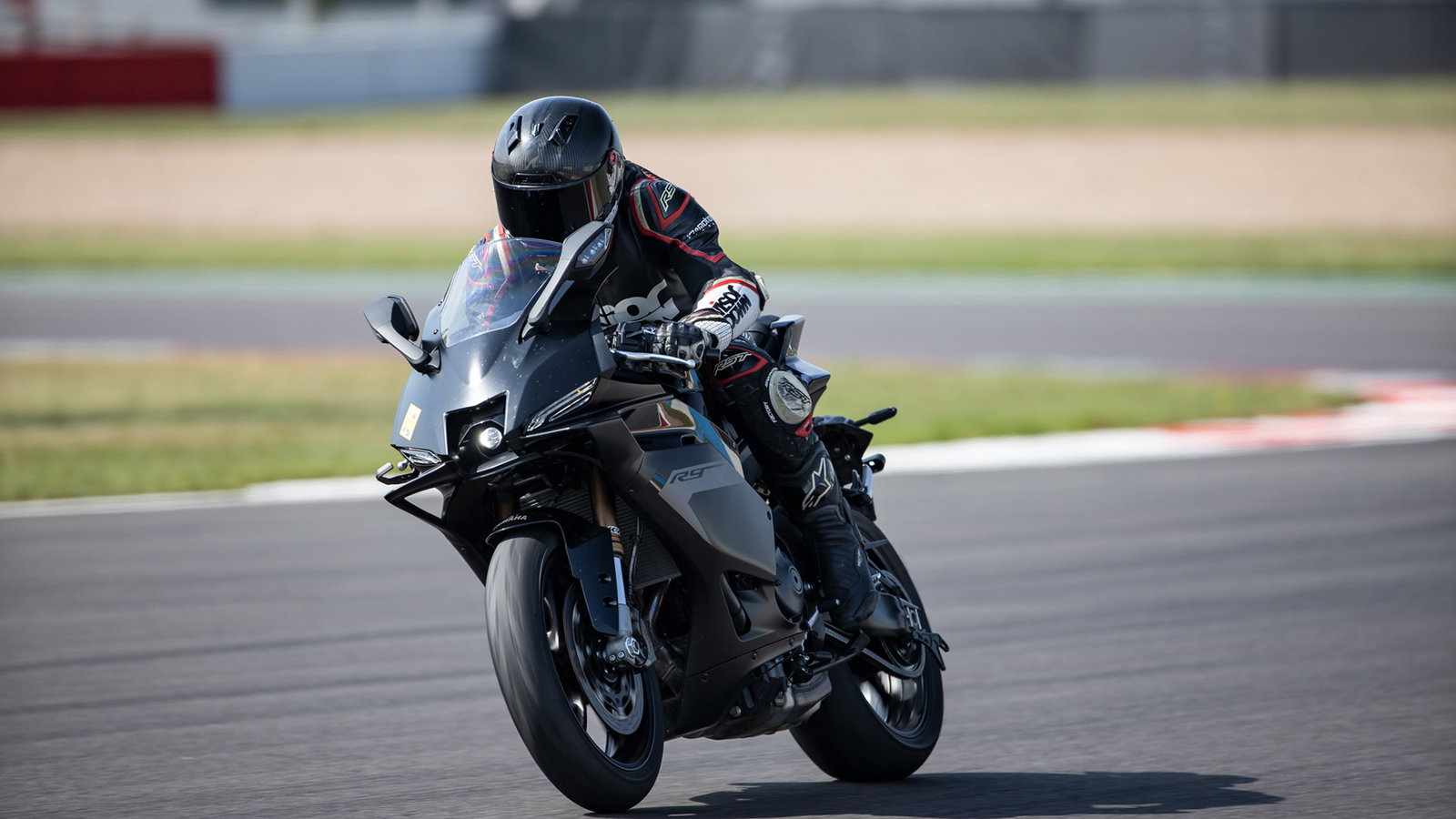
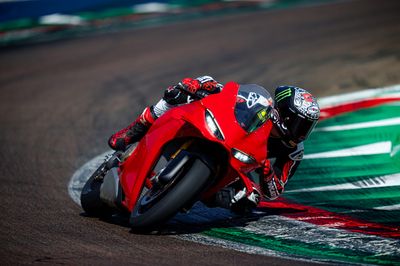
Lifestyle shot of rider on winding road for everyday livability section
Suspension duties are handled by KYB components front and rear — fully adjustable 43mm inverted forks up front and a linkage-assisted monoshock at the rear. On track, we found the base settings surprisingly capable, requiring only minor compression damping adjustments to get the front end communicating clearly under hard braking. On the road, the setup is firm but not punishing, which is a meaningful improvement over the old R6's notoriously unforgiving street manners.
Braking is handled by radially mounted Brembo monobloc calipers gripping 320mm discs up front, paired with Bosch cornering ABS. Bite and modulation are excellent, and the cornering ABS intervened only twice during our track sessions — both times appropriately and without drama.
Ergonomics and Everyday Livability
Here's where the R9 makes its most deliberate departure from pure supersport orthodoxy. The riding position is aggressive but not punishing — the clip-ons are slightly higher and wider than an R1's, and the seat-to-footpeg relationship offers more legroom than you'd expect from the sculpted tail section's visual promise. Riders between 5'8" and 6'1" will find the ergonomics close to ideal. Shorter riders may want to explore Yamaha's accessory lowering link.
Wind protection from the full fairing is genuinely good at highway speeds, with buffeting well-managed around the helmet compared to many competitors. Heat management — always a concern on naked triples — is handled better here than on the MT-09, thanks to revised exhaust routing and revised fairing ducting that channels hot air away from the rider's legs more effectively.
Technology Package: Modern Without Being Overwhelming
The R9 ships with a 5-inch TFT color display that pairs to a dedicated Yamaha app via Bluetooth, allowing lap timing, ride data logging, and settings customization. The interface is clean and legible even in direct sunlight — something we specifically tested. The instrument cluster isn't as flashy as some Italian competitors, but it's functional and logical.
Standard electronics include:
Six-axis IMU with lean-angle-sensitive ABS and traction control
Slide control system
Launch control (Sport mode only)
Bi-directional quick-shifter
Three power modes with torque curve adjustment
Cruise control
Notably absent: semi-active suspension, which competitors like the Ducati Panigale V2 offer at a higher price point. For the R9's expected MSRP in the mid-to-upper $12,000 range, the electronics package is genuinely competitive.
On Track: How Does It Really Stack Up?
Four 20-minute track sessions gave us a solid feel for the R9 in its most natural habitat. The honest assessment: it's not an R6. The old R6 in full-race trim was a razor-edged instrument that rewarded commitment and punished hesitation. The R9 is friendlier, more forgiving, and — for 90 percent of track day riders — faster in practice, because it lets you get into the throttle earlier and stay there more confidently.
The CP3 triple's character shines on tight, technical circuits where midrange matters more than top-end power. On longer, faster circuits, a well-sorted ZX-6R or CBR600RR might edge it at the very top of the tachometer. But in the corners, the R9's chassis balance and electronics support give it a genuine edge over older middleweights.
The Verdict
The 2026 Yamaha R9 is not the R6 reborn — and that's arguably its greatest strength. It's a smarter, more versatile, more modern interpretation of what a middleweight supersport needs to be for riders who want genuine performance without surrendering every concession to comfort and usability. It fills the gap in Yamaha's lineup with confidence, competence, and no small amount of character.
If you've been waiting for Yamaha to answer the call, the wait is over. The R9 is real, it's ready, and it's very, very good.