Indian Motorcycle's Big Tech Move: Adaptive Suspension Is Coming
Indian Motorcycle has long been celebrated for its heritage-rich styling, thundering V-twin powerplants, and a loyal following that spans generations. But a newly uncovered patent filing suggests the iconic American brand is quietly developing technology that could put it squarely in the conversation with Europe's most advanced touring machines. The patent — filed with the United States Patent and Trademark Office — outlines a sophisticated adaptive suspension system designed to monitor, analyze, and automatically adjust damping and spring preload in real time.
If this system makes it to production — and patent filings, while not guarantees, are often strong indicators of a brand's engineering roadmap — it could redefine what riders expect from an Indian motorcycle by the 2028 model year.
What the Patent Actually Describes
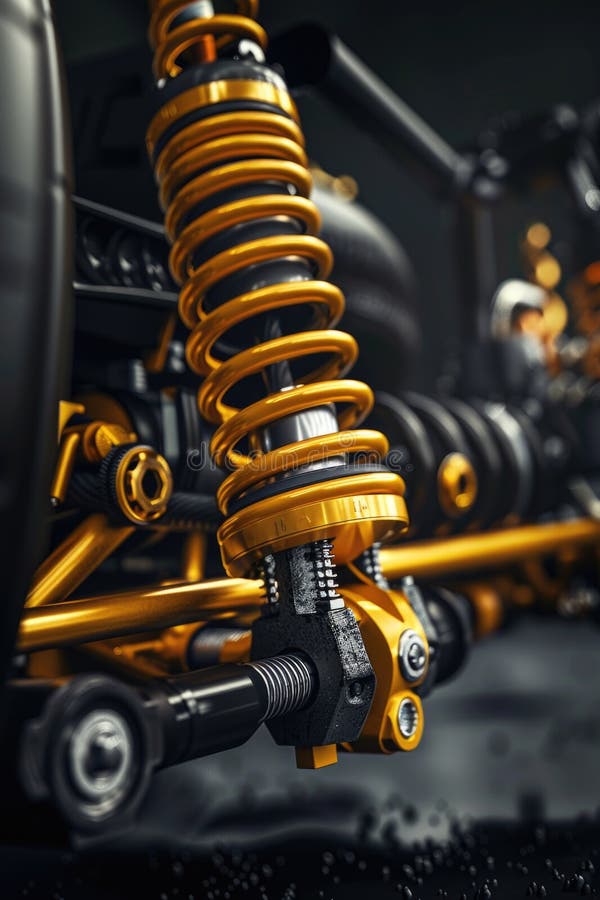
The patent details a multi-sensor array that works in concert with an onboard control unit to manage suspension behavior dynamically. According to the filing, the system would gather data from several inputs simultaneously, including:
- Inertial measurement units (IMUs) tracking pitch, roll, and yaw in real time
- Wheel speed sensors detecting surface irregularities and wheel slip
- Throttle and brake inputs to anticipate load transfer under acceleration and deceleration
- GPS or terrain mapping data (referenced as an optional integration) to pre-emptively adjust for known road conditions
- Load sensors at front and rear to account for solo riding, passenger weight, and luggage
The control unit processes all of this information and adjusts electro-hydraulic actuators within the fork tubes and rear shock — reportedly in milliseconds. The goal, as described in the filing, is to maintain a consistent, optimized contact patch between tire and road regardless of surface variation, speed, or rider behavior.
Why This Matters for Indian's Lineup
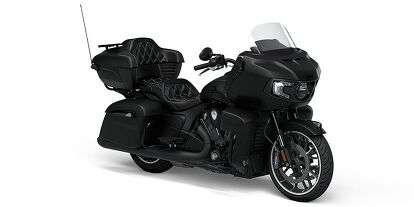
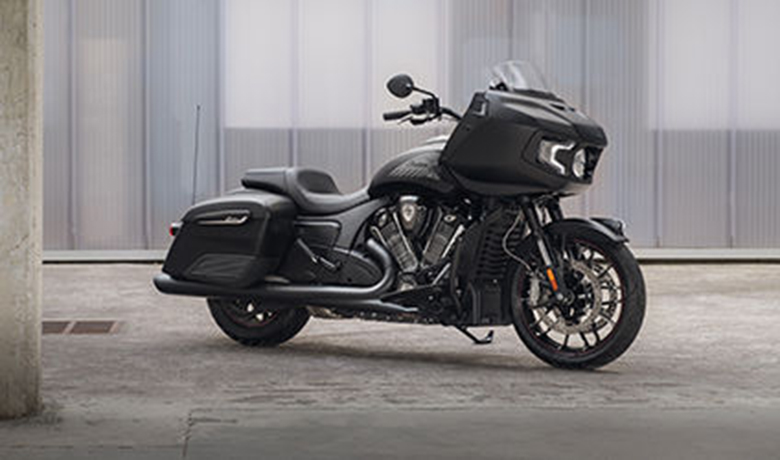
Indian's current suspension technology is competent, particularly on flagship models like the Indian Pursuit Dark Horse and the Indian Chieftain, where semi-active Fox suspension is already offered. However, that existing system — while a genuine improvement over fully manual setups — relies primarily on pre-set modes selected by the rider rather than true real-time adaptation. The leap from semi-active to fully adaptive represents a meaningful technological jump.
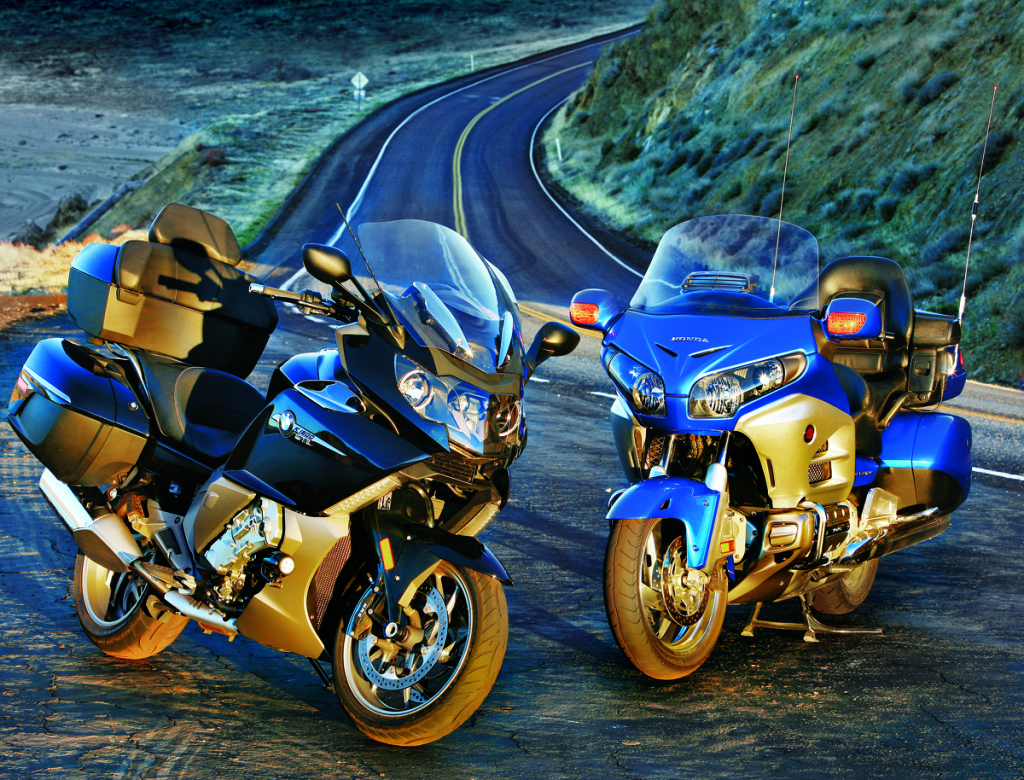
For a brand that competes directly with Harley-Davidson and increasingly eyes the premium touring market dominated by machines like the BMW K1600GTL and Honda Gold Wing, offering fully adaptive suspension would close a significant technology gap. It would also send a powerful message: Indian is not content to compete on nostalgia alone.
The Touring Segment Stands to Gain the Most
If this system debuts anywhere in Indian's lineup, the touring models are the most logical candidates. The Indian Pursuit and Indian Roadmaster are long-haul machines that carry heavy loads, encounter wildly varied road surfaces, and often carry two-up riders for thousands of miles at a stretch. An adaptive suspension system would directly address the core complaints riders raise about long-distance comfort — particularly fatigue from road vibration and the challenge of properly setting up suspension for varying load conditions.
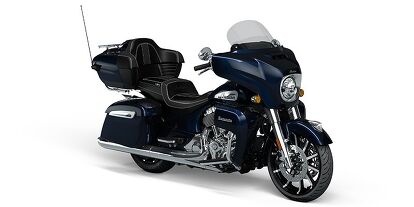
Imagine loading up the Indian Roadmaster Limited with full saddlebags, a passenger, and a trunk full of gear and having the bike automatically recalibrate its suspension geometry and damping to compensate. No manual preload adjustments, no guesswork. That's the promise buried inside this patent filing.
Could It Reach Sport or Bagger Models?
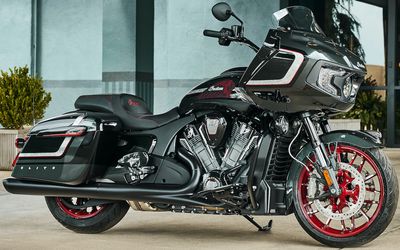
The patent language is broad enough that it isn't limited to full-dress touring applications. Indian's FTR and Challenger lines could theoretically benefit as well. The Indian Challenger Dark Horse, for instance, is a performance-oriented bagger that already bridges the gap between sport riding and long-distance comfort. Adaptive suspension tailored to sport-bagger dynamics — firming up under hard cornering, softening for straight-line cruising — would be a compelling selling point for that segment of the market.
There is also speculation within the enthusiast community that Indian's parent company, Polaris, may be developing shared technology platforms across its off-road and on-road vehicle divisions. Polaris has invested heavily in adaptive ride technology for its off-road vehicles, and cross-platform development would make the investment economics far more attractive.
Potential Challenges and Caveats
It's worth applying some measured skepticism here. Patent filings describe what a company is exploring, not necessarily what will reach a showroom floor. The gap between a promising patent and a production-ready system involves engineering validation, cost optimization, reliability testing, and regulatory considerations. Adaptive suspension systems — particularly those integrating GPS or terrain-mapping functions — also raise questions about software dependency and long-term serviceability that conservative buyers in the cruiser and touring segment may scrutinize.
Weight and complexity are additional considerations. Indian's touring riders are already managing heavy machines, and adding electro-hydraulic actuators, additional sensors, and associated wiring harnesses must be done without adding meaningfully to the already substantial curb weights of bikes like the Indian Roadmaster.
There's also the pricing question. Fully adaptive suspension as standard equipment or even as an option adds cost. If it pushes flagship models deeper into the $35,000-plus territory, it could narrow the buying pool even further in a market that's already feeling macroeconomic headwinds.
Reading the Competitive Landscape
Indian's timing isn't accidental. BMW Motorrad's Dynamic ESA (Electronic Suspension Adjustment) and the semi-active suspension found on the Honda Gold Wing Tour have raised rider expectations for premium touring motorcycles. Harley-Davidson, Indian's most direct competitor, has been slow to adopt comparable technology on its touring line. If Indian can leapfrog with a genuinely adaptive — rather than merely semi-active — system, it earns a strong first-mover advantage in the American heavyweight touring space.
The broader industry trend is clear: electronics are becoming the new battleground for premium motorcycle buyers. Adaptive cruise control, cornering ABS, lean-sensitive traction control, and radar-assisted safety systems are all moving downstream from European flagships to more accessible models. Suspension is a natural next frontier.
What Riders Should Watch For
If Indian's development timeline tracks with the patent filing — and if Polaris prioritizes this technology for the 2028 model year cycle — enthusiasts should watch for prototype sightings and spy shots of test mules in late 2026 and early 2027. Announcements at events like Sturgis Motorcycle Rally or the Consumer Electronics Show (where Polaris has previewed technology before) would also be early indicators.
For now, the message from this patent is clear: Indian Motorcycle is thinking bigger than chrome and heritage. The brand is investing in the kind of intelligent riding technology that could attract a new generation of touring riders — and keep its loyal base coming back. If the 2028 Indian lineup arrives with adaptive suspension aboard, it will be one of the most significant product launches in the company's modern history.