
1962
Norton Manx - Specifications & Review
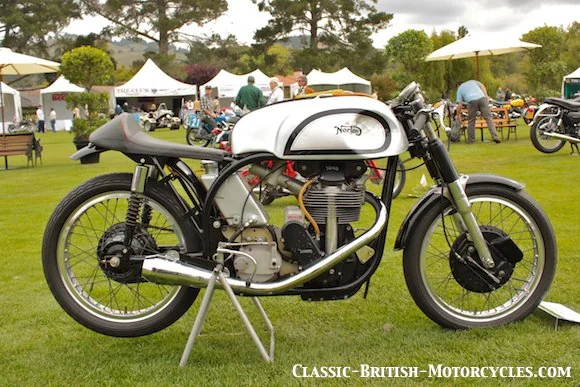
Article Complete Info
| Articleid | 611592 |
|---|---|
| Category | Sport |
| Make | Norton |
| Model | Manx |
| Year | 1962 |
Chassis, Suspension, Brakes & Wheels
| Frametype | Steel |
|---|---|
| Frontbrakes | Expanding brake (drum brake) |
| Frontsuspension | Telescopic fork |
| Rearbrakes | Expanding brake (drum brake) |
| Rearsuspension | Swingarm |
Engine & Transmission
| Coolingsystem | Air |
|---|---|
| Displacement | 499.00 ccm (30.45 cubic inches) |
| Enginedetails | Single cylinder, four-stroke |
| Fuelsystem | Carburettor. NA |
| Power | 47.00 HP (34.3 kW)) @ 6500 RPM |
| Topspeed | 210.0 km/h (130.5 mph) |
| Transmissiontypefinaldrive | Chain |
Physical Measures & Capacities
| Dryweight | 140.0 kg (308.6 pounds) |
|---|---|
| Powerweightratio | 0.3357 HP/kg |
About Norton
Country of Origin:
United Kingdom
Founder:
James Lansdowne Norton
Best Known For:
Isle of Man glory (Manx), Featherbed frame, Commando twins; modern V4/V-twin revivals
Company History
Few badges carry more romance than Norton: Manx singles howling over the Mountain, the Featherbed frame teaching the world about chassis stiffness, and the Commando’s rubber-mounted charisma defining a generation of British twins. Financial dramas and ownership changes punctuated the marque’s modern history, but the idea of Norton endured—elegant engines, taut handling, and a certain aristocratic restraint. Recent revivals pursued premium V4s and modernized Commandos with contemporary electronics and finishes, aiming to reconcile heritage with present-day reliability and compliance. Enthusiasts remain drawn to the riding experience: steering that reads the road, engines that speak through the bars, and ergonomics suited to fast B-roads. Historically, Norton is a pillar of motorcycling’s canon. Whether in classic trim under club racers or in modern carbon and billet, the name signals a commitment to the art of handling and the poetry of mechanical rhythm.