KTM Takes Aim at the Future With Semi-Active Suspension Patents
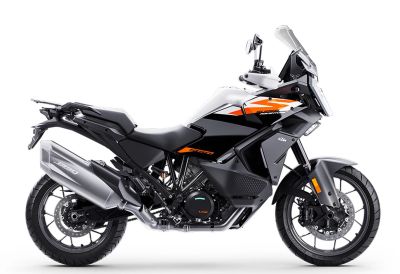
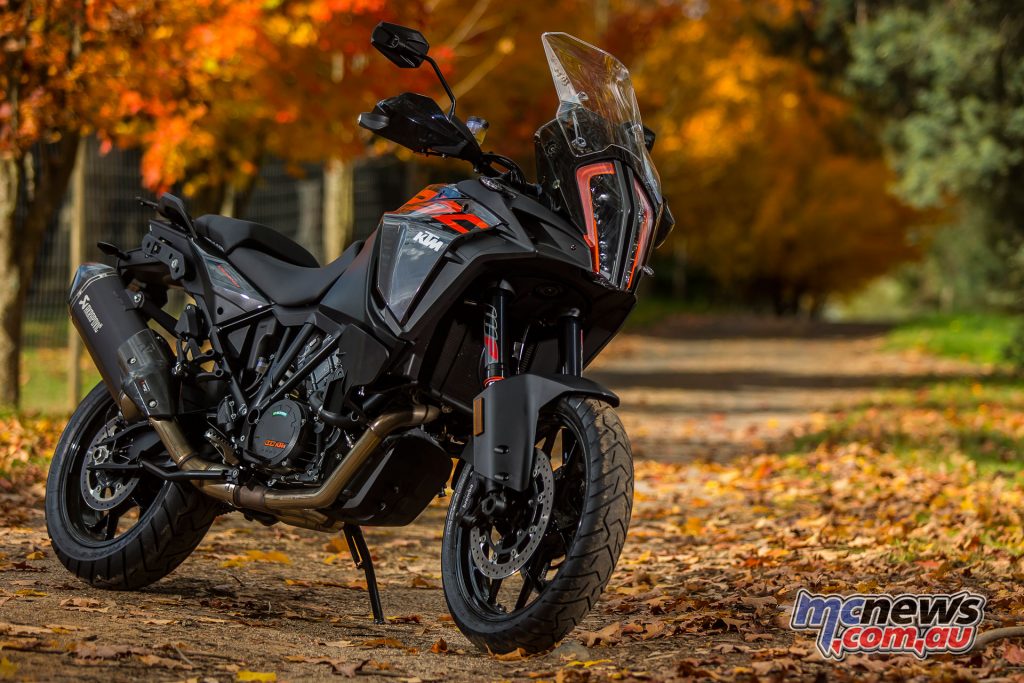
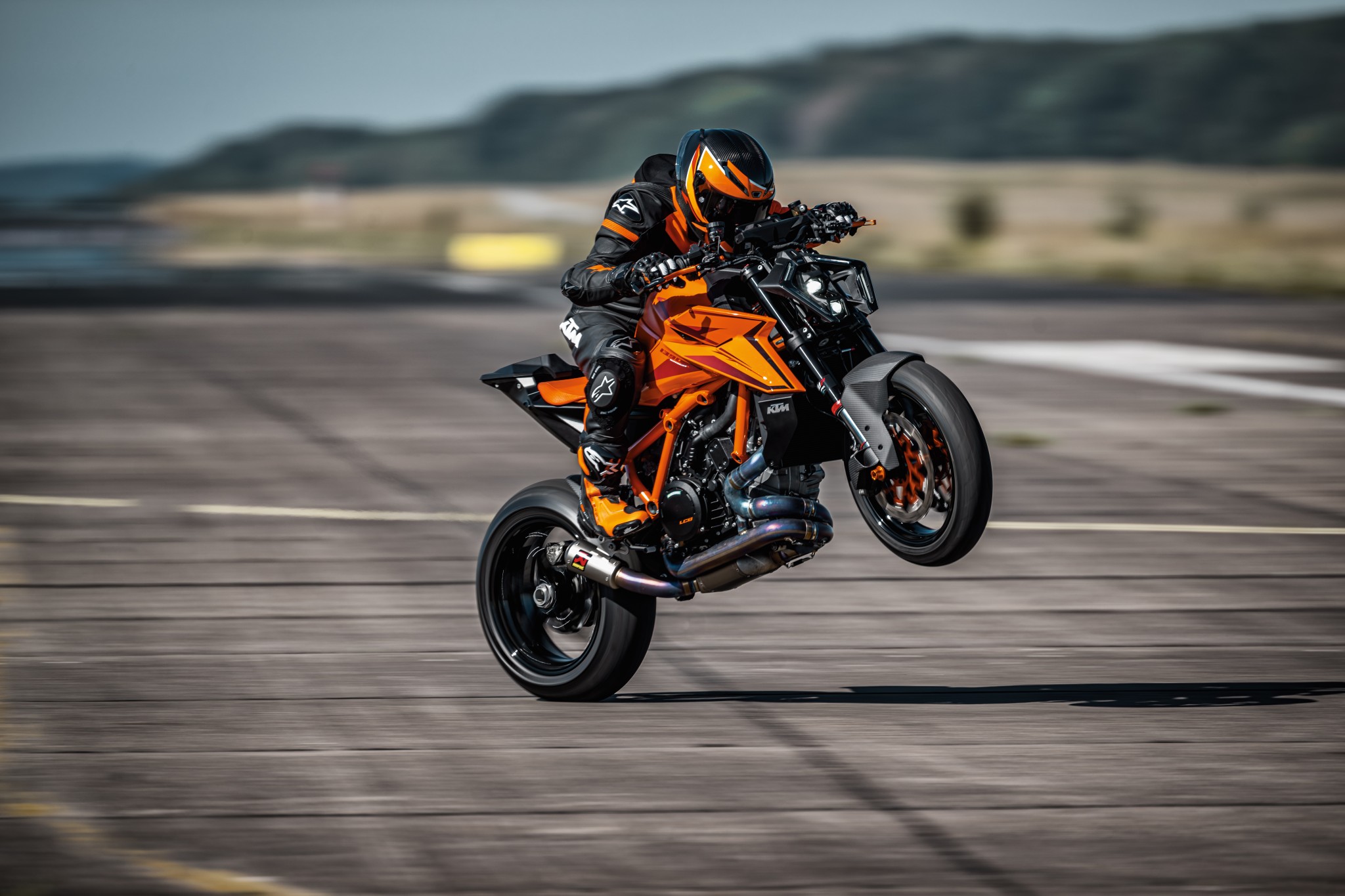
KTM has never been shy about pushing technology to its limits, and the Austrian manufacturer's latest patent filing confirms that the next frontier is firmly beneath your wheels. The company has officially registered intellectual property for a new semi-active suspension system — one that's specifically engineered to be shared across both its adventure-touring and naked streetfighter platforms. That means everything from the beloved KTM 1290 Super Adventure S to the flagship KTM 1390 Super Duke R could eventually benefit from the same core suspension intelligence.
For riders who have been watching semi-active suspension evolve on competitors like BMW and Ducati, this is KTM planting its flag firmly in that territory — with a platform-agnostic approach that could give the brand a significant cost and consistency advantage going forward.
What the Patent Actually Describes
Patent filings are always dense reading, but the core of KTM's submission paints an intriguing picture. The system centers on electronically controlled damping units at both ends of the motorcycle — front forks and rear shock — that continuously receive data from an array of onboard sensors. These sensors monitor wheel speed, chassis lean angle, braking force, throttle position, and road surface feedback in real time.
The key innovation appears to be in how the system processes this data. Rather than relying on a single central ECU making bulk decisions, the patent describes a distributed processing architecture where localized micro-controllers at each suspension unit can make near-instantaneous micro-adjustments, with the central unit providing overarching ride mode context. In plain terms: the suspension reacts faster because it doesn't have to wait for instructions to travel across the entire electronics network before acting.
- Dual-end electronic damping: Both front and rear units adjust independently and in coordination.
- Multi-sensor fusion: Lean angle, acceleration, braking, and terrain data are all factored into each adjustment cycle.
- Distributed processing: Faster local decision-making at each damper unit reduces system latency.
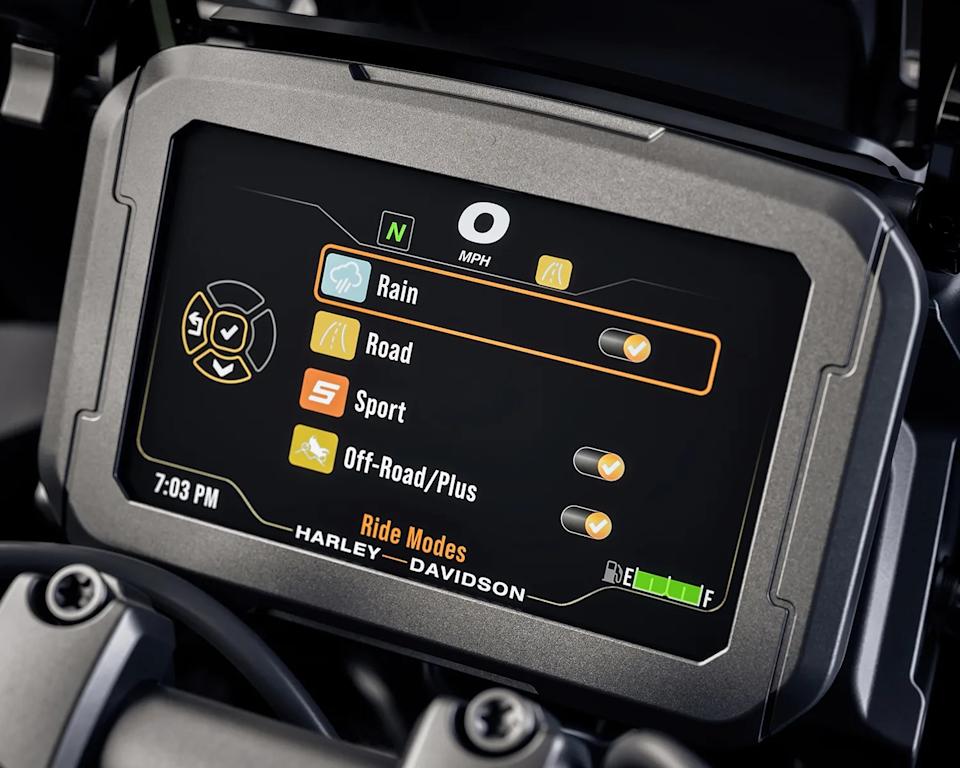
- Ride mode integration: The suspension system interfaces directly with KTM's existing ride mode architecture (Street, Sport, Off-Road, Rally, etc.).
- Cross-platform compatibility: A single core system designed to be tuned and repackaged for different frame geometries and rider profiles.
Why Sharing Across Adventure and Duke Platforms Is a Big Deal
At first glance, it might seem odd to develop a unified suspension platform for motorcycles as different as an adventure tourer loaded with luggage and a naked streetfighter attacking a canyon road. But there's genuine engineering logic here, and it matters to buyers too.
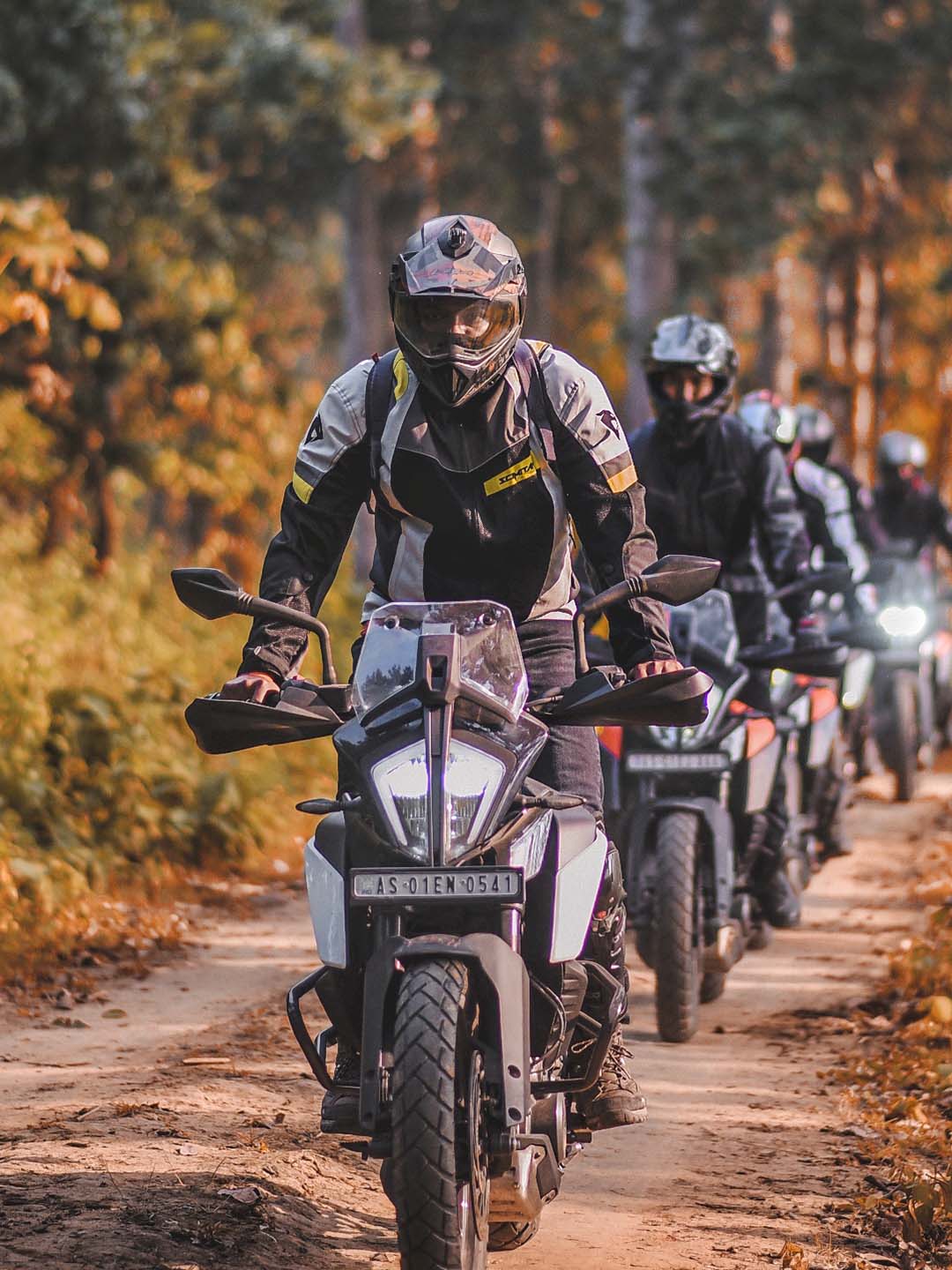
From a development standpoint, sharing a core system means KTM invests heavily once and then calibrates the software and hardware tuning for each application. This is how the company keeps development costs manageable while delivering high-spec technology across its lineup. It's the same philosophy that allows WP Suspension — KTM's in-house suspension brand — to supply components to everything from motocross bikes to touring machines.
For riders, this means that as the technology matures on the higher-end models, it has a clear pathway to trickle down to more accessible price points within both the Duke and Adventure families. Today's exclusive feature becomes tomorrow's mid-range standard equipment — a pattern KTM has followed with traction control, cornering ABS, and lean-angle-sensitive electronics over the past decade.
How It Could Transform the Riding Experience
If you've ever ridden a motorcycle with quality semi-active suspension — think the WP XPLOR Pro on the current KTM 890 Adventure R in its basic electronic form, or competitive systems from Öhlins Smart EC 2.0 on rival machines — you already have a sense of the baseline. What KTM's next-generation system promises is a meaningful step beyond that.
On the adventure side, imagine your KTM 1290 Super Adventure S sensing a sudden patch of loose gravel mid-corner and softening the front damping before you consciously register the change in surface. Or consider descending a rough trail with luggage aboard, where the system automatically compensates for the added sprung weight to prevent the rear from packing down and going harsh over repeated impacts.
On the Duke side, picture the KTM 1390 Super Duke R entering a high-speed braking zone and having the front forks automatically stiffen under compression to reduce dive — keeping the bike more composed and the rider more confident — then instantly relaxing as the braking force trails off mid-corner to allow natural suspension movement and feedback.
These aren't hypothetical party tricks. They're the kinds of real-world improvements that semi-active systems already deliver on premium motorcycles, and KTM's distributed architecture suggests the brand is targeting faster response times and finer granularity than current-generation competition.
The Timeline: What to Expect by 2028
Patent filings don't always translate directly to production motorcycles — the motorcycle industry is littered with fascinating patents that never made it to showrooms. However, several factors suggest KTM is serious about this timeline.
First, WP Suspension's existing infrastructure and deep integration with KTM's electronics teams gives the brand a meaningful head start on physical development. Second, the timing aligns with KTM's typical five-to-seven-year technology development cycle, which would put this system on track for 2027-2028 model year introductions. Third, competitive pressure is real: BMW's Dynamic ESA, Ducati's Skyhook suspension, and Aprilia's APRC ecosystem are all maturing, and KTM cannot afford to lag on flagship technology.
The most realistic scenario is a staged rollout. Expect to see the system debut on a flagship model — likely the next-generation Super Adventure S — as a premium option or standard feature at the top of the range, before spreading to the Super Duke lineup and eventually downward through the family.
What Riders Should Watch For
As this story develops over the next few years, there are a few milestones worth tracking. Watch for WP Suspension announcements at EICMA or Intermot, where component suppliers often preview production-intent hardware before motorcycle manufacturers make official model reveals. Keep an eye on KTM's homologation filings in European and US markets, which often surface before official announcements. And pay attention to any talk of updated electronics platforms, since a new suspension system of this sophistication will almost certainly require a new generation of KTM's onboard electronics suite to support it.
For current KTM owners considering a purchase decision in the next few years, the calculus is interesting. If you're eyeing a 2025 or 2026 model and this system materializes on schedule, you may be one model cycle away from a significant technology upgrade. On the other hand, the bikes available right now are already exceptional — the current semi-active setup on the Super Adventure S is genuinely impressive — and waiting is never guaranteed to pay off on schedule.
The Bottom Line
KTM's patent filing for a next-generation semi-active suspension system is one of the most technically meaningful pieces of motorcycle news to emerge from the Austrian manufacturer in recent memory. A shared, distributed-processing suspension architecture spanning the Adventure and Duke families would represent not just a technology upgrade, but a fundamental shift in how KTM approaches chassis dynamics across its lineup. If the 2028 timeline holds, riders are looking at a new benchmark in factory suspension capability — and that's worth getting excited about.